


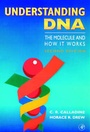
Understanding DNA
The Molecule and How it Works
Published on 1. December 1992
Book
Paperback/Softback
251 pages
978-0-12-155086-8 (ISBN)
Description
The functional properties of any molecule are directly related to and affected by its structure. This is no less true for DNA, the molecule that carries the code for our very being. Yet, so often DNA is thought of as just a string of bases. "Understanding DNA" explains in a step by step fashion why DNA forms specific structures, the nature of these structures and how they fundamentally effect the biological processes of transcription, recombination and replication. Containing over 100 illustrations, some in full colour, "Understanding DNA" describes the basic units of DNA and how these form the double helix; characterizes the various types of DNA double helix that exist; explains how and why DNA twists and curves; discusses the mechanisms of DNA supercoiling; summarizes the assembly of DNA and protein into chromosomes; outlines the principles of the methods employed to study DNA structure; contains simple exercises, further reading and a bibliography at the end of each chapter.
More details
Language
English
Place of publication
San Diego
United States
Publishing group
Elsevier Science Publishing Co Inc
Target group
College/higher education
Professional and scholarly
Illustrations
Ill.(some col.).
Dimensions
Height: 244 mm
Width: 169 mm
Weight
590 gr
ISBN-13
978-0-12-155086-8 (9780121550868)
Copyright in bibliographic data is held by Nielsen Book Services Limited or its licensors: all rights reserved.
Schweitzer Classification
Other editions
New editions
Book
04/1997
2nd Edition
Academic Press
€45.79
Article exhausted; check for reprint
Content
An introduction to molecular biology for non-scientists; why a helix?; different kinds of double helix; twisting and curving; curving in three dimensions; DNA supercoiling; the assembly of DNA into chromosomes; methods used to study the structure of DNA. Appendices: notes on the derivation of some technical terms; the chemical theory of base-stacking interactions in DNA.