

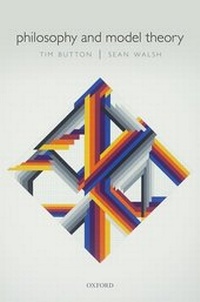
Philosophy and Model Theory
Published on 15. March 2018
Book
Paperback/Softback
534 pages
978-0-19-879040-2 (ISBN)
Description
Model theory is used in every theoretical branch of analytic philosophy: in philosophy of mathematics, in philosophy of science, in philosophy of language, in philosophical logic, and in metaphysics.
But these wide-ranging uses of model theory have created a highly fragmented literature. On the one hand, many philosophically significant results are found only in mathematics textbooks: these are aimed squarely at mathematicians; they typically presuppose that the reader has a serious background in mathematics; and little clue is given as to their philosophical significance. On the other hand, the philosophical applications of these results are scattered across disconnected pockets of papers.
The first aim of this book, then, is to explore the philosophical uses of model theory, focusing on the central topics of reference, realism, and doxology. Its second aim is to address important questions in the philosophy of model theory, such as: sameness of theories and structure, the boundaries of logic, and the classification of mathematical structures.
Philosophy and Model Theory will be accessible to anyone who has completed an introductory logic course. It does not assume that readers have encountered model theory before, but starts right at the beginning, discussing philosophical issues that arise even with conceptually basic model theory. Moreover, the book is largely self-contained: model-theoretic notions are defined as and when they are needed for the philosophical discussion, and many of the most philosophically significant results are given accessible proofs.
But these wide-ranging uses of model theory have created a highly fragmented literature. On the one hand, many philosophically significant results are found only in mathematics textbooks: these are aimed squarely at mathematicians; they typically presuppose that the reader has a serious background in mathematics; and little clue is given as to their philosophical significance. On the other hand, the philosophical applications of these results are scattered across disconnected pockets of papers.
The first aim of this book, then, is to explore the philosophical uses of model theory, focusing on the central topics of reference, realism, and doxology. Its second aim is to address important questions in the philosophy of model theory, such as: sameness of theories and structure, the boundaries of logic, and the classification of mathematical structures.
Philosophy and Model Theory will be accessible to anyone who has completed an introductory logic course. It does not assume that readers have encountered model theory before, but starts right at the beginning, discussing philosophical issues that arise even with conceptually basic model theory. Moreover, the book is largely self-contained: model-theoretic notions are defined as and when they are needed for the philosophical discussion, and many of the most philosophically significant results are given accessible proofs.
Reviews / Votes
The book provides a masterly overview of many central stakes in philosophy of mathematics where model theory is involved, either as a source or as a tool. Anyone interested in mathematical structures, in categoricity, or in internalization of semantics, especially in the cases of arithmetic and set theory, will find everything she is looking for, and more. * Brice Halimi, Universite de Paris, Philosophia Mathematica *More details
Language
English
Place of publication
Oxford
United Kingdom
Target group
Professional and scholarly
College/higher education
Dimensions
Height: 235 mm
Width: 155 mm
Thickness: 29 mm
Weight
796 gr
ISBN-13
978-0-19-879040-2 (9780198790402)
Copyright in bibliographic data and cover images is held by Nielsen Book Services Limited or by the publishers or by their respective licensors: all rights reserved.
Schweitzer Classification
Other editions
Additional editions
Tim Button | Sean Walsh
Philosophy and Model Theory
Book
03/2018
Oxford University Press
€176.90
Shipment within 15-20 days
Tim Button | Sean Walsh
Philosophy and Model Theory
E-Book
03/2018
1st Edition
OUP eBook
€29.49
Available for download
Persons
Tim Button is a Senior Lecturer, and a Fellow of St John's College, at the University of Cambridge. His first book, The Limits of Realism (OUP 2013) explores the relationship between words and world; between semantics and scepticism. His main research interests lie in meta(meta)physics, logic, mathematics, and language. In 2014 he received a Philip Leverhulme Prize.
Sean Walsh did his graduate work in philosophy and mathematics at the University of Notre Dame, where he received a PhD in Logic and the Foundations of Mathematics. He is an Associate Professor in the Department of Philosophy at the University of California, Los Angeles.
Sean Walsh did his graduate work in philosophy and mathematics at the University of Notre Dame, where he received a PhD in Logic and the Foundations of Mathematics. He is an Associate Professor in the Department of Philosophy at the University of California, Los Angeles.
Content
A: Reference and realism
1: Logics and languages
2: Permutations and referential indeterminacy
3: Ramsey sentences and Newman's objection
4: Compactness, infinitesimals, and the reals
5: Sameness of structure and theory
B: Categoricity
6: Modelism and mathematical doxology
7: Categoricity and the natural numbers
8: Categoricity and the sets
9: Transcendental arguments
10: Internal categoricity and the natural numbers
11: Internal categoricity and the sets
12: Internal categoricity and truth
13: Boolean-valued structures
C: Indiscernibility and classification
14: Types and Stone spaces
15: Indiscernibility
16: Quantifiers
17: Classification and uncountable categoricity
D: Historical appendix
Wilfrid Hodges: A short history of model theory
1: Logics and languages
2: Permutations and referential indeterminacy
3: Ramsey sentences and Newman's objection
4: Compactness, infinitesimals, and the reals
5: Sameness of structure and theory
B: Categoricity
6: Modelism and mathematical doxology
7: Categoricity and the natural numbers
8: Categoricity and the sets
9: Transcendental arguments
10: Internal categoricity and the natural numbers
11: Internal categoricity and the sets
12: Internal categoricity and truth
13: Boolean-valued structures
C: Indiscernibility and classification
14: Types and Stone spaces
15: Indiscernibility
16: Quantifiers
17: Classification and uncountable categoricity
D: Historical appendix
Wilfrid Hodges: A short history of model theory