

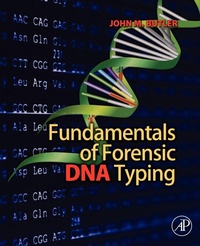
Fundamentals of Forensic DNA Typing
Published on 30. September 2009
Book
Paperback/Softback
520 pages
978-0-12-374999-4 (ISBN)
Description
Fundamentals of Forensic DNA Typing is written with a broad viewpoint. It examines the methods of current forensic DNA typing, focusing on short tandem repeats (STRs). It encompasses current forensic DNA analysis methods, as well as biology, technology and genetic interpretation. This book reviews the methods of forensic DNA testing used in the first two decades since early 1980's, and it offers perspectives on future trends in this field, including new genetic markers and new technologies. Furthermore, it explains the process of DNA testing from collection of samples through DNA extraction, DNA quantitation, DNA amplification, and statistical interpretation. The book also discusses DNA databases, which play an important role in law enforcement investigations. In addition, there is a discussion about ethical concerns in retaining DNA profiles and the issues involved when people use a database to search for close relatives. Students of forensic DNA analysis, forensic scientists, and members of the law enforcement and legal professions who want to know more about STR typing will find this book invaluable.
Reviews / Votes
"There is perhaps no individual better suited to author a foundational survey of forensic DNA typing than John Butler. As with past editions, Butler's knowledge, along with his organizational and communication skills make Fundamentals of Forensic DNA Typing a must read for students, forensic practitioners and trial attorneys. This text provides the reader with insightful and understandable explanations necessary to comprehend the underpinnings of forensic DNA analysis. It continues in the tradition of its predecessors as the premier textbook on the forensic DNA subject."-- Richard Saferstein, Ph.D. Author and Forensic Science Consultant
"When ScienceWatch.com, a Thomson Reuters web resource for measuring and analyzing science trends, recently listed the most influential institutions and researchers in forensic science based on journal citations, the National Institute of Standards and Technology (NIST) and one of its researchers, John Butler, were among the leaders."
-- ThomasNet.com
"Intended as the companion to the 2010 publication, Fundamentals of Forensic DNA Typing, this title contains 18 chapters with four appendices providing up-to-date coverage of essential topics in the field of DNA analysis. The book includes new information on DNA databases, low-level DNA, and validation; a comprehensive listing of alleles for the 23 STR loci present in commercial kits, and coverage of familial searching."
--Evidence Technology Magazine, July-August 2012, page 4
More details
Language
English
Place of publication
San Diego
United States
Publishing group
Elsevier Science Publishing Co Inc
Target group
College/higher education
Undergraduate forensic science students, lawyers who need enough cursory information to understand and speak to jury, law enforcement, crime scene investigators, legal professionals and government/legal policy makers
Dimensions
Height: 236 mm
Width: 189 mm
Thickness: 35 mm
Weight
966 gr
ISBN-13
978-0-12-374999-4 (9780123749994)
Copyright in bibliographic data and cover images is held by Nielsen Book Services Limited or by the publishers or by their respective licensors: all rights reserved.
Schweitzer Classification
Other editions
Additional editions
BUTLER | John M. Butler
Fundamentals of Forensic DNA Typing
E-Book
09/2009
Academic Press
€33.99
Available for download
Person
John M. Butler is a NIST Fellow and Special Assistant to the Director for Forensic Science, Office of Special Programs, at the U.S. National Institute of Standards and Technology, in Gaithersburg, Maryland. Dr. Butler earned his PhD from the University of Virginia while doing DNA research in the FBI Laboratory's Forensic Science Research Unit. He has won numerous scientific awards, including being named Science Watch's #1 world-wide high-impact author in legal medicine and forensic science over the last decade (July 2011). He has over 150 publications in this field and is a frequent presenter on the topic of DNA typing, and has authored four other DNA Typing books including Advanced Topics in Forensic DNA Typing: Methodology. For a detailed CV, visit http://www.cstl.nist.gov/strbase/butler.htm.
Content
Foreword
Introduction
Acknowledgments
About the author
1 Overview and History of DNA Typing
2 Basics of DNA Biology and Genetics
3 Historical Methods
4 Sample Collection, Storage and Characterization
5 DNA Extraction
6 DNA Quantitation
7 DNA Amplification (The Polymerase Chain Reaction)
8 Short Tandem Repeat Markers
9 Fundamentals of DNA separation and Detection
10 STR Genotyping and Data Interpretation
11 Statistical Interpretation: Evaluating the Strength of Forensic DNA Evidence
12 DNA databases
13 Quality Assurance
14 Forensic Challenges: Degraded DNA, Mixtures, and LCN
15 Additional Loci and Non-Human DNA Testing
16 Lineage Markers: Y Chromosome and mtDNA Testing
17 Applications of DNA Typing
18 Future Trends
Appendix
1 Glossary of Terms
2 Useful Websites
3 Probability and Statistics
Introduction
Acknowledgments
About the author
1 Overview and History of DNA Typing
2 Basics of DNA Biology and Genetics
3 Historical Methods
4 Sample Collection, Storage and Characterization
5 DNA Extraction
6 DNA Quantitation
7 DNA Amplification (The Polymerase Chain Reaction)
8 Short Tandem Repeat Markers
9 Fundamentals of DNA separation and Detection
10 STR Genotyping and Data Interpretation
11 Statistical Interpretation: Evaluating the Strength of Forensic DNA Evidence
12 DNA databases
13 Quality Assurance
14 Forensic Challenges: Degraded DNA, Mixtures, and LCN
15 Additional Loci and Non-Human DNA Testing
16 Lineage Markers: Y Chromosome and mtDNA Testing
17 Applications of DNA Typing
18 Future Trends
Appendix
1 Glossary of Terms
2 Useful Websites
3 Probability and Statistics