

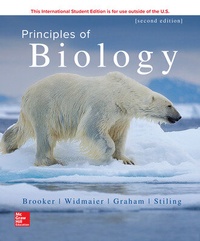
Principles of Biology
2nd Edition
Published on 16. March 2017
Book
Hardback
1104 pages
978-1-259-87512-0 (ISBN)
Description
Overview
Inspired by recommendations from the AAAS vision and Change Report. Principles of Biology is reflective of the shift taking place in the majors biology course from large and detail rich to short and conceptual, with a focus on new, cutting-edge science. A succinct and inviting text focused on central concepts, Principles of Biology helps students connect fundamental principles while challenging them to develop and hone critical thinking skills. Five new chapters introduce cutting-edge topics that will benefit students who continue their study of biology in future courses (Chapters 11, 16, 24, 41 and 47)
Inspired by recommendations from the AAAS vision and Change Report. Principles of Biology is reflective of the shift taking place in the majors biology course from large and detail rich to short and conceptual, with a focus on new, cutting-edge science. A succinct and inviting text focused on central concepts, Principles of Biology helps students connect fundamental principles while challenging them to develop and hone critical thinking skills. Five new chapters introduce cutting-edge topics that will benefit students who continue their study of biology in future courses (Chapters 11, 16, 24, 41 and 47)
More details
Edition
2nd edition
Language
English
Place of publication
OH
United States
Target group
College/higher education
US School Grade: From College Freshman to College Graduate Student
Illustrations
903 Illustrations
Dimensions
Height: 282 mm
Width: 229 mm
Thickness: 48 mm
Weight
2391 gr
ISBN-13
978-1-259-87512-0 (9781259875120)
Copyright in bibliographic data and cover images is held by Nielsen Book Services Limited or by the publishers or by their respective licensors: all rights reserved.
Schweitzer Classification
Other editions
Previous edition
Robert Brooker | Eric P. Widmaier | Linda Graham
Principles of Biology
Book
11/2014
McGraw-Hill Professional
€209.56
Article exhausted; check for reprint
Persons
Rob Brooker (Ph.D., Yale University) received his B.A. in biology at Wittenberg University, Springfield, Ohio, in 1978. At Harvard, he studied lactose permease, the product of the lacY gene of the lac operon. He continues working on transporters at the University of Minnesota, where he is a Professor in the Department of Genetics, Cell Biology, and Development and has an active research laboratory. At the University of Minnesota, Dr. Brooker teaches undergraduate courses in biology, genetics, and cell biology. In addition to many other publications, he has written two undergraduate genetics texts published by McGraw-Hill: Genetics: Analysis & Principles, 4th edition, copyright 2012, and Concepts of Genetics, copyright 2012.
Eric P. Widmaier received his Ph.D. in 1984 in Endocrinology from the University of California at San Francisco. His postdoctoral training was in endocrinology and physiology at the Worcester Foundation for Experimental Biology, and The Salk Institute in La Jolla, CA. He is currently Professor of Biology at Boston University.
Linda Graham is Professor of Botany and Environmental Studies at the University of Wisconsin-Madison. She received her Ph.D. in Botany from the University of Michigan, Ann Arbor. She has taught a nonmajors plant biology course each year for more than 20 years. She also teaches courses on the biology of algae and bryophytes, contributes to an introductory biology course for majors, and has taught marine botany on a remote tropical island.
Peter Stiling is a professor of biology at the University of South Florida at Tampa. He has taught classes in ecology, environmental science, and community ecology, and in 1995 he received a teaching award in recognition of classroom excellence in these areas. Dr. Stiling obtained his Ph.D. from University College, Cardiff, Wales, and completed postdoctoral research at Florida State University.
Eric P. Widmaier received his Ph.D. in 1984 in Endocrinology from the University of California at San Francisco. His postdoctoral training was in endocrinology and physiology at the Worcester Foundation for Experimental Biology, and The Salk Institute in La Jolla, CA. He is currently Professor of Biology at Boston University.
Linda Graham is Professor of Botany and Environmental Studies at the University of Wisconsin-Madison. She received her Ph.D. in Botany from the University of Michigan, Ann Arbor. She has taught a nonmajors plant biology course each year for more than 20 years. She also teaches courses on the biology of algae and bryophytes, contributes to an introductory biology course for majors, and has taught marine botany on a remote tropical island.
Peter Stiling is a professor of biology at the University of South Florida at Tampa. He has taught classes in ecology, environmental science, and community ecology, and in 1995 he received a teaching award in recognition of classroom excellence in these areas. Dr. Stiling obtained his Ph.D. from University College, Cardiff, Wales, and completed postdoctoral research at Florida State University.
Content
1 An Introduction to Biology
Unit 1 Chemistry
2 The Chemical Basis of Life I: Atoms, Molecules, and Water
3 The Chemical Basis of Life II: Organic Molecules
Unit 2 Cell
4 The Evolutionary Origin of Cells and their GeneralFeatures
5 Membranes: The Interface between Cells and TheirEnvironment
6 How Cells Utilize Energy
7 How Cells Capture Energy via Photosynthesis
8 How Cells Communicate with Each Other and with theEnvironment
Unit 3 Genetics
9 The Information of Life: Structures of DNA, RNA, andChromosomes, and DNA Replication
10 The Expression of Genetic Information via Genes I:Transcription and Translation
11 The Expression ofGenetic Information via Genes II: Non-coding RNAs
12 The Control of Genetic information via Gene Regulation
13 Altering the Genetic Material: Mutation, DNA Repair, andCancer
14 How Eukaryotic Cells Sort and Transmit their Chromosomes:Mitosis and Meiosis
15 Transmission of Genetic Information from Parents toOffspring I: Patterns that Follow Mendel's Laws
16 Transmission ofGenetic Information from Parents to Offspring II: Epigenetics, Linkage, andExtranuclear Inheritance
17 The Simpler Genetic Systems of Viruses and Bacteria
18 Genetic Technologies: How Biologists Study Genes andGenomes
Unit 4 Evolution
19 Evolution of Life I: How Populations Change fromGeneration to Generation20 Origin of Species and Macroevolution
21 Evolution of Life II: The Emergence of New Species
22 The History of Life on Earth and Human Evolution
Unit 5 Diversity
23 Diversity of Microbial Life: Bacteria, Archaea, Protists,and Fungi
24 Microbiomes:Microbial Systems On and Around Us
25 Plant Evolution: How Plant Diversification Changed PlanetEarth
26 Invertebrates: the Vast Array of Animal Life without aBackbone
27 Vertebrates: Fishes, Reptiles and Mammals28 FloweringPlants: Plant Behavior
Unit 6 Plants
28 An Introduction to Flowering Plant Form and Function
29 How Flowering Plants Sense and Interact with theirEnvironments
30 How Flowering Plants Obtain and Transport Nutrients
31 How Flowering Plants Reproduce and Develop
Unit 7 Animals
32 General Features of Animal Bodies, and Homeostasis as aDefining Principle of Animal Biology
33 Neuroscience I: The Structure, Function, and Evolution ofNervous Systems
34 Neuroscience II: How Sensory Systems Allow Animals toInteract with the Environment
35 How Muscles and Skeletons are Adaptations for Movement,Support, and Protection
36 Circulatory and Respiratory Systems: Transporting Solutesand Exchanging Gases
37 Digestive Systems and Excretory Systems: Maintenance ofNutrient, Energy, Ion and Water Balance
38 How Endocrine Systems Influence the Activities of allOther Organ Systems
39 The Production of Offspring: Reproduction and Development
40 Immune Systems: How Animals Defend Against Pathogens andOther Dangers
41 IntegratedResponses of Animal Organ Systems to a Challenge to Homeostasis
Unit 8 Ecology
42 Behavioral Ecology: the Struggle to Find Food, Mates andto Pass on Genes
43 Population Growth and Species Interactions
44 Communities and Ecosystems: Ecological Organization atLarger Scales
45 Biomes: Worldwide Patterns across Global Scales
46 Biodiversity and Conservation
47 The Age of Humans:Impacts on Natural Systems
Unit 1 Chemistry
2 The Chemical Basis of Life I: Atoms, Molecules, and Water
3 The Chemical Basis of Life II: Organic Molecules
Unit 2 Cell
4 The Evolutionary Origin of Cells and their GeneralFeatures
5 Membranes: The Interface between Cells and TheirEnvironment
6 How Cells Utilize Energy
7 How Cells Capture Energy via Photosynthesis
8 How Cells Communicate with Each Other and with theEnvironment
Unit 3 Genetics
9 The Information of Life: Structures of DNA, RNA, andChromosomes, and DNA Replication
10 The Expression of Genetic Information via Genes I:Transcription and Translation
11 The Expression ofGenetic Information via Genes II: Non-coding RNAs
12 The Control of Genetic information via Gene Regulation
13 Altering the Genetic Material: Mutation, DNA Repair, andCancer
14 How Eukaryotic Cells Sort and Transmit their Chromosomes:Mitosis and Meiosis
15 Transmission of Genetic Information from Parents toOffspring I: Patterns that Follow Mendel's Laws
16 Transmission ofGenetic Information from Parents to Offspring II: Epigenetics, Linkage, andExtranuclear Inheritance
17 The Simpler Genetic Systems of Viruses and Bacteria
18 Genetic Technologies: How Biologists Study Genes andGenomes
Unit 4 Evolution
19 Evolution of Life I: How Populations Change fromGeneration to Generation20 Origin of Species and Macroevolution
21 Evolution of Life II: The Emergence of New Species
22 The History of Life on Earth and Human Evolution
Unit 5 Diversity
23 Diversity of Microbial Life: Bacteria, Archaea, Protists,and Fungi
24 Microbiomes:Microbial Systems On and Around Us
25 Plant Evolution: How Plant Diversification Changed PlanetEarth
26 Invertebrates: the Vast Array of Animal Life without aBackbone
27 Vertebrates: Fishes, Reptiles and Mammals28 FloweringPlants: Plant Behavior
Unit 6 Plants
28 An Introduction to Flowering Plant Form and Function
29 How Flowering Plants Sense and Interact with theirEnvironments
30 How Flowering Plants Obtain and Transport Nutrients
31 How Flowering Plants Reproduce and Develop
Unit 7 Animals
32 General Features of Animal Bodies, and Homeostasis as aDefining Principle of Animal Biology
33 Neuroscience I: The Structure, Function, and Evolution ofNervous Systems
34 Neuroscience II: How Sensory Systems Allow Animals toInteract with the Environment
35 How Muscles and Skeletons are Adaptations for Movement,Support, and Protection
36 Circulatory and Respiratory Systems: Transporting Solutesand Exchanging Gases
37 Digestive Systems and Excretory Systems: Maintenance ofNutrient, Energy, Ion and Water Balance
38 How Endocrine Systems Influence the Activities of allOther Organ Systems
39 The Production of Offspring: Reproduction and Development
40 Immune Systems: How Animals Defend Against Pathogens andOther Dangers
41 IntegratedResponses of Animal Organ Systems to a Challenge to Homeostasis
Unit 8 Ecology
42 Behavioral Ecology: the Struggle to Find Food, Mates andto Pass on Genes
43 Population Growth and Species Interactions
44 Communities and Ecosystems: Ecological Organization atLarger Scales
45 Biomes: Worldwide Patterns across Global Scales
46 Biodiversity and Conservation
47 The Age of Humans:Impacts on Natural Systems