

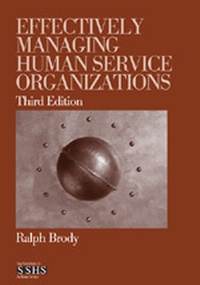
Effectively Managing Human Service Organizations
Third Edition
3rd Edition
Published on 31. August 2004
Book
Paperback/Softback
480 pages
978-1-4129-0420-9 (ISBN)
Description
Now in its Third Edition, Effectively Managing Human Service Organizations continues to provide invaluable advice for achieving managerial success. Ralph Brody dissects and diagnoses common workplace dilemmas, arming practicing managers with the skills to implement positive changes in their organizations.
While retaining much of the valuable information from the previous editions, the Third Edition adds up-to-date information and ideas to chapters on developing leadership, planning strategically, solving organizational problems, addressing challenging employee situations, monitoring financial statements, improving internal and external communications, and obtaining funding from private foundations.
New to this edition are topics that will make managers even more effective: designing service delivery programmes, marketing consumer services, promoting organizational change, developing volunteer programmes, and seeking governmental funding. An additional chapter on resource development includes discussion of electronic philanthropy and developing a business plan. The new edition also provides useful Web sites for keeping current on management and fund-raising developments.
Effectively Managing Human Service Organizations, Third Edition is an excellent resource book for executive directors, middle managers, line supervisors, and graduate students who aspire to work in these roles. It provides both a conceptual framework and essential skills managers need to make their organizations more effective. Easy to read, the book contains hundreds of real-life examples and specific guidance in developing skills necessary to manage large and small organizations.
While retaining much of the valuable information from the previous editions, the Third Edition adds up-to-date information and ideas to chapters on developing leadership, planning strategically, solving organizational problems, addressing challenging employee situations, monitoring financial statements, improving internal and external communications, and obtaining funding from private foundations.
New to this edition are topics that will make managers even more effective: designing service delivery programmes, marketing consumer services, promoting organizational change, developing volunteer programmes, and seeking governmental funding. An additional chapter on resource development includes discussion of electronic philanthropy and developing a business plan. The new edition also provides useful Web sites for keeping current on management and fund-raising developments.
Effectively Managing Human Service Organizations, Third Edition is an excellent resource book for executive directors, middle managers, line supervisors, and graduate students who aspire to work in these roles. It provides both a conceptual framework and essential skills managers need to make their organizations more effective. Easy to read, the book contains hundreds of real-life examples and specific guidance in developing skills necessary to manage large and small organizations.
More details
Series
Edition
3rd Revised edition
Language
English
Place of publication
Thousand Oaks
United States
Target group
College/higher education
Edition type
Revised edition
Dimensions
Height: 254 mm
Width: 178 mm
Weight
822 gr
ISBN-13
978-1-4129-0420-9 (9781412904209)
Copyright in bibliographic data and cover images is held by Nielsen Book Services Limited or by the publishers or by their respective licensors: all rights reserved.
Schweitzer Classification
Other editions
New editions
Ralph Brody | Murali D. Nair
Effectively Managing and Leading Human Service Organizations
Book
01/2014
4th Edition
SAGE Publications Inc
€218.30
Shipment within 10-20 days
Previous edition
Ralph Brody
Effectively Managing Human Service Organizations
Book
08/2000
2nd Edition
SAGE Publications Inc
€63.33
Article exhausted; check for reprint
Person
Ralph Brody, Ph.D. passed away on February 8, 2006. Dr. Brody was previously on the faculty of Cleveland State University where he taught social policy and human service administration. He also taught graduate courses on human service delivery models at Case Western Reserve University. Previously, he served for fifteen years as the executive director of the Federation for Community Planning, an organization that provides research, planning and advocacy on health and human services. Dr. Brody authored books on case management, the state legislative process, fundraising events, community problem solving, service learning, and macro practice. Dr. Brody's many years as a manager and teacher convinced him that the issues facing those in human service organizations were universal and applied to boards of directors as well as NGOs. He dedicated himself to developing tools to enhance the understanding and skills of those in leadership roles, from Cleveland to India, Spain, Ghana, Ethiopia, Egypt and Nigeria. His frequent workshops in Kenya led to the translation of his casebook into the Swahili language. His co-authored book with Dr. Nair: Grassroot Development - Establishing Successful Microenterprises has been published in English and Malayalam language. Dr. Brody's work touched millions, and his contributions will continue to educate, inform and inspire future students and professionals in human services field.
Content
Preface
Acknowledgments
PART I: SETTING ORGANIZATIONAL DIRECTIONS
Chapter 1. Leading the Organization
Dynamic Interaction: Manager, Staff and Situation
Flawed Leadership Styles
Leadership Competencies
Attributes Contributing to Leadership
Diagnosing Your leadership Style
Questions for Discussion
Chapter 2. Strategic Planning
Strategic Planning
Embracing Change
Embracing Change
Developing a Strategic Plan
Summary of a Strategic Plan Process
Questions for Discussion
Chapter 3. Designing and Developing Consumer Oriented Programs
Designing a Logic Planning Model
Developing a Marketing Planning Model
Summary of Elements of Good Design
Questions for Discussion
Chapter 4. Implementing Action Plans
Setting Objectives
Anticipating Unintended Consequences
Managing Change
Working Out the Details of a Plan
Questions for Discussion
Chapter 5. Problem Solving
Step 1: Analyzing the Problem
Step 2: Considering Alternative Solutions
Step 3: Making Decisions
Step 4: Monitoring Results
Step 5: Making Corrections
Questions for Discussion
PART II: INCREASING STAFF PRODUCTIVITY
Chapter 6. Time Management
Diagnosing the Time Problem
Planning the Use of Time
Combating Time Gobblers
Procrastination
Questions for Discussion
Chapter 7. Finding and Keeping Productive Employees
Finding the Right People for the Job
Conducting a Nondiscriminatory Interview
Developing Staff
Structuring the Organization to be Productive
Restructuring Jobs
Dilemmas about Keeping Good People
Questions for Discussion
Chapter 8. Managing Employment Challenges
Diagnosing Employment Problems
Dealing with Legally Protected Employees
Taking Corrective Action to Change Behavior
Progressive Discipline
Handling the Incompetent Employee
Chapter 9. Humanizing the Organization
Promoting Organizational Values
Managing Stress
Fostering Diversity
Harassment in the Workplace
Addressing Complacency and Stagnation
Being Sensitive to Inequities
Questions for Discussion
Chapter 10. Supervising Staff
The Pickle in the Middle
The Supervisor's Multiple Roles
Supervisor's Multiple Roles
Delegating
Delegating Assignments
Applying Motivational Theories to Improve Performance
Elements of Good Supervision
Supervising Volunteers
Questions for Discussion
Chapter 11. Appraising and Compensating Performance
Appraisal Methods
Conducting an Appraisal Conference
Compensating Work
Symbolic Rewards
Questions for Discussion
PART III: ENHANCING AGENCY SURVIVABILITY
Chapter 12. Managing Agency Finances
Understanding the Budgeting Process
Understanding Types of Income and Expenses
Conducting the Budgeting Process
Using the Budget as a Management Tool
50 Considerations for Reducing Costs
Questions for Discussion
Chapter 13. Strategic Resource Development I
Developing an Integrated Fund Plan
Preparing a Case Statement
The Annual Campaign
Capital Campaigns/ Major Gifts
Questions for Discussion
Chapter 14. Strategic Resource Development II
Planned Giving
Seeking Corporate Contributions
Electronic Philanthropy
Business Ventures
Conducting Fundraising Events
Questions for Discussion
Chapter 15. Preparing Effective Proposals
Preliminary Considerations
Preparing Proposals
Approaching Foundations for Funding
The Proposal is One Part of the Process
Criteria for Effective Proposals
Questions for Discussion
Chapter 16. Seeking Funding
Types of Foundations
Primary Source for Foundation Funding: The Foundation Center
Using Foundation Directories
Using the FC Search CD-ROM
Federal Government Funding
State and Local Government Funding
Questions for Discussion
PART IV: INTERACTING EFFECTIVELY
Chapter 17. Making Meetings Productive
Considering Whether or Not to Hold a Meeting
Making the Best Use of Time
Functions of Meetings
Dealing with Meeting Problems
Questions that Facilitate Discussion
Forming a Consensus
Using the Group Process to Generate Ideas
Recording the Meeting Process
Leading a Meeting
Chapter 18. Communication and Conflict
Factors that Interfere with Good Communication
Handling Conflict
Persuasive Communication
Facilitating Internal Communication
Facilitating External Communication
Questions for Discussion
Chapter 19. Team Building/ Coalition Building
Questions
The Importance of Team Building
Task Forces
Coalition Building
Questions for Discussion
Chapter 20. Working With a Board of Trustees
Distinguishing Governance from Management
Board Roles and Responsibilities
Board
Board Structures and Processes
Addressing Special Board Issues
Summary: Elements of a Well Functioning Board
Agency Executive Performance Review
Board Self Assessment Review
Questions for Discussion
Web Sites for Human Service Managers
References
Index
About the Author
Acknowledgments
PART I: SETTING ORGANIZATIONAL DIRECTIONS
Chapter 1. Leading the Organization
Dynamic Interaction: Manager, Staff and Situation
Flawed Leadership Styles
Leadership Competencies
Attributes Contributing to Leadership
Diagnosing Your leadership Style
Questions for Discussion
Chapter 2. Strategic Planning
Strategic Planning
Embracing Change
Embracing Change
Developing a Strategic Plan
Summary of a Strategic Plan Process
Questions for Discussion
Chapter 3. Designing and Developing Consumer Oriented Programs
Designing a Logic Planning Model
Developing a Marketing Planning Model
Summary of Elements of Good Design
Questions for Discussion
Chapter 4. Implementing Action Plans
Setting Objectives
Anticipating Unintended Consequences
Managing Change
Working Out the Details of a Plan
Questions for Discussion
Chapter 5. Problem Solving
Step 1: Analyzing the Problem
Step 2: Considering Alternative Solutions
Step 3: Making Decisions
Step 4: Monitoring Results
Step 5: Making Corrections
Questions for Discussion
PART II: INCREASING STAFF PRODUCTIVITY
Chapter 6. Time Management
Diagnosing the Time Problem
Planning the Use of Time
Combating Time Gobblers
Procrastination
Questions for Discussion
Chapter 7. Finding and Keeping Productive Employees
Finding the Right People for the Job
Conducting a Nondiscriminatory Interview
Developing Staff
Structuring the Organization to be Productive
Restructuring Jobs
Dilemmas about Keeping Good People
Questions for Discussion
Chapter 8. Managing Employment Challenges
Diagnosing Employment Problems
Dealing with Legally Protected Employees
Taking Corrective Action to Change Behavior
Progressive Discipline
Handling the Incompetent Employee
Chapter 9. Humanizing the Organization
Promoting Organizational Values
Managing Stress
Fostering Diversity
Harassment in the Workplace
Addressing Complacency and Stagnation
Being Sensitive to Inequities
Questions for Discussion
Chapter 10. Supervising Staff
The Pickle in the Middle
The Supervisor's Multiple Roles
Supervisor's Multiple Roles
Delegating
Delegating Assignments
Applying Motivational Theories to Improve Performance
Elements of Good Supervision
Supervising Volunteers
Questions for Discussion
Chapter 11. Appraising and Compensating Performance
Appraisal Methods
Conducting an Appraisal Conference
Compensating Work
Symbolic Rewards
Questions for Discussion
PART III: ENHANCING AGENCY SURVIVABILITY
Chapter 12. Managing Agency Finances
Understanding the Budgeting Process
Understanding Types of Income and Expenses
Conducting the Budgeting Process
Using the Budget as a Management Tool
50 Considerations for Reducing Costs
Questions for Discussion
Chapter 13. Strategic Resource Development I
Developing an Integrated Fund Plan
Preparing a Case Statement
The Annual Campaign
Capital Campaigns/ Major Gifts
Questions for Discussion
Chapter 14. Strategic Resource Development II
Planned Giving
Seeking Corporate Contributions
Electronic Philanthropy
Business Ventures
Conducting Fundraising Events
Questions for Discussion
Chapter 15. Preparing Effective Proposals
Preliminary Considerations
Preparing Proposals
Approaching Foundations for Funding
The Proposal is One Part of the Process
Criteria for Effective Proposals
Questions for Discussion
Chapter 16. Seeking Funding
Types of Foundations
Primary Source for Foundation Funding: The Foundation Center
Using Foundation Directories
Using the FC Search CD-ROM
Federal Government Funding
State and Local Government Funding
Questions for Discussion
PART IV: INTERACTING EFFECTIVELY
Chapter 17. Making Meetings Productive
Considering Whether or Not to Hold a Meeting
Making the Best Use of Time
Functions of Meetings
Dealing with Meeting Problems
Questions that Facilitate Discussion
Forming a Consensus
Using the Group Process to Generate Ideas
Recording the Meeting Process
Leading a Meeting
Chapter 18. Communication and Conflict
Factors that Interfere with Good Communication
Handling Conflict
Persuasive Communication
Facilitating Internal Communication
Facilitating External Communication
Questions for Discussion
Chapter 19. Team Building/ Coalition Building
Questions
The Importance of Team Building
Task Forces
Coalition Building
Questions for Discussion
Chapter 20. Working With a Board of Trustees
Distinguishing Governance from Management
Board Roles and Responsibilities
Board
Board Structures and Processes
Addressing Special Board Issues
Summary: Elements of a Well Functioning Board
Agency Executive Performance Review
Board Self Assessment Review
Questions for Discussion
Web Sites for Human Service Managers
References
Index
About the Author