

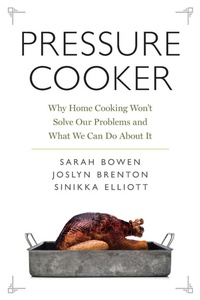
Pressure Cooker
Why Home Cooking Won't Solve Our Problems and What We Can Do About It
Published on 24. September 2020
Book
Paperback/Softback
256 pages
978-0-19-066330-8 (ISBN)
Description
Food is at the center of national debates about how Americans live and the future of the planet. Not everyone agrees about how to reform our relationship to food, but one suggestion rises above the din: home-cooked meals. Amid concerns about obesity and diabetes, unpronounceable ingredients, and the environmental footprint of industrial agriculture, food reformers implore parents to slow down, cook from scratch, and gather around the dinner table. Voting with your fork, they argue, will lead to happier and healthier families. But is it really that simple?
Informed by extensive interviews and observations with families, Pressure Cooker examines how deep-seated differences shape the work done in kitchens across America. Conversations about family meals are dominated by a relentless focus on what individuals can better do to improve their own health and the health of their families and the nation. This book looks closely at the lives of nine diverse families to demonstrate how family meals are profoundly shaped by what happens inside and outside people's homes.
The scenes contained in this book contrast with the joyful images we see on cooking shows or read about in cookbooks. Romantic images of family meals are inviting. But they create a food fiction that does little to fix the problems in the food system. Even worse, they contribute to the pressure on families-and in particular, mothers-to strive for an ideal that has never been simple to achieve. A day of food reckoning cannot come without considering how class inequality, racism, sexism, and xenophobia pass through the kitchen. To ensure a food system that is fair and equitable, we must move the conversation out of the kitchen.
Informed by extensive interviews and observations with families, Pressure Cooker examines how deep-seated differences shape the work done in kitchens across America. Conversations about family meals are dominated by a relentless focus on what individuals can better do to improve their own health and the health of their families and the nation. This book looks closely at the lives of nine diverse families to demonstrate how family meals are profoundly shaped by what happens inside and outside people's homes.
The scenes contained in this book contrast with the joyful images we see on cooking shows or read about in cookbooks. Romantic images of family meals are inviting. But they create a food fiction that does little to fix the problems in the food system. Even worse, they contribute to the pressure on families-and in particular, mothers-to strive for an ideal that has never been simple to achieve. A day of food reckoning cannot come without considering how class inequality, racism, sexism, and xenophobia pass through the kitchen. To ensure a food system that is fair and equitable, we must move the conversation out of the kitchen.
More details
Language
English
Place of publication
New York
United States
Target group
Professional and scholarly
Illustrations
12 black and white illustrations
Dimensions
Height: 234 mm
Width: 156 mm
Thickness: 19 mm
Weight
532 gr
ISBN-13
978-0-19-066330-8 (9780190663308)
Copyright in bibliographic data and cover images is held by Nielsen Book Services Limited or by the publishers or by their respective licensors: all rights reserved.
Schweitzer Classification
Other editions
Additional editions
Sarah Bowen | Joslyn Brenton | Sinikka Elliott
Pressure Cooker
Why Home Cooking Won't Solve Our Problems and What We Can Do About It
E-Book
02/2019
1st Edition
OUP eBook
€11.49
Available for download
Sarah Bowen | Joslyn Brenton | Sinikka Elliott
Pressure Cooker
Why Home Cooking Won't Solve Our Problems and What We Can Do About It
E-Book
01/2019
1st Edition
OUP eBook
€11.49
Available for download
Persons
Sarah Bowen is Associate Professor of Sociology at North Carolina State University. Her work focuses on food systems, local and global institutions, and inequality in the United States, Mexico, and France. She is author of Divided Spirits: Tequila, Mezcal, and the Politics of Production (University of California Press, 2015).
Joslyn Brenton is an Associate Professor of Sociology at Ithaca College. Her research focuses on the sociology of health and illness, with a particular focus on how mothers of young children think about food, health, and the body.
Sinikka Elliott is Associate Professor of Sociology at the University of British Columbia where she researches and teaches on the topics of gender, sexuality, inequality, and family. She is the author of Not My Kid: What Parents Believe about the Sex Lives of Their Teenagers (NYU Press, 2012).
Joslyn Brenton is an Associate Professor of Sociology at Ithaca College. Her research focuses on the sociology of health and illness, with a particular focus on how mothers of young children think about food, health, and the body.
Sinikka Elliott is Associate Professor of Sociology at the University of British Columbia where she researches and teaches on the topics of gender, sexuality, inequality, and family. She is the author of Not My Kid: What Parents Believe about the Sex Lives of Their Teenagers (NYU Press, 2012).
Content
Acknowledgments
Chapter 1: Introduction: (Back) to the Kitchen?
Part One: You Are What You Eat
Chapter 2: Room 105
Chapter 3: Deep Roots
Chapter 4: By the Book
Chapter 5: Hurtful Words
Part Two: Make Time for Food
Chapter 6: Taking the Time
Chapter 7: Finding Balance
Chapter 8: Shift Work
Part Three: The Family that Eats Together, Stays Together
Chapter 9: Spaghetti for an Army
Chapter 10: Fourth of July
Chapter 11: Where's the Gravy?
Chapter 12: Takis
Chapter 13: Scarce Food
Part Four: Know What's on Your Plate
Chapter 14: Vote with Your Fork
Chapter 15: The Repertoire
Chapter 16: Sour Grapes
Part Five: Shop Smarter, Eat Better
Chapter 17: Smart Shopper
Chapter 18: Blood from a Turnip
Chapter 19: The Checkout Line
Part Six: Bring Good Food to Others
Chapter 20: Lotus Cafe
Chapter 21: A Small Fridge
Chapter 22: Daily Bread
Chapter 23: Stop Crying
Part Seven: Food Brings People Together
Chapter 24: Sunday Dinner
Chapter 25: Cupcakes for Cousin
Chapter 26: Thanksgiving
Chapter 27: Communion
Chapter 28: Conclusions: Thinking Outside the Kitchen
Appendix: Notes on Methods
References
Endnotes
Chapter 1: Introduction: (Back) to the Kitchen?
Part One: You Are What You Eat
Chapter 2: Room 105
Chapter 3: Deep Roots
Chapter 4: By the Book
Chapter 5: Hurtful Words
Part Two: Make Time for Food
Chapter 6: Taking the Time
Chapter 7: Finding Balance
Chapter 8: Shift Work
Part Three: The Family that Eats Together, Stays Together
Chapter 9: Spaghetti for an Army
Chapter 10: Fourth of July
Chapter 11: Where's the Gravy?
Chapter 12: Takis
Chapter 13: Scarce Food
Part Four: Know What's on Your Plate
Chapter 14: Vote with Your Fork
Chapter 15: The Repertoire
Chapter 16: Sour Grapes
Part Five: Shop Smarter, Eat Better
Chapter 17: Smart Shopper
Chapter 18: Blood from a Turnip
Chapter 19: The Checkout Line
Part Six: Bring Good Food to Others
Chapter 20: Lotus Cafe
Chapter 21: A Small Fridge
Chapter 22: Daily Bread
Chapter 23: Stop Crying
Part Seven: Food Brings People Together
Chapter 24: Sunday Dinner
Chapter 25: Cupcakes for Cousin
Chapter 26: Thanksgiving
Chapter 27: Communion
Chapter 28: Conclusions: Thinking Outside the Kitchen
Appendix: Notes on Methods
References
Endnotes