

The Power of Images
Siena, 1338
1st Edition
Published on 23. March 2018
Book
Paperback/Softback
240 pages
978-1-5095-1290-4 (ISBN)
Description
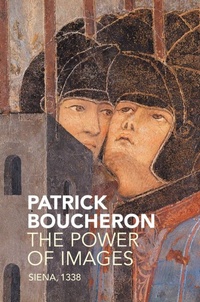
Where can the danger be lurking? Two soldiers are huddled together, one gazing up at the sky, the other darting a sideward glance. They derive a tacit reassurance from their weapons, but they are both in their different ways alone and scared. They were painted by Ambrogio Lorenzetti in the Palazzo Pubblico in Siena, and they seem symptomatic of a state of emergency: the year was 1338, and the spectre of the signoria, of rule by one man, was abroad in the city, undermining the very idea of the common good.
In this book, distinguished historian Patrick Boucheron uncovers the rich social and political dimensions of the iconic 'Fresco of Good Government'. He guides the reader through Lorenzetti's divided city, where peaceful prosperity and leisure sit alongside the ever-present threats of violence, war and despotism. Lorenzetti's painting reminds us crucially that good government is not founded on the wisdom of principled or virtuous rulers. Rather, good government lies in the visible and tangible effects it has on the lives of its citizens. By subjecting it to scrutiny, we may, at least for a while, be able to hold at bay the dark seductions of tyranny.
From fourteenth-century Siena to the present, The Power of Images shows the latent dangers to democracy when our perceptions of the common good are distorted and undermined. It will appeal to students and scholars in art history, politics and the humanities, as well as to anyone interested in the nature of power.
In this book, distinguished historian Patrick Boucheron uncovers the rich social and political dimensions of the iconic 'Fresco of Good Government'. He guides the reader through Lorenzetti's divided city, where peaceful prosperity and leisure sit alongside the ever-present threats of violence, war and despotism. Lorenzetti's painting reminds us crucially that good government is not founded on the wisdom of principled or virtuous rulers. Rather, good government lies in the visible and tangible effects it has on the lives of its citizens. By subjecting it to scrutiny, we may, at least for a while, be able to hold at bay the dark seductions of tyranny.
From fourteenth-century Siena to the present, The Power of Images shows the latent dangers to democracy when our perceptions of the common good are distorted and undermined. It will appeal to students and scholars in art history, politics and the humanities, as well as to anyone interested in the nature of power.
Reviews / Votes
"This superbly written book invites us to reflect on both history and art, and entices us to go and experience Tuscany for ourselves"Livres Hebdo
"Analyzing the fresco of 'Good Government' painted in Siena in the 14th century, Boucheron powerfully elucidates the nature of political representation."
Philosophie Magazine
More details
Other editions
Additional editions
E-Book
05/2018
1st Edition
Wiley-Scrivener
€19.99
Available for download
E-Book
05/2018
1st Edition
Wiley
€19.99
Available for download
Book
03/2018
1st Edition
Polity Press
€65.00
Shipment within 15-20 days
Person
Patrick Boucheron is Professor of History at the College de France
Content
Acknowledgments
Preface: The site of an ancient urgency
1. 'I thought of these images, painted for you'
2. Nachleben. The watchful shadows
3. The Nine
4. Ambrogio Lorenzetti, famosissimo e singularissimo maestro
5. On each side: allegory, realism, resemblances
6. Esto visibile parlare: the walls speak to us
7. Guernica in the lands of Siena
8. The seductions of tyranny (what the image conceals)
9. Concord with its cords
10. With the common good as lord
11. What peace sees: narratives of spaces and talking bodies
12. Well, now you can dance
Epilogue: Vanishing point
Appendices
The fresco of the Dala della Pace: silhouettes, inscriptions, identifications
Inscriptions in the vernacular: transcription, edition and translation
Notes
Published sources
Bibliography
Picture credits
Index
Preface: The site of an ancient urgency
1. 'I thought of these images, painted for you'
2. Nachleben. The watchful shadows
3. The Nine
4. Ambrogio Lorenzetti, famosissimo e singularissimo maestro
5. On each side: allegory, realism, resemblances
6. Esto visibile parlare: the walls speak to us
7. Guernica in the lands of Siena
8. The seductions of tyranny (what the image conceals)
9. Concord with its cords
10. With the common good as lord
11. What peace sees: narratives of spaces and talking bodies
12. Well, now you can dance
Epilogue: Vanishing point
Appendices
The fresco of the Dala della Pace: silhouettes, inscriptions, identifications
Inscriptions in the vernacular: transcription, edition and translation
Notes
Published sources
Bibliography
Picture credits
Index