

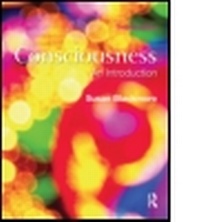
Consciousness
An Introduction
2nd Edition
Published on 25. June 2010
Book
Hardback
560 pages
978-1-4441-0487-5 (ISBN)
Description
Is there a theory that explains the essence of consciousness? Or is consciousness itself just an illusion? The 'last great mystery of science', consciousness is a topic that was banned from serious research for most of the last century, but is now an area of increasing popular interest, as well as a rapidly expanding area of study for students of psychology, philosophy and neuroscience. This ground-breaking textbook by best-selling author Susan Blackmore was the first of its kind to bring together all the major theories of consciousness studies, from those based on neuroscience to those based on quantum theory or Eastern philosophy.
The book examines topics such as how subjective experiences arise from objective brain processes, the basic neuroscience of consciousness, altered states of consciousness, out of body and near death experiences and the effects of drugs, dreams and meditation. It also explores the nature of self, the possibility of artificial consciousness in robots, and the question of whether animals are conscious.
The new edition has been fully revised to include the latest developments in neuroscience, brain scanning techniques, and artificial consciousness and robotics. The new website includes self-assessment exercises, advanced further reading, flashcards and MCQs.
For all those intrigued by what it means to be, to exist, this book could radically transform your understanding of your own consciousness.
The book examines topics such as how subjective experiences arise from objective brain processes, the basic neuroscience of consciousness, altered states of consciousness, out of body and near death experiences and the effects of drugs, dreams and meditation. It also explores the nature of self, the possibility of artificial consciousness in robots, and the question of whether animals are conscious.
The new edition has been fully revised to include the latest developments in neuroscience, brain scanning techniques, and artificial consciousness and robotics. The new website includes self-assessment exercises, advanced further reading, flashcards and MCQs.
For all those intrigued by what it means to be, to exist, this book could radically transform your understanding of your own consciousness.
Reviews / Votes
"The style of the book lays down a challenge to the reader: to enter perplexity. Any reader carrying out the activities and practices is likely to engage personally with the subject matter in ways that other texts cannot reach." - Guy Saunders, University of the West of England, The Scientific and Medical Network, No. 83, Winter 03"One day, all consciousness textbooks will be made this way. Susan Blackmore's Consciousness: An Introduction is an invaluable addition to the area of consciousness research. It is balanced, scholarly and yet student-friendly: no undergraduate course on consciousness should be without it." - Greg Davis, Times Higher Education Supplement
More details
Edition
2nd New edition
Language
English
Place of publication
London
United Kingdom
Publishing group
Taylor & Francis Ltd
Target group
College/higher education
Edition type
New edition
Illustrations
100 b/w line drawings, 50 half tones
Dimensions
Height: 248 mm
Width: 191 mm
Weight
1202 gr
ISBN-13
978-1-4441-0487-5 (9781444104875)
Copyright in bibliographic data and cover images is held by Nielsen Book Services Limited or by the publishers or by their respective licensors: all rights reserved.
Schweitzer Classification
Other editions
New editions
Book
04/2018
3rd Edition
Routledge
€186.01
Article exhausted; check for reprint
Previous edition
Susan Blackmore | Emma Woolf
CONSCIOUSNESS - AN INTRODUCTION
Book
05/2003
Hodder Arnold
€50.99
Article exhausted; check for reprint
Person
Susan Blackmore is visiting Professor of Psychology, University of Plymouth
Content
Introduction
Section One: The problem
1. WhataEUR (TM)s the problem ?
2. What is it like to beaEUR|?
3. Conscious or unconscious ?
Section Two: The world
4. The theatre of the mind
5. Attention and timing
6. The grand illusion
Section Three: The self
7. Egos, bundles and multiple selves
8. Theories of self
9. Agency and free will
Section Four: The brain
10. The neural correlates of consciousness
11. The unity of consciousness
12. Damaged brains
Section Five: Evolution
13. The evolution of consciousness
14. The function of consciousness
15. Animal minds
Section Six: Artificial consciousness
16. Minds and machines
17. Could a machine be conscious?
18. How to build a conscious machine
Section Seven: Borderlands
19. Unconscious processing
20. Reality and imagination
21. The paranormal
Section Eight: Altered states of consciousness
22. Drugs and altered states
23. Sleep dreams and hypnosis
24. Exceptional human experience
Section Nine: First-person approaches
25. The view from within
26. Meditation and mindfulness
27. Waking up
Section One: The problem
1. WhataEUR (TM)s the problem ?
2. What is it like to beaEUR|?
3. Conscious or unconscious ?
Section Two: The world
4. The theatre of the mind
5. Attention and timing
6. The grand illusion
Section Three: The self
7. Egos, bundles and multiple selves
8. Theories of self
9. Agency and free will
Section Four: The brain
10. The neural correlates of consciousness
11. The unity of consciousness
12. Damaged brains
Section Five: Evolution
13. The evolution of consciousness
14. The function of consciousness
15. Animal minds
Section Six: Artificial consciousness
16. Minds and machines
17. Could a machine be conscious?
18. How to build a conscious machine
Section Seven: Borderlands
19. Unconscious processing
20. Reality and imagination
21. The paranormal
Section Eight: Altered states of consciousness
22. Drugs and altered states
23. Sleep dreams and hypnosis
24. Exceptional human experience
Section Nine: First-person approaches
25. The view from within
26. Meditation and mindfulness
27. Waking up