

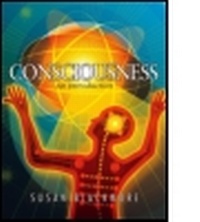
CONSCIOUSNESS - AN INTRODUCTION
Published on 30. May 2003
Book
Hardback
472 pages
978-0-340-80909-9 (ISBN)
Description
Is there a theory that explains the essence of consciousness? Or is consciousness itself just an illusion? The 'last great mystery of science', consciousness is a topic that was banned from serious research for most of the last century, but is now an area of increasing popular interest, as well as a rapidly expanding area of study for students of psychology, philosophy and neuroscience. This ground-breaking new book by best-selling author Susan Blackmore is the first of its kind to bring together all the major theories of consciousness studies, from those based on neuroscience to those based on quantum theory or Eastern philosophy.
The book examines topics such as how subjective experiences arise from objective brain processes, the basic neuroscience of consciousness, altered states of consciousness, out of body and near death experiences and the effects of drugs, dreams and meditation. It also explores the nature of self, the possibility of artificial consciousness in robots, and the question of whether animals are conscious.
For all those intrigued by popular science, and what it means to exist, this book could radically transform each reader's understanding of their own consciousness.
The book examines topics such as how subjective experiences arise from objective brain processes, the basic neuroscience of consciousness, altered states of consciousness, out of body and near death experiences and the effects of drugs, dreams and meditation. It also explores the nature of self, the possibility of artificial consciousness in robots, and the question of whether animals are conscious.
For all those intrigued by popular science, and what it means to exist, this book could radically transform each reader's understanding of their own consciousness.
Reviews / Votes
One day, all consciousness textbooks will be made this way. Susan Blackmore's Consciousness is an invaluable addition to the area of consciousness research. It is balanced, scholarly and yet student-friendly: no undergraduate course on consciousness should be without it. This book will prove to be the benchmark by which future consciousness-course texts are judged.Blackmore's title concentrates on the theory and practice of consciousness by asking you to do some thinking for yourself...she invites you as the reader to join in the speculations by taking part in various illustrative activities. These provide far more insight than words and references ever could on their own. This book can be read by anyone at any level of interest, from the most casual browser to the full-time psychology professional.
Focus
Blackmore provides a very student-friendly way in to the often complex debates about consciousness
Mr A Stone, South Bank University
More details
Language
English
Place of publication
London
United Kingdom
Publishing group
Taylor & Francis Ltd
Target group
Professional and scholarly
College/higher education
Dimensions
Height: 246 mm
Width: 191 mm
ISBN-13
978-0-340-80909-9 (9780340809099)
Copyright in bibliographic data and cover images is held by Nielsen Book Services Limited or by the publishers or by their respective licensors: all rights reserved.
Schweitzer Classification
Other editions
New editions
Book
06/2010
2nd Edition
Hodder Arnold
€72.07
Article exhausted; check for reprint
Persons
Susan Blackmore is a full time writer, lecturer and broadcaster, whose previous books include the controversial bestseller The Meme Machine (OUP, 1999)
Content
Chapter 1 The Problem
Chapter 2 The World
Chapter 3 The Self
Chapter 4 Evolution
Chapter 5 Artificial Consciousness
Chapter 6 The Brain
Chapter 7 Borderlands
Chapter 8 Altered States
Chapter 9 First Person Approaches
Chapter 10 Theories
Chapter 2 The World
Chapter 3 The Self
Chapter 4 Evolution
Chapter 5 Artificial Consciousness
Chapter 6 The Brain
Chapter 7 Borderlands
Chapter 8 Altered States
Chapter 9 First Person Approaches
Chapter 10 Theories