


Impossible Worlds
Published on 13. June 2019
Book
Hardback
334 pages
978-0-19-881279-1 (ISBN)
Description
This is an open access title available under the terms of a CC BY-NC-ND 4.0 International licence. It is free to read at Oxford Scholarship Online and offered as a free PDF download from OUP and selected open access locations.
We need to understand the impossible. Francesco Berto and Mark Jago start by considering what the concepts of meaning, information, knowledge, belief, fiction, conditionality, and counterfactual supposition have in common. They are all concepts which divide the world up more finely than logic does. Logically equivalent sentences may carry different meanings and information and may differ in how they're believed. Fictions can be inconsistent yet meaningful. We can suppose impossible things without collapsing into total incoherence. Yet for the leading philosophical theories of meaning, these phenomena are an unfathomable mystery. To understand these concepts, we need a metaphysical, logical, and conceptual grasp of situations that could not possibly exist: Impossible Worlds. This book discusses the metaphysics of impossible worlds and applies the concept to a range of central topics and open issues in logic, semantics, and philosophy. It considers problems in the logic of knowledge, the meaning of alternative logics, models of imagination and mental simulation, the theory of information, truth in fiction, the meaning of conditional statements, and reasoning about the impossible. In all these cases, impossible worlds have an essential role to play.
We need to understand the impossible. Francesco Berto and Mark Jago start by considering what the concepts of meaning, information, knowledge, belief, fiction, conditionality, and counterfactual supposition have in common. They are all concepts which divide the world up more finely than logic does. Logically equivalent sentences may carry different meanings and information and may differ in how they're believed. Fictions can be inconsistent yet meaningful. We can suppose impossible things without collapsing into total incoherence. Yet for the leading philosophical theories of meaning, these phenomena are an unfathomable mystery. To understand these concepts, we need a metaphysical, logical, and conceptual grasp of situations that could not possibly exist: Impossible Worlds. This book discusses the metaphysics of impossible worlds and applies the concept to a range of central topics and open issues in logic, semantics, and philosophy. It considers problems in the logic of knowledge, the meaning of alternative logics, models of imagination and mental simulation, the theory of information, truth in fiction, the meaning of conditional statements, and reasoning about the impossible. In all these cases, impossible worlds have an essential role to play.
Reviews / Votes
just what you want if you are looking for a sophisticated and accurate introduction to the literature on impossible worlds, or you are interested in learning how the ideas in that literature can be extended in original and thought- provoking ways, Notre Dame Philosophical ReviewsMore details
Language
English
Place of publication
Oxford
United Kingdom
Target group
Professional and scholarly
Dimensions
Height: 222 mm
Width: 145 mm
Thickness: 22 mm
Weight
553 gr
ISBN-13
978-0-19-881279-1 (9780198812791)
Copyright in bibliographic data and cover images is held by Nielsen Book Services Limited or by the publishers or by their respective licensors: all rights reserved.
Schweitzer Classification
Other editions
Additional editions
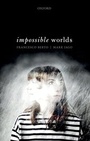
Francesco Berto | Mark Jago
Impossible Worlds
E-Book
06/2019
1st Edition
OUP eBook
€0.00
Available for download
Persons
Francesco Berto is Professor of Logic and Metaphysics at the University of St Andrews and Research Chair at the Institute for Logic, Language and Computation (ILLC) at the University of Amsterdam. He has also worked at the Universities of Notre Dame, Aberdeen, Padua, Venice, Lugano, and at the Sorbonne-Ecole Normale Superieure of Paris. He works on ontology, logic, epistemology, and the philosophy of computation.
Mark Jago is an Associate Professor in Philosophy at the University of Nottingham. Before that, he was a postdoctoral fellow at Macquarie University in Sydney, Australia. He mainly writes on metaphysics, logic, epistemology, and philosophy of language. His previous books are The Impossible (Oxford 2014), Reality Making (Oxford 2016, as editor), and What Truth Is (Oxford 2018).
Mark Jago is an Associate Professor in Philosophy at the University of Nottingham. Before that, he was a postdoctoral fellow at Macquarie University in Sydney, Australia. He mainly writes on metaphysics, logic, epistemology, and philosophy of language. His previous books are The Impossible (Oxford 2014), Reality Making (Oxford 2016, as editor), and What Truth Is (Oxford 2018).
Content
Introduction
Part I: Impossibilities
1: From Possible to Impossible Worlds
2: Metaphysics
3: Ersatz Modal Realism
Part II: Logical Applications
4: Modal Logics
5: Epistemic Logics
6: Relevant Logics
7: The Logic of Imagination
Part III: Philosophical Applications
8: Hyperintensionality
9: Information and Content
10: Epistemic and Doxastic Contents
11: Fiction and Fictional Objects
12: Counterpossible Conditionals
Part I: Impossibilities
1: From Possible to Impossible Worlds
2: Metaphysics
3: Ersatz Modal Realism
Part II: Logical Applications
4: Modal Logics
5: Epistemic Logics
6: Relevant Logics
7: The Logic of Imagination
Part III: Philosophical Applications
8: Hyperintensionality
9: Information and Content
10: Epistemic and Doxastic Contents
11: Fiction and Fictional Objects
12: Counterpossible Conditionals