

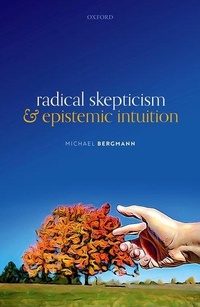
Radical Skepticism and Epistemic Intuition
Published on 1. July 2021
Book
Hardback
296 pages
978-0-19-289848-7 (ISBN)
Description
Radical skepticism endorses the extreme claim that large swaths of our ordinary beliefs, such as those produced by perception or memory, are irrational. The best arguments for such skepticism are, in their essentials, as familiar as a popular science fiction movie and yet even seasoned epistemologists continue to find them strangely seductive. Moreover, although most contemporary philosophers dismiss radical skepticism, they cannot agree on how best to respond to the challenge it presents. In the tradition of the 18th century Scottish philosopher, Thomas Reid, Radical Skepticism and Epistemic Intuition joins this discussion by taking up four main tasks. First, it identifies the strongest arguments for radical skepticism, namely, underdetermination arguments, which emphasize the gap between our evidence and our ordinary beliefs based on that evidence. Second, it rejects all inferential or argument-based responses to radical skepticism, which aim to lay out good noncircular reasoning from the evidence on which we base our ordinary beliefs to the conclusion that those beliefs are probably true. Third, it develops a commonsense noninferential response to radical skepticism with two distinctive features: (a) it consciously and extensively relies on epistemic intuitions, which are seemings about epistemic goods, such as knowledge and rationality, and (b) it can be endorsed without difficulty by both internalists and externalists in epistemology. Fourth, and finally, it defends this commonsense epistemic-intuition-based response to radical skepticism against a variety of objections, including those connected with underdetermination worries, epistemic circularity, disagreement problems, experimental philosophy, and concerns about whether it engages skepticism in a sufficiently serious way.
Reviews / Votes
In his excellent Radical Skepticism and Epistemic Intuition, Michael Bergmann offers an admirably deep and systematic response to skeptical arguments. * Matthias Steup, Canadian Journal of Philosophy *More details
Language
English
Place of publication
Oxford
United Kingdom
Target group
College/higher education
Product notice
sewn/stitched
Cloth over boards
Dimensions
Height: 237 mm
Width: 153 mm
Thickness: 25 mm
Weight
614 gr
ISBN-13
978-0-19-289848-7 (9780192898487)
Copyright in bibliographic data and cover images is held by Nielsen Book Services Limited or by the publishers or by their respective licensors: all rights reserved.
Schweitzer Classification
Other editions
Additional editions
Michael Bergmann
Radical Skepticism and Epistemic Intuition
E-Book
07/2021
1st Edition
OUP eBook
€54.49
Available for download
Michael Bergmann
Radical Skepticism and Epistemic Intuition
E-Book
07/2021
1st Edition
OUP eBook
€54.49
Available for download
Person
Michael Bergmann is Professor of Philosophy at Purdue University. In addition to numerous articles in epistemology and philosophy of religion, he is the author of Justification without Awareness (OUP 2006), and co-editor of Divine Evil? The Moral Character of the God of Abraham (2011), Challenges to Moral and Religious Belief (2014), Reason and Faith (2016), and Intellectual Assurance: Essays on Traditional Epistemic Internalism (OUP 2016).
Content
1: Introduction Part I: Underdetermination and Inferential Anti-Skepticism 2: Underdetermination and Perceptual Skepticism 3: Inferential Anti-Skepticism about Perception 4: Global and Memory Skepticism 5: A Priori, Introspective, and Inferential Skepticism Part II: Particularist Noninferential Anti-Skepticism 6: Intuitionist Particularism: An Introduction 7: Intuitionist Particularism: Elucidations and Defenses 8: Ecumenical Noninferential Anti-Skepticism 9: Easy Knowledge and Epistemic Circularity 10: Ridiculous Beliefs, Irresponsible Beliefs, and Anti-Skeptical Evidence Part III: Skepticism About Epistemic Intuition 11: Epistemic Intuition and Underdetermination 12: Epistemic Intuition and Disagreement 13: Epistemic Intuition and Experimental Philosophy