

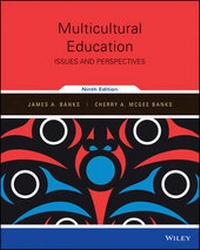
Multicultural Education
Issues and Perspectives
9th Edition
Published on 14. September 2017
Book
Paperback/Softback
360 pages
978-1-118-97628-9 (ISBN)
Description
There is a wide and growing ethnic, cultural, social-class, and linguistic gap between many of the nation's teachers and their students. Multicultural Education: Issues and Perspectives, 9th edition, is designed to help current and future educators acquire the concepts, paradigms, and explanations needed to become effective practitioners in culturally, racially, linguistically, and social-class diverse classrooms and schools. An important goal of the 9th edition is to help educators attain a sophisticated understanding of the concept of culture and to view race, class, gender, social class, and exceptionality as interacting concepts rather than as separate and distinct.
More details
Edition
9th ed.
Language
English
Place of publication
United States
Target group
College/higher education
Product notice
Paperback (trade)
Unsewn / adhesive bound
ISBN-13
978-1-118-97628-9 (9781118976289)
Copyright in bibliographic data and cover images is held by Nielsen Book Services Limited or by the publishers or by their respective licensors: all rights reserved.
Schweitzer Classification
Other editions
New editions
Book
07/2020
10th Edition
Wiley
€152.50
Shipment within 15-20 days
Previous edition
Book
07/2013
8th Edition
Wiley
€245.00
Article exhausted; check for reprint
Content
Part 1 Issues and Concepts 1
1 Multicultural Education: Characteristics and Goals 2
1.1. The Nature of Multicultural Education 2
1.2. The Historical Development of Multicultural Education 3
1.2.1 How Multicultural Education Developed 5
1.3. The Nature of Culture in the United States 5
1.4 The Social Construction of Categories 13
1.5 The Dimensions of Multicultural Education 15
1.6 The School as a Social System 19
Summary 20
Questions and Activities 20
References 21
2 Culture, Teaching, and Learning 24
2.1. Getting to Know Culture: An Overview of Culture's Meanings and Uses 25
2.2. Some Early Origins of the Construct of Culture 27
2.3. Culture as Transmission and Adaptation 27
2.4. Creating Culture: Cultural Transmission and Education 28
2.5. Culture Change: Cultural Psychology and Cultural Production 29
2.6. Critiques of Culture 31
2.7. Culture and Educational Achievement 32
2.8. Cultural Deficit Models 32
2.9. Cultural Difference Model and Mismatch Hypothesis 33
2.10. Educational Achievement: Voluntary versus Involuntary Immigrant Students 34
2.11. Putting Culture to Work: Culture and Learning in the 21st Century 35
2.12. Rethinking Learning and Cultural Processes in Education 36
2.13. Learning in Context: What Teachers Need to Know 36
2.14. Concluding Remarks 37
Questions and Activities 38
References 38
Part 2 Social Class and Religion 41
3 Social Class and Education 42
3.1. Education and the Production of Social and Economic Inequalities 44
3.2. Ability Grouping and Tracking 45
3.3. Official Knowledge and Its Distribution 47
3.4. Access and Outcomes in the Postsecondary Sector 48
3.5. Research on Class Privilege 50
3.6. Globalizing Our Imagination 52
Questions and Activities 54
References 54
4 Christian Nation or Pluralistic Culture: Religion in American Life 59
4.1. Europeans Plant Christianity in North America 60
4.2. Early Signs of Diversity 60
4.3. Common Themes 61
4.4. The Spread of Evangelical Protestantism 62
4.5. Religious Freedom and the Separation of Church and State 63
4.6. Diversity, Religious Freedom, and the Courts 66
4.7. Pluralism Becomes the Norm 69
4.8. New Faces of Pluralism 71
4.9. Summary and Educational Implications 75
4.10. Resources 75
Questions and Activities 76
References 77
Part 3 Gender 79
5 Gender Bias: From Colonial America to Today's Classroom 81
5.1. The Hidden Civil Rights Struggle 82
5.2. Report Card: The Cost of Sexism in Schools 84
5.3. Gender Bias in Today's Classroom: The Curriculum 86
5.4. Gender Bias in Today's Classrooms: Student-Teacher Interaction 89
5.5. Trends and Challenges 90
5.6. Strategies for Creating Gender?]Fair Classrooms 95
Questions and Activities 96
References 96
6 Classrooms for Diversity: Rethinking Curriculum and Pedagogy 98
6.1. Feminist Phase Theory 99
6.2. Male?]Defined Curriculum 99
6.3. Contribution Curriculum 101
6.4. Bifocal Curriculum 101
6.5. Women's Curriculum 103
6.6. Gender?]Balanced Curriculum 106
6.7. Changes in Traditional Ways of Teaching 107
Sample Lessons 110
Social Studies 112
Summary 113
Questions and Activities 113
References 113
7 Understanding and Supporting Gender Equity in Schools 115
7.1. Evolution of Thinking about Gender Equity 116
7.2. Intersections of Gender and Other Statuses 117
7.3. Teacher Perceptions and Expectations 121
7.4. Classroom Experiences of Females and Males from Diverse Populations 122
7.5. Supporting Gender Equity among Diverse Populations 125
7.6. Conclusions 128
Questions and Activities 129
References 129
8 Queer Lessons: Sexual and Gender Minorities in Multicultural Education 132
8.1. Sexuality and Gender Identity 133
8.2. LGBTQ Issues and the School Curriculum 134
8.3. Overlapping Histories of Multiculturalism and LGBTQ Movements 135
8.4. Histories of Gay?]Inclusive Multiculturalism and Other Curricular Inclusiveness 137
8.5. Challenges to Homophobia and Heterosexism 138
8.6. Challenging Assumptions about LGBTQ People 139
8.7. Why Homophobia? 142
8.8. Dilemmas of Queer Inclusion 144
8.9. Seven Things to Do to Improve Education for Students of All Sexual Orientations and Genders 145
Questions and Activities 146
References 146
Part 4 Race, Ethnicity, and Language 149
9 Approaches to Multicultural Curriculum Reform 151
9.1. The Mainstream?]Centric Curriculum 151
9.2. Public Sites and Popular History 153
9.3. Efforts to Establish a Multicultural Curriculum 154
9.4. Levels of Integration of Multicultural Content 155
9.5. Guidelines for Teaching Multicultural Content 166
Summary 167
Questions and Activities 168
References 168
10 Backstage Racism: Implications for Teaching 171
10.1. Context 172
10.2. Methodology 172
10.3. Journals by White Students 173
10.4. Journals by Students of Color 178
10.5. Comparing the Journals Written by Whites and Students of Color 181
10.6. Conclusion and Next Actionable Steps 182
Journal Exercise 184
How Do I Do This? 184
Questions and Activities 185
References 186
11 Language Diversity and Schooling 188
11.1. The Immigrant Population in the United States 189
11.2. Dramatic Increase in Linguistic Diversity in Schools 192
11.3. Additional Sources of Linguistic Diversity: Dialect Variation and Indigenous Languages 192
11.4. Historical and Legal Overview of Language Policy in the United States 193
11.5. Implementation of Federal Policy 193
11.6. Language Policy in Recent History 195
11.7. Programmatic Responses to Linguistic Diversity 196
11.8. Instructional Programs 197
11.9. The Bilingual Debate and the Research Context 197
11.10. Program Types That Contribute to Successful Educational Practice 198
11.11. The Lived Reality of Today's Linguistically Diverse Students 199
11.12. Views on Language Learning and Teaching 199
11.13. Language Learning and Teaching 201
11.14. Conclusion 205
Questions and Activities 205
Resources 206
Professional Associations 206
Websites 206
References 206
Part 5 Exceptionality 211
12 Educational Equality for Students with Disabilities 213
12.1. Identification of Students with Disabilities 214
12.2. Is Disability a Social Construct? 215
12.3. How Many Students with Disabilities Are There? 216
12.4. How Are Students with Disabilities Classified? 217
12.5. How Is Eligibility for Special Education Determined? 218
12.6. How Does Classification Affect Instruction? 218
12.7. History of Educational Equality for Students with Disabilities 218
12.8. The Individuals with Disabilities Act: A Legislative Mandate for Educational Equality for Students with Disabilities 220
12.9. Educational Equality for Students with Disabilities: Progress Made but Challenges Remain 226
Summary 231
Questions and Activities 231
References 231
13 Culturally Responsive Special Education in Inclusive Schools 235
13.1. Special Education as Exclusion 236
13.2. Special Education and Segregation 236
13.3. Strategies to Prevent Misdiagnosis and Disproportionality 238
13.4. The Monoculture of Mainstream Education 239
13.5. Parent Participation and Working with Families 240
13.6. Causes of Limited Parental Involvement 241
13.7. A Mismatch: Special Education and Families 242
13.8. Strategies to Increase Parental Participation 243
13.9. Culturally Competent Teachers and Inclusive Pedagogies 245
13.10. Preintervention Culturally Responsive Teaching 245
13.11. Culturally Responsive Interventions 246
13.12. Culturally Situated Schooling and Inclusive Pedagogies 248
13.13. Quality Inclusive Schools 248
13.14. Delivery of Special Education in the Context of General Education 249
13.15. Inclusive Schools and Teacher Education 250
13.16. Managing Inclusive Classrooms 250
13.17. Diversity and Caring Communities:
Outcomes for the Social Good 251
Questions and Activities 252
References 252
Part 6 School Reform and Classroom Assessment 257
14 School Reform and Student Learning: A Multicultural Perspective 258
14.1. School Reform with a Multicultural Perspective 260
14.2. Conditions for Systemic School Reform with a Multicultural Perspective 261
14.3. School Reform should be Antiracist and Antibias 262
14.4. School Reform should Reflect an Understanding and Acceptance of All Students as Having Talents and Strengths that can Enhance their Education 265
14.5. School Reform should be Considered within the Parameters of Critical Pedagogy 267
14.6. A Study of Identity, Struggle, and Resilience at SCotA 268
14.7. The People Most Intimately Connected with Teaching and Learning (Teachers, Families, and Students) Need to Be Meaningfully Involved in School Reform 269
14.8. School Reform Needs to Be Based on High Expectations and Rigorous Standards
for All Learners 269
14.10. Conclusion 271
Questions and Activities 271
References 272
15 Communities, Families, and Educators Working Together for School Improvement 275
15.1. Reasons That Parent and Family Involvement in Schools Is Important 277
15.2. Historical Overview 279
15.3. The Changing Face of the Family 279
15.3. Parents with Special Needs 282
15.4. Single Parents 283
15.5. Low?]Income Parents 283
15.6. Teacher Concerns with Parent and Family Involvement 284
15.7. Steps to Increase Parent and Family Involvement 285
15.8. Establish Two?]Way Communication between the School and the Home 285
15.9. Enlist Support from Other Staff Members and Students 286
15.10. Enlist Support from the Community 288
15.11. Develop Learning Resources for Parents to Use at Home 289
15.12. Broaden the Conception of Parent and Community Involvement 289
Summary 292
Questions and Activities 292
Internet Resources For Information On Parent Involvement 292
References 293
16 Classroom Assessment and Diversity 295
16.1. Bias and Sensitivity Issues in Assessment 296
16.2. Lessons Learned from a Bias and Sensitivity Review Panel 298
16.3. Investigating Potential Bias through Statistical Analyses 300
16.4. The Effects of Engagement on Assessment Performance 301
16.5. The Social Context of Assessment 303
16.6. Teacher Assessment Practices 304
Summary 306
Questions and Activities 306
References 306
Appendix: Multicultural Resources 309
Glossary 315
Index 321
1 Multicultural Education: Characteristics and Goals 2
1.1. The Nature of Multicultural Education 2
1.2. The Historical Development of Multicultural Education 3
1.2.1 How Multicultural Education Developed 5
1.3. The Nature of Culture in the United States 5
1.4 The Social Construction of Categories 13
1.5 The Dimensions of Multicultural Education 15
1.6 The School as a Social System 19
Summary 20
Questions and Activities 20
References 21
2 Culture, Teaching, and Learning 24
2.1. Getting to Know Culture: An Overview of Culture's Meanings and Uses 25
2.2. Some Early Origins of the Construct of Culture 27
2.3. Culture as Transmission and Adaptation 27
2.4. Creating Culture: Cultural Transmission and Education 28
2.5. Culture Change: Cultural Psychology and Cultural Production 29
2.6. Critiques of Culture 31
2.7. Culture and Educational Achievement 32
2.8. Cultural Deficit Models 32
2.9. Cultural Difference Model and Mismatch Hypothesis 33
2.10. Educational Achievement: Voluntary versus Involuntary Immigrant Students 34
2.11. Putting Culture to Work: Culture and Learning in the 21st Century 35
2.12. Rethinking Learning and Cultural Processes in Education 36
2.13. Learning in Context: What Teachers Need to Know 36
2.14. Concluding Remarks 37
Questions and Activities 38
References 38
Part 2 Social Class and Religion 41
3 Social Class and Education 42
3.1. Education and the Production of Social and Economic Inequalities 44
3.2. Ability Grouping and Tracking 45
3.3. Official Knowledge and Its Distribution 47
3.4. Access and Outcomes in the Postsecondary Sector 48
3.5. Research on Class Privilege 50
3.6. Globalizing Our Imagination 52
Questions and Activities 54
References 54
4 Christian Nation or Pluralistic Culture: Religion in American Life 59
4.1. Europeans Plant Christianity in North America 60
4.2. Early Signs of Diversity 60
4.3. Common Themes 61
4.4. The Spread of Evangelical Protestantism 62
4.5. Religious Freedom and the Separation of Church and State 63
4.6. Diversity, Religious Freedom, and the Courts 66
4.7. Pluralism Becomes the Norm 69
4.8. New Faces of Pluralism 71
4.9. Summary and Educational Implications 75
4.10. Resources 75
Questions and Activities 76
References 77
Part 3 Gender 79
5 Gender Bias: From Colonial America to Today's Classroom 81
5.1. The Hidden Civil Rights Struggle 82
5.2. Report Card: The Cost of Sexism in Schools 84
5.3. Gender Bias in Today's Classroom: The Curriculum 86
5.4. Gender Bias in Today's Classrooms: Student-Teacher Interaction 89
5.5. Trends and Challenges 90
5.6. Strategies for Creating Gender?]Fair Classrooms 95
Questions and Activities 96
References 96
6 Classrooms for Diversity: Rethinking Curriculum and Pedagogy 98
6.1. Feminist Phase Theory 99
6.2. Male?]Defined Curriculum 99
6.3. Contribution Curriculum 101
6.4. Bifocal Curriculum 101
6.5. Women's Curriculum 103
6.6. Gender?]Balanced Curriculum 106
6.7. Changes in Traditional Ways of Teaching 107
Sample Lessons 110
Social Studies 112
Summary 113
Questions and Activities 113
References 113
7 Understanding and Supporting Gender Equity in Schools 115
7.1. Evolution of Thinking about Gender Equity 116
7.2. Intersections of Gender and Other Statuses 117
7.3. Teacher Perceptions and Expectations 121
7.4. Classroom Experiences of Females and Males from Diverse Populations 122
7.5. Supporting Gender Equity among Diverse Populations 125
7.6. Conclusions 128
Questions and Activities 129
References 129
8 Queer Lessons: Sexual and Gender Minorities in Multicultural Education 132
8.1. Sexuality and Gender Identity 133
8.2. LGBTQ Issues and the School Curriculum 134
8.3. Overlapping Histories of Multiculturalism and LGBTQ Movements 135
8.4. Histories of Gay?]Inclusive Multiculturalism and Other Curricular Inclusiveness 137
8.5. Challenges to Homophobia and Heterosexism 138
8.6. Challenging Assumptions about LGBTQ People 139
8.7. Why Homophobia? 142
8.8. Dilemmas of Queer Inclusion 144
8.9. Seven Things to Do to Improve Education for Students of All Sexual Orientations and Genders 145
Questions and Activities 146
References 146
Part 4 Race, Ethnicity, and Language 149
9 Approaches to Multicultural Curriculum Reform 151
9.1. The Mainstream?]Centric Curriculum 151
9.2. Public Sites and Popular History 153
9.3. Efforts to Establish a Multicultural Curriculum 154
9.4. Levels of Integration of Multicultural Content 155
9.5. Guidelines for Teaching Multicultural Content 166
Summary 167
Questions and Activities 168
References 168
10 Backstage Racism: Implications for Teaching 171
10.1. Context 172
10.2. Methodology 172
10.3. Journals by White Students 173
10.4. Journals by Students of Color 178
10.5. Comparing the Journals Written by Whites and Students of Color 181
10.6. Conclusion and Next Actionable Steps 182
Journal Exercise 184
How Do I Do This? 184
Questions and Activities 185
References 186
11 Language Diversity and Schooling 188
11.1. The Immigrant Population in the United States 189
11.2. Dramatic Increase in Linguistic Diversity in Schools 192
11.3. Additional Sources of Linguistic Diversity: Dialect Variation and Indigenous Languages 192
11.4. Historical and Legal Overview of Language Policy in the United States 193
11.5. Implementation of Federal Policy 193
11.6. Language Policy in Recent History 195
11.7. Programmatic Responses to Linguistic Diversity 196
11.8. Instructional Programs 197
11.9. The Bilingual Debate and the Research Context 197
11.10. Program Types That Contribute to Successful Educational Practice 198
11.11. The Lived Reality of Today's Linguistically Diverse Students 199
11.12. Views on Language Learning and Teaching 199
11.13. Language Learning and Teaching 201
11.14. Conclusion 205
Questions and Activities 205
Resources 206
Professional Associations 206
Websites 206
References 206
Part 5 Exceptionality 211
12 Educational Equality for Students with Disabilities 213
12.1. Identification of Students with Disabilities 214
12.2. Is Disability a Social Construct? 215
12.3. How Many Students with Disabilities Are There? 216
12.4. How Are Students with Disabilities Classified? 217
12.5. How Is Eligibility for Special Education Determined? 218
12.6. How Does Classification Affect Instruction? 218
12.7. History of Educational Equality for Students with Disabilities 218
12.8. The Individuals with Disabilities Act: A Legislative Mandate for Educational Equality for Students with Disabilities 220
12.9. Educational Equality for Students with Disabilities: Progress Made but Challenges Remain 226
Summary 231
Questions and Activities 231
References 231
13 Culturally Responsive Special Education in Inclusive Schools 235
13.1. Special Education as Exclusion 236
13.2. Special Education and Segregation 236
13.3. Strategies to Prevent Misdiagnosis and Disproportionality 238
13.4. The Monoculture of Mainstream Education 239
13.5. Parent Participation and Working with Families 240
13.6. Causes of Limited Parental Involvement 241
13.7. A Mismatch: Special Education and Families 242
13.8. Strategies to Increase Parental Participation 243
13.9. Culturally Competent Teachers and Inclusive Pedagogies 245
13.10. Preintervention Culturally Responsive Teaching 245
13.11. Culturally Responsive Interventions 246
13.12. Culturally Situated Schooling and Inclusive Pedagogies 248
13.13. Quality Inclusive Schools 248
13.14. Delivery of Special Education in the Context of General Education 249
13.15. Inclusive Schools and Teacher Education 250
13.16. Managing Inclusive Classrooms 250
13.17. Diversity and Caring Communities:
Outcomes for the Social Good 251
Questions and Activities 252
References 252
Part 6 School Reform and Classroom Assessment 257
14 School Reform and Student Learning: A Multicultural Perspective 258
14.1. School Reform with a Multicultural Perspective 260
14.2. Conditions for Systemic School Reform with a Multicultural Perspective 261
14.3. School Reform should be Antiracist and Antibias 262
14.4. School Reform should Reflect an Understanding and Acceptance of All Students as Having Talents and Strengths that can Enhance their Education 265
14.5. School Reform should be Considered within the Parameters of Critical Pedagogy 267
14.6. A Study of Identity, Struggle, and Resilience at SCotA 268
14.7. The People Most Intimately Connected with Teaching and Learning (Teachers, Families, and Students) Need to Be Meaningfully Involved in School Reform 269
14.8. School Reform Needs to Be Based on High Expectations and Rigorous Standards
for All Learners 269
14.10. Conclusion 271
Questions and Activities 271
References 272
15 Communities, Families, and Educators Working Together for School Improvement 275
15.1. Reasons That Parent and Family Involvement in Schools Is Important 277
15.2. Historical Overview 279
15.3. The Changing Face of the Family 279
15.3. Parents with Special Needs 282
15.4. Single Parents 283
15.5. Low?]Income Parents 283
15.6. Teacher Concerns with Parent and Family Involvement 284
15.7. Steps to Increase Parent and Family Involvement 285
15.8. Establish Two?]Way Communication between the School and the Home 285
15.9. Enlist Support from Other Staff Members and Students 286
15.10. Enlist Support from the Community 288
15.11. Develop Learning Resources for Parents to Use at Home 289
15.12. Broaden the Conception of Parent and Community Involvement 289
Summary 292
Questions and Activities 292
Internet Resources For Information On Parent Involvement 292
References 293
16 Classroom Assessment and Diversity 295
16.1. Bias and Sensitivity Issues in Assessment 296
16.2. Lessons Learned from a Bias and Sensitivity Review Panel 298
16.3. Investigating Potential Bias through Statistical Analyses 300
16.4. The Effects of Engagement on Assessment Performance 301
16.5. The Social Context of Assessment 303
16.6. Teacher Assessment Practices 304
Summary 306
Questions and Activities 306
References 306
Appendix: Multicultural Resources 309
Glossary 315
Index 321