

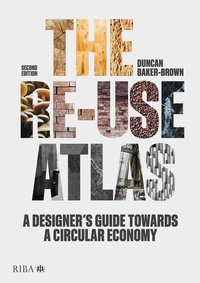
The Re-use Atlas
A Designer's Guide Towards a Circular Economy
2nd Edition
Published on 1. September 2024
Book
Hardback
240 pages
978-1-914124-12-9 (ISBN)
Description
Do you know how to design for a circular economy?
A truly sustainable, circular economy is both a robust and viable option for architecture. Through inspirational case studies, interviews and essays, this new edition of the 2017 book is an accessible and practical guide to how architects can move from a linear economy towards a circular economy.
This atlas to sustainable, closed-loop systems takes the reader on a journey through four distinct steps (Recycle, Reuse, Reduce, Circular Economy) that show how they can dramatically reduce the negative impact humans have on the planet. It gives architects the skills and knowledge to navigate through the emerging fields of resource management towards a true Circular Economy. Each step is supplemented with an in-depth interview with an expert who is successfully tacking one or more of the challenges facing all designers today.
If we change our behaviour, we enable humanity to work with nature rather than against it. Be part of the change.
A truly sustainable, circular economy is both a robust and viable option for architecture. Through inspirational case studies, interviews and essays, this new edition of the 2017 book is an accessible and practical guide to how architects can move from a linear economy towards a circular economy.
This atlas to sustainable, closed-loop systems takes the reader on a journey through four distinct steps (Recycle, Reuse, Reduce, Circular Economy) that show how they can dramatically reduce the negative impact humans have on the planet. It gives architects the skills and knowledge to navigate through the emerging fields of resource management towards a true Circular Economy. Each step is supplemented with an in-depth interview with an expert who is successfully tacking one or more of the challenges facing all designers today.
If we change our behaviour, we enable humanity to work with nature rather than against it. Be part of the change.
More details
Edition
2nd edition
Language
English
Place of publication
London
United Kingdom
Target group
Professional and scholarly
Professional Practice & Development
Dimensions
Height: 254 mm
Width: 212 mm
Thickness: 21 mm
Weight
1000 gr
ISBN-13
978-1-914124-12-9 (9781914124129)
Copyright in bibliographic data and cover images is held by Nielsen Book Services Limited or by the publishers or by their respective licensors: all rights reserved.
Schweitzer Classification
Other editions
Additional editions
E-Book
10/2024
2nd Edition
Taylor & Francis
€52.49
Available for download
E-Book
10/2024
2nd Edition
Taylor & Francis
€52.49
Available for download
Previous edition
Book
04/2017
1st Edition
RIBA Publishing
€65.81
Article exhausted; check for reprint
Person
Duncan Baker-Brown is a practicing architect, academic and environmental activist. He has practiced, researched, and taught around issues of sustainable development for more than 25 years and founded BBM Sustainable Design in 1994 with his partner Ian McKay. Since then he has worked on hundreds of projects considering many aspects of sustainable design and closed-loop systems.
Content
Foreword Preface
PART 1 Setting the Waste Scene Chapter 1 Resource matters Chapter 2 What a waste! Chapter 3 The political narrative
PART 2 - Circular Inspirations Step 1 - Recycing Waste Case Study 1 - Gumtech Case Study 2 - ReWorked/SMILE Case Study 3 - Net-Works Case Study 4 - Overtreders-W Case Study 5 - Local Works Studio Case Study 6: a:gain
Step 2: Reusing Waste Case Study 1 - Rural Studio Case Study 2 - SuperUse Studio Case Study 3 - Hub 67 by Lyn Atelier Case Study 4 - Rubber House & RecyclingHaus Case Study 5 - Super Local Case Study 6 - Entopia CISL HQ Case Study 7 - Cleveland Steel Case Study 8 - Cycle Station Case Study 9 - Cork House & Stone House Case Study 10 - Resource Rows
Step 3: Reducing Case Study 1 - Rotor Case Study 2 - Lacaton & Vassal Case Study 3 - Rented House Life Case Study 4 - RAFT Case Study 5 - Samual Becket Theatre Case Study 6 - No.1 Triton Square Case Study 7 - Jo Tailieu Paddenbroek Education Centre Case Study 8 - de Ceuval
Step 4: The Circular Economy Case Study 1 - Prof Dirk Hebel Case Study 2 - Francis Kere Case Study 3 - Enterprise Centre Case Study 4 - Orsman Road Case Study 5 - Cepezed Case Study 6 - Housing by BHCC Case Study 7 - Overtreders-W People's Pavilion Case Study 8 - GS8 Housing Orford Mews Case Study 9 - Biohm Case Study 10 - Work of Hans Hammink
PART 4 Looking Forward Chapter 4 Product Moments, Material Eternities Chapter 5 The Wiki-Waste Workshop Chapter 6 It's all change now...isn't it?
PART 1 Setting the Waste Scene Chapter 1 Resource matters Chapter 2 What a waste! Chapter 3 The political narrative
PART 2 - Circular Inspirations Step 1 - Recycing Waste Case Study 1 - Gumtech Case Study 2 - ReWorked/SMILE Case Study 3 - Net-Works Case Study 4 - Overtreders-W Case Study 5 - Local Works Studio Case Study 6: a:gain
Step 2: Reusing Waste Case Study 1 - Rural Studio Case Study 2 - SuperUse Studio Case Study 3 - Hub 67 by Lyn Atelier Case Study 4 - Rubber House & RecyclingHaus Case Study 5 - Super Local Case Study 6 - Entopia CISL HQ Case Study 7 - Cleveland Steel Case Study 8 - Cycle Station Case Study 9 - Cork House & Stone House Case Study 10 - Resource Rows
Step 3: Reducing Case Study 1 - Rotor Case Study 2 - Lacaton & Vassal Case Study 3 - Rented House Life Case Study 4 - RAFT Case Study 5 - Samual Becket Theatre Case Study 6 - No.1 Triton Square Case Study 7 - Jo Tailieu Paddenbroek Education Centre Case Study 8 - de Ceuval
Step 4: The Circular Economy Case Study 1 - Prof Dirk Hebel Case Study 2 - Francis Kere Case Study 3 - Enterprise Centre Case Study 4 - Orsman Road Case Study 5 - Cepezed Case Study 6 - Housing by BHCC Case Study 7 - Overtreders-W People's Pavilion Case Study 8 - GS8 Housing Orford Mews Case Study 9 - Biohm Case Study 10 - Work of Hans Hammink
PART 4 Looking Forward Chapter 4 Product Moments, Material Eternities Chapter 5 The Wiki-Waste Workshop Chapter 6 It's all change now...isn't it?