


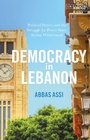
Democracy in Lebanon
Political Parties and the Struggle for Power Since Syrian Withdrawal
Published on 3. October 2019
Book
Paperback/Softback
264 pages
978-1-78831-978-2 (ISBN)
Description
The 'Cedar Revolution' in Lebanon, which was sparked by the assassination of former Prime Minister Rafiq Hariri on 14 February 2005, was seen by many as an opportunity for Lebanon's fragile political system to move towards a more stable form of democracy. But contrary to these expectations, in the years since Syrian military withdrawal in April 2005, Lebanon has been plagued with sectarian and political unrest and conflict. Abbas Assi here explores the obstacles that impeded the democratic transition process and how subsequent events since 2005 (such as the passing of UNSCR 1559, the 2006 Hizbullah-Israel war and the Syrian conflict) have bolstered this trend. By looking at these, Assi examines how the intersection of the influence of external factors and powers with domestic conflicts has shaped the behaviour of political parties and has had implications on their ability to reach compromises and initiate democratic reforms. By analysing the impact of the intersection of domestic and external factors on democracy, this book is a vital reference for those studying politics of Lebanon and the Middle East more broadly.
More details
Language
English
Place of publication
United Kingdom
Publishing group
Bloomsbury Publishing PLC
Target group
College/higher education
Dimensions
Height: 214 mm
Width: 138 mm
Thickness: 18 mm
Weight
340 gr
ISBN-13
978-1-78831-978-2 (9781788319782)
Copyright in bibliographic data and cover images is held by Nielsen Book Services Limited or by the publishers or by their respective licensors: all rights reserved.
Schweitzer Classification
Other editions
Additional editions
E-Book
08/2016
1st Edition
I.B. Tauris
€28.49
Available for download
Person
Abbas Assi works as a teaching assistant at the University of Leeds where he completed his PhD in International Relations.
Content
Introduction
Chapter 1: Consociational Theory
Chapter 2: The Consociational Model of Lebanon
Chapter 3: The Democratisation Process in Pre- and Post-2005 Periods
Chapter 4: Domestic Variables and Political Parties
Chapter 5: Exogenous Variables and Political Parties
Chapter 6: The Syrian Conflict and Lebanon's 2013 Parliamentary Election
Conclusion
Chapter 1: Consociational Theory
Chapter 2: The Consociational Model of Lebanon
Chapter 3: The Democratisation Process in Pre- and Post-2005 Periods
Chapter 4: Domestic Variables and Political Parties
Chapter 5: Exogenous Variables and Political Parties
Chapter 6: The Syrian Conflict and Lebanon's 2013 Parliamentary Election
Conclusion