

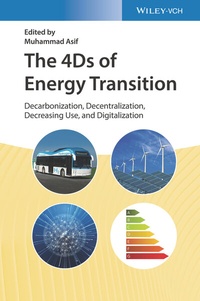
The 4Ds of Energy Transition
Decarbonization, Decentralization, Decreasing Use and Digitalization
1st Edition
Published on 10. August 2022
Book
Hardback
432 pages
978-3-527-34882-4 (ISBN)
Description
The book provides a comprehensive account of the characteristics of energy transition covering the latest advancements, trends and practices around it. Moreover,it discusses the 4Ds in Energy transition; Decarbonization, Decreasing use, Decentralization and Digitalization also the important technical, economic, social and policy perspectives. It appropriately incorporates up-to-date data, case studies and comparative assessments. It focuses on and engineering dimensions of the energy transition covering topics like: energy conservation and management; renewable energy and sustainable energy future; hydrogen and fuel cells; electric mobility and sustainable transportation; distributed and off-grid generation; energy storage and batteries; smart energy solutions; smart meters, smart grids and smart cities; fossil fuel; nuclear power.
More details
Other editions
Additional editions
Muhammad Asif
The 4Ds of Energy Transition
Decarbonization, Decentralization, Decreasing Use and Digitalization
E-Book
07/2022
1st Edition
Wiley-VCH
€108.99
Available for download
Muhammad Asif
The 4Ds of Energy Transition
Decarbonization, Decentralization, Decreasing Use and Digitalization
E-Book
07/2022
1st Edition
Wiley-VCH
€108.99
Available for download
Person
Dr. Muhammad Asif is a Senior Lecturer at the Glasgow Caledonian University (GCU). He completed his PhD in Applied Energy Engineering from Edinburgh Napier University in 2002. He is a Certified Charted Engineer (UK), Certified Energy Manager (AEE, USA), Member of the Energy Institute (UK) and Fellow of the Higher Education Academy (UK). He is the chair of several international energy forums including the accreditation panel of the Energy Institute. His areas of research interests include renewable energy, energy policy, sustainable development and life cycle assessment. He has authored over 100 research publications. He has authored one book and edited two books ?Energy Crisis in Pakistan: Origins, Challenges and Pakistan?, published by Oxford University Press, `Dynamics of Energy, Environment and Economy: A Sustainability Perspective? published by Springer and `Energy- and Environmental Security in Developing Countries? by CRC Press respectively. He is cited in several European policy documents and directives. He has provided consultancy services to several prominent international organizations
Content
PART I
INTRODUCTION
PART II
DECARBONISATION
1)Renewable Energy
2)Decarbonisation of the Fossil Fuel Sector
3)Nuclear Power: Status and Trends
4)Electric Vehicles
5)Hydrogen and Fuel Cells
6)Batteries and Energy Storage
PART III
DECREASING USE
1)Fundamentals of Energy Conservation and Management
2)Energy Efficiency: Cross Sectoral Scope and Application
3)Techno-economics of Energy Efficiency
PART IV
DECENTRALIZATION
1)Fundamentals of Distributed Generation
2)Distributed Generation: Power Infrastructure and Grid Parity
3)Distributed Generation: Application and Economics
PART V
DIGITALIZATION
1)Digitalization of Energy Value Chain
2)Smart Meters to Smart Cities
3)Digitalisation: Industry and Policy Status and Trends
INTRODUCTION
PART II
DECARBONISATION
1)Renewable Energy
2)Decarbonisation of the Fossil Fuel Sector
3)Nuclear Power: Status and Trends
4)Electric Vehicles
5)Hydrogen and Fuel Cells
6)Batteries and Energy Storage
PART III
DECREASING USE
1)Fundamentals of Energy Conservation and Management
2)Energy Efficiency: Cross Sectoral Scope and Application
3)Techno-economics of Energy Efficiency
PART IV
DECENTRALIZATION
1)Fundamentals of Distributed Generation
2)Distributed Generation: Power Infrastructure and Grid Parity
3)Distributed Generation: Application and Economics
PART V
DIGITALIZATION
1)Digitalization of Energy Value Chain
2)Smart Meters to Smart Cities
3)Digitalisation: Industry and Policy Status and Trends