

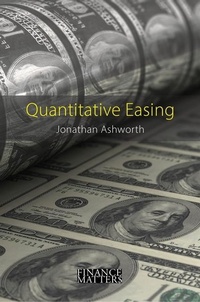
Quantitative Easing
The Great Central Bank Experiment
Published on 16. July 2020
Book
Paperback/Softback
192 pages
978-1-78821-222-9 (ISBN)
Description
Before the Great Financial Crisis of 2008-09, significant reductions in official interest rates typically proved sufficient to generate sustainable economic recoveries from downturns. However, with economies and financial markets in freefall during the crisis despite a cut in interest rates to effectively zero, policymakers in some advanced economies launched a major new tool called quantitative easing (QE). This involved central banks purchasing huge amounts of financial assets.
This book offers a thorough and perspicacious analysis of QE, which has become a recovery method of last resort. Whilst it was successful in averting another Great Depression and stimulating growth, it remains controversial and continues to promote widespread debate in economics, financial, and political-economy circles. This book is essential reading for anyone wishing to understand central banking in the national economy.
This book offers a thorough and perspicacious analysis of QE, which has become a recovery method of last resort. Whilst it was successful in averting another Great Depression and stimulating growth, it remains controversial and continues to promote widespread debate in economics, financial, and political-economy circles. This book is essential reading for anyone wishing to understand central banking in the national economy.
Reviews / Votes
A thorough and comprehensive analysis of the history and effects of quantitative easing. -- C. A. E. Goodhart, from the Foreword A valuable reference ... of use to anyone wanting an overview of how monetary policy has evolved in recent decades ...should find many readers. * Central Banking * A comprehensive and detailed analysis of what is, in terms of central banking history, still a relatively new tool in the policymaker's box. Everything you have learned and experienced over the last decade (and forgotten) on the subject of QE is covered, in detail, in this book ... I would encourage you to pick it up to refresh yourself on the details of how and why we got to where we are today ... the author manages to provide the reader with a complete and interesting overview of one of the most important topics in our time. * Society of Professional Economists *More details
Series
Language
English
Place of publication
United Kingdom
Publishing group
Edinburgh University Press
Target group
College/higher education
Product notice
Paperback (trade)
Dimensions
Height: 234 mm
Width: 156 mm
Thickness: 10 mm
Weight
318 gr
ISBN-13
978-1-78821-222-9 (9781788212229)
Copyright in bibliographic data and cover images is held by Nielsen Book Services Limited or by the publishers or by their respective licensors: all rights reserved.
Schweitzer Classification
Other editions
Additional editions
E-Book
07/2020
1st Edition
Agenda Publishing
from
€62.99
Available for download
E-Book
07/2020
1st Edition
Agenda Publishing
from
€62.99
Available for download
Person
Jonathan Ashworth is an independent economist. He has worked as an economist at Morgan Stanley and Barclays Wealth and his work has been widely cited in the media including The Economist, The Financial Times and The Wall Street Journal. He has also worked as an economist in the productivity and structural reform team at HM Treasury, where he did work on the famous "Five Tests" for whether Britain should join the euro.
Content
Foreword by C. A. E. Goodhart
1. Monetary policymaking since the end of Bretton Woods
2. Key monetary policy trends and events before the Great Financial Crisis
3. The Great Financial Crisis and quantitative easing
4. How quantitative easing works
5. Measuring the effectiveness and impact of quantitative easing
6. International spillovers of quantitative easing
7. Criticisms and negative externalities of quantitative easing
8. Exiting quantitative easing and policies for the next slowdown
1. Monetary policymaking since the end of Bretton Woods
2. Key monetary policy trends and events before the Great Financial Crisis
3. The Great Financial Crisis and quantitative easing
4. How quantitative easing works
5. Measuring the effectiveness and impact of quantitative easing
6. International spillovers of quantitative easing
7. Criticisms and negative externalities of quantitative easing
8. Exiting quantitative easing and policies for the next slowdown