

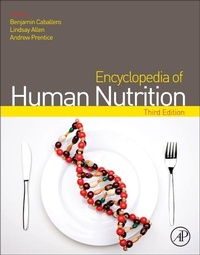
Encyclopedia of Human Nutrition
3rd Edition
Published on 18. January 2013
Book
Paperback/Softback
2190 pages
978-0-12-375083-9 (ISBN)
Description
The role of nutrition in improving quality of life and combating disease is undeniable - and researchers from different disciplines are bringing their perspectives to bear on this fundamental topic.
The 4-volume Encyclopedia of Human Nutrition, Third Edition, is a thorough revision of the previous award-winning version and reflects the scientific advances in the field of human nutrition. It presents the latest understanding on a wide range of nutrition-related topics including food safety, weight management, vitamins, bioengineering of foods, plant based diet and raw foods among others. New articles on organic food, biofortification, nutritional labeling and the effect of religious customs on diet, among many others, reflect the dedication to currency in this revision. It not only contains the most current and thorough information available on the topic, but also contains broader cross-referencing on emerging opportunities for potential treatment and prevention of diseases. An ideal starting point for scientific research, Encyclopedia of Human Nutrition, Third Edition, continues to provide authoritative information in an accessible format, making this complex discipline available to readers at both the professional and non-professional level.
The 4-volume Encyclopedia of Human Nutrition, Third Edition, is a thorough revision of the previous award-winning version and reflects the scientific advances in the field of human nutrition. It presents the latest understanding on a wide range of nutrition-related topics including food safety, weight management, vitamins, bioengineering of foods, plant based diet and raw foods among others. New articles on organic food, biofortification, nutritional labeling and the effect of religious customs on diet, among many others, reflect the dedication to currency in this revision. It not only contains the most current and thorough information available on the topic, but also contains broader cross-referencing on emerging opportunities for potential treatment and prevention of diseases. An ideal starting point for scientific research, Encyclopedia of Human Nutrition, Third Edition, continues to provide authoritative information in an accessible format, making this complex discipline available to readers at both the professional and non-professional level.
Reviews / Votes
"This new edition has been completely revised and expanded to accommodate the enormous growth of the scientific discipline of human nutrition, including the effects of such pivotal events as mapping of the human genome and the discovery that nutrients influence the mutation of viruses. Though comprehensive, the articles are not overly technical, making the work relevant to both general readers and health care practitioners." Summing Up: Essential. --CHOICE Reviews Online, June 2014More details
Edition
3rd edition
Language
English
Place of publication
San Diego
United States
Publishing group
Elsevier Science Publishing Co Inc
Target group
Professional and scholarly
Nutritionists, clinical nutritionists, dietitians and allied health workers will all find this MRW useful. Libraries including university, medical school, public; food industry corporations; and government sectors dealing with nutritional policies will want this MRW in their library.
Dimensions
Height: 302 mm
Width: 249 mm
Thickness: 150 mm
Weight
7198 gr
ISBN-13
978-0-12-375083-9 (9780123750839)
Copyright in bibliographic data and cover images is held by Nielsen Book Services Limited or by the publishers or by their respective licensors: all rights reserved.
Schweitzer Classification
Other editions
New editions
Book
03/2023
4th Edition
Academic Press
€3,002.11
Shipment within 15-20 days
Additional editions
Press Academic
Encyclopedia of Human Nutrition
E-Book
12/2012
3rd Edition
Academic Press
€3,010.00
Available for download
Persons
Andrew Prentice is Professor of International Nutrition at the London School of Hygiene & Tropical Medicine. He leads the Medical Research Council's International Nutrition Group which is based in London and The Gambia. His research interests have encompassed human energy metabolism and obesity as well as maternal and child nutrition in developing countries. Dr. Caballero is Professor of International Health at the Bloomberg School of Public Health, and Professor of Pediatrics at the School of Medicine, Johns Hopkins University. He has over 20 years of experience as a scholar, researcher and leader in the area of child health and nutrition. He obtained his MD from the University of Buenos Aires and his PhD (in neuroendocrine regulation) from MIT. He started his faculty career at Harvard Medical School, and moved to Johns Hopkins in 1990 to found the Center for Human Nutrition. Dr. Caballero is a recognized expert on the nutritional needs of children and adults, and on nutrient requirements in undernourished populations. For the past 10 years, he has focused on the problem of childhood obesity in the US and in developing countries, and explored the impact of dietary transition and globalization on health indicators. He is an active participant in key scientific committees advising the US government on issues of diet and health, including the Dietary Reference Intakes (DRI) Committee, the Expert Panel on Macronutrient Requirements, and the Food and Nutrition Board of the Institute of Medicine, National Academy of Sciences. He was a member of the Dietary Guidelines for Americans Advisory Committee, and is currently a member of the Scientific Advisory Board of the Food and Drug Administration (FDA) and of the International Life Sciences Institute (ILSI). Dr. Caballero is an active leader in the area of global health, specifically on diet, lifestyle and disease risk. He is Chairman of the Board of the Pan American Health and Education Foundation, in Washington, D.C., and member of the Board of Directors of the International Nutrition Foundation, in Boston, MA. He is a member of the Steering Committee of the Centers of Excellence Network of the Global Health Initiative, National Institutes of Health. Recent awards include the Ancel Keys Prize for achievements in international public health and the Thompson-Beaudette Lectureship from Rutgers University. In 2011 he was named to the Spanish Academy of Nutritional Sciences. Dr. Caballero is the author of over 150 scientific publications. He is the Editor-in-Chief of the Encyclopedia of Food Sciences and Nutrition, a 10-volume work on food production, consumption and biological effects. He is also Editor-in-Chief of the Encyclopedia of Human Nutrition, which received the Book of the Year Award from the British Medical Association. His Guide to Dietary Supplements summarizes the current scientific basis for the use of mineral and vitamin supplements. His book The Nutrition Transition: Diet and Disease in the Developing World explored the impact of demographic and economic development on diet- and lifestyle-related diseases in developing countries. His book Obesity in China summarizes research conducted in rural and urban China to track the impact of socioeconomic development on health outcomes. He is also co-editor of the most widely used textbook in human nutrition, Modern Nutrition in Health and Disease.
Content
Sample Table of Contents
For Complete Table of Contents, visit the microsite at www.elsevierdirect.com/HUN3
1. Adipose Tissue
2. Adolescents | Nutritional Problems
3. Adolescent requirements for growth and optimal health
4. Aging
5. Alcohol | Absorption, Metabolism and Physiological Effects
7. Alcohol | Effects of Consumption on Diet and Nutritional Status
8. Aluminum
9. Amino Acids | Chemistry and Classification
10. Amino Acids | Metabolism
11. Amino Acids | Specific Functions
13. Antioxidants | Intervention Studies
16. Appetite | Physiological and Neurobiological Aspects
17. Appetite | Psychobiological and Behavioral Aspects
18. Arthritis
19. Ascorbic Acid | Physiology, Dietary Sources and Requirements
20. Ascorbic Acid | Deficiency States
21. Asthma
22. Behavior
23. Beverages
24. Bioavailability
25. Biofortification
26. Biotin
27. Body Composition
29. Bone | Nutritional Aspects
30. Brain and Nervous System
31. Breast Feeding
32. Burns Patients
33. Caffeine
34. Calcium
36. Cancer | Epidemiology and Associations Between Diet and Cancer
37. Cancer | Epidemiology of Gastrointestinal Cancers Other Than Colorectal Cancers
38. Cancer | Epidemiology of Lung Cancer
39. Cancer | Dietary Management
40. Cancer | Carcinogenic Substances in Food
41. Carbohydrates | Chemistry and Classification
42. Carbohydrates | Regulation of Metabolism
For Complete Table of Contents, visit the microsite at www.elsevierdirect.com/HUN3
1. Adipose Tissue
2. Adolescents | Nutritional Problems
3. Adolescent requirements for growth and optimal health
4. Aging
5. Alcohol | Absorption, Metabolism and Physiological Effects
7. Alcohol | Effects of Consumption on Diet and Nutritional Status
8. Aluminum
9. Amino Acids | Chemistry and Classification
10. Amino Acids | Metabolism
11. Amino Acids | Specific Functions
13. Antioxidants | Intervention Studies
16. Appetite | Physiological and Neurobiological Aspects
17. Appetite | Psychobiological and Behavioral Aspects
18. Arthritis
19. Ascorbic Acid | Physiology, Dietary Sources and Requirements
20. Ascorbic Acid | Deficiency States
21. Asthma
22. Behavior
23. Beverages
24. Bioavailability
25. Biofortification
26. Biotin
27. Body Composition
29. Bone | Nutritional Aspects
30. Brain and Nervous System
31. Breast Feeding
32. Burns Patients
33. Caffeine
34. Calcium
36. Cancer | Epidemiology and Associations Between Diet and Cancer
37. Cancer | Epidemiology of Gastrointestinal Cancers Other Than Colorectal Cancers
38. Cancer | Epidemiology of Lung Cancer
39. Cancer | Dietary Management
40. Cancer | Carcinogenic Substances in Food
41. Carbohydrates | Chemistry and Classification
42. Carbohydrates | Regulation of Metabolism