


Understanding Depression Anatomical Chart
Lippincott Williams and Wilkins (Publisher)
2nd Edition
Published on 27. December 2007
Other
Wallchart
978-0-7817-7316-4 (ISBN)
Description
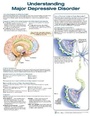
Simplified and updated from the previous edition, this chart provides an easy-to-understand visual and textual overview of the most important aspects of depression. It defines depression and three main types of this serious medical condition: major depression, dysthymic disorder/dysthymia, and bipolar disorder. The areas of the brain affected by depression are defined and illustrated. Structures of the limbic system are also shown, as any disturbance to this system can affect mood and behavior. The role of transmitters is described; illustrations show normal and abnormal levels of these important chemical messengers, which can help explain how imbalances in these chemicals can lead to depression. Signs and symptoms of major depression are prominently featured towards the top of the chart. Suicide warning signs are also detailed. Risk factors and treatment options for depression are also discussed.
Simplified and updated from the previous edition, this chart provides an easy-to-understand visual and textual overview of the most important aspects of depression. It defines depression and three main types of this serious medical condition: major depression, dysthymic disorder/dysthymia, and bipolar disorder. The areas of the brain affected by depression are defined and illustrated. Structures of the limbic system are also shown, as any disturbance to this system can affect mood and behavior. The role of transmitters is described; illustrations show normal and abnormal levels of these important chemical messengers, which can help explain how imbalances in these chemicals can lead to depression. Signs and symptoms of major depression are prominently featured towards the top of the chart. Suicide warning signs are also detailed. Risk factors and treatment options for depression are also discussed.
Simplified and updated from the previous edition, this chart provides an easy-to-understand visual and textual overview of the most important aspects of depression. It defines depression and three main types of this serious medical condition: major depression, dysthymic disorder/dysthymia, and bipolar disorder. The areas of the brain affected by depression are defined and illustrated. Structures of the limbic system are also shown, as any disturbance to this system can affect mood and behavior. The role of transmitters is described; illustrations show normal and abnormal levels of these important chemical messengers, which can help explain how imbalances in these chemicals can lead to depression. Signs and symptoms of major depression are prominently featured towards the top of the chart. Suicide warning signs are also detailed. Risk factors and treatment options for depression are also discussed.
More details
Edition
2nd edition
Language
English
Place of publication
Philadelphia
United States
Target group
Professional and scholarly
Edition type
New edition
Product notice
Laminated
Illustrations
Illustrations, unspecified
Dimensions
Height: 660 mm
Width: 508 mm
Weight
68 gr
ISBN-13
978-0-7817-7316-4 (9780781773164)
Copyright in bibliographic data and cover images is held by Nielsen Book Services Limited or by the publishers or by their respective licensors: all rights reserved.
Schweitzer Classification
Other editions
New editions
Other
08/2018
3rd Edition
Lippincott Williams and Wilkins
€53.87
Shipment within 10-20 days

Other
06/2017
3rd Edition
Lippincott Williams and Wilkins
€35.70
No shipping information available
Previous edition

Anatomical Chart Company
Understanding Depression Anatomical Chart
Other
01/2003
Anatomical Chart Co.
€34.05
Article exhausted; check for reprint