

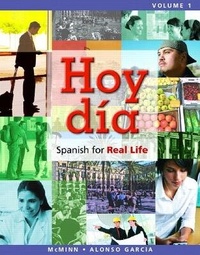
MyLab Spanish with Pearson eText -- Access Card -- for Hoy dia
Spanish for Real Life Vols 1 & 2 (multi semester access)
Published on 11. June 2014
Other
Miscellaneous print
272 pages
978-0-205-97916-5 (ISBN)
Description
Hoy dia : Spanish for Real Life focuses on the Spanish you need for everyday communication and teaches you to function in a variety of settings. Hoy dia helps you focus on what you need to know now to use Spanish effectively in real life. Volume 1 is a paperback split of the Chapters 1-6.
More details
Language
English
Place of publication
United States
Publishing group
Pearson Education (US)
Target group
College/higher education
Dimensions
Height: 10 mm
Width: 10 mm
Thickness: 10 mm
Weight
68 gr
ISBN-13
978-0-205-97916-5 (9780205979165)
Copyright in bibliographic data and cover images is held by Nielsen Book Services Limited or by the publishers or by their respective licensors: all rights reserved.
Schweitzer Classification
Persons
John McMinn teaches both Spanish and French at Austin Community College in Austin, Texas. He graduated with his Masters degree in Romance Linguistics from the University of Texas at Austin in 1981, and while pursuing doctoral studies there, he began working as an editor of Spanish and French textbooks at Holt, Rinehart and Winston and Harcourt, Brace, Jovanovich publishers. He has worked as an editor on numerous texts, and in addition to Trato hecho and Hoy dia: Spanish for Real Life, he is the co-author of the secondary-level Spanish program Expresate, as well as the college-level French texts Horizons and Qu'est-ce qu'on dit?
Nuria Alonso Garcia is an Associate Professor of Spanish at Providence College Department of Foreign Language Studies, where she teaches courses in Spanish language and culture, linguistics, language methodology and global studies. She graduated from the Universidad de Oviedo, Spain, with a degree in Spanish Philology, and holds a Ph.D. in Applied Linguistics from the Universidad Nacional de Educacion a Distancia in Madrid. She has published various articles in sociolinguistics, and authored a number of pedagogical materials for foreign languages. She is a co-author of Trato hecho, and Hoy dia: Spanish for Real Life published by Pearson-Prentice Hall.
Nuria Alonso Garcia is an Associate Professor of Spanish at Providence College Department of Foreign Language Studies, where she teaches courses in Spanish language and culture, linguistics, language methodology and global studies. She graduated from the Universidad de Oviedo, Spain, with a degree in Spanish Philology, and holds a Ph.D. in Applied Linguistics from the Universidad Nacional de Educacion a Distancia in Madrid. She has published various articles in sociolinguistics, and authored a number of pedagogical materials for foreign languages. She is a co-author of Trato hecho, and Hoy dia: Spanish for Real Life published by Pearson-Prentice Hall.
Content
VOLUME 1
Capitulo 1 En la universidad
Tema 1 ?Como te llamas? ?Como estas?
Vocabulario Saludos y despedidas
Gramatica 1 Deciding how to address people: Using tu or usted
Gramatica 2 Describing yourself and others: Introduction to ser and estar
Tema 2 ?Que hay en el salon de clase? ?Cuantos estudiantes hay?
Vocabulario En la clase
Gramatica 1 Saying what there is: Gender and number of nouns, the indefinite article, and hay
Gramatica 2 Saying how many: Numbers from 0 to 100
Tema 3 ?Como es la universidad?
Vocabulario En el campus universitario
Gramatica 1 Specifying people and things and describing them: The definite article and adjectives
Gramatica 2 Saying who it is: Subject pronouns and the verb ser
Tema 4 ?Te gustan tus clases? ?Que dice el profesor/la profesora?
Vocabulario Los cursos universitarios y frases utiles
Resumen de gramatica
En la vida real En el centro de estudiantes internacionales
Hoy dia
Lectores de hoy Estudiar en el extranjero
Reading strategy Recognizing cognates
Voces de la calle Senas de identidad
Listening strategy Anticipating content
Escritores en accion Una consulta
Writing strategy Identifying your audience
Capitulo 2 Despues de clase
Tema 1 ?Que dia? ?A que hora?
Vocabulario Mi horario
Gramatica 1 Describing your schedule: Time and the days of the week
Gramatica 2 Saying where you are: The verb estar
Tema 2 ?Que te gusta hacer despues de clase?
Vocabulario Las actividades diarias
Gramatica 1 Talking about your activities: Regular -ar verbs
Gramatica 2 Asking questions: Question formation
Tema 3 ?Adonde vas?
Vocabulario Lugares cerca de la universidad
Gramatica 1 Indicating location: Prepositions of place and contractions with de
Gramatica 2 Saying what you are going to do: Ir, contractions with a, ir a + infinitive
Tema 4 ?Adonde te gusta ir los fines de semana?
Vocabulario Los pasatiempos
Resumen de gramatica
En la vida real En la Camara de Comercio
Hoy dia
Lectores de hoy Moda global
Reading strategy Guessing meaning from context
Voces de la calle Centros sociales comunitarios
Listening strategy Identifying the main idea
Escritores en accion Tu perfil en Internet
Writing strategy Brainstorming.
Capitulo 3 En familia
Tema 1 ?Como es tu familia?
Vocabulario Los familiares
Gramatica 1 Saying whose it is: The possessive adjectives
Gramatica 2 Describing relationships: The verbs tener and venir
Tema 2 ?Como pasas el dia?
Vocabulario Un dia tipico
Gramatica 1 Describing your daily activities: Regular -er and -ir verbs
Gramatica 2 Describing people: Idiomatic expressions with tener
Tema 3 ?Que haces los sabados?
Vocabulario Mas pasatiempos
Gramatica 1 Talking about your activities: The verbs hacer, salir, poner, traer, ver, and oir; and
thepersonal a
Gramatica 2: Talking about what you do with friends and family: Pronouns used after prepositions
Tema 4 ?Como es?
Vocabulario El aspecto fisico y el caracter
Resumen de gramatica
En la vida real En el Centro de Servicios Familiares
Hoy dia
Lectores de hoy Publicidad en espanol
Reading strategy Skimming
Voces de la calle Crecer en una familia hispana
Listening strategy Listening for specific information
Escritores en accion Retrato de familia
Writing strategy Visualizing your topic
Capitulo 4 En casa
Tema 1 ?Como es tu casa?
Vocabulario La casa y los muebles
Gramatica 1 Giving your address and other information: Numbers above 100
Gramatica 2 Negating: Indefinite and negative words
Tema 2 ?Como es tu cuarto?
Vocabulario Los muebles y los colores
Gramatica 1 Describing: Using ser and estar
Gramatica 2 Making comparisons: Comparatives
Tema 3 ?Como pasas el dia?
Vocabulario Mas actividades diarias
Gramatica 1 Talking about your daily activities: Stem-changing verbs
Gramatica 2 Describing how you do things: Adverbs
Tema 4 ?Te gusta tu barrio?
Vocabulario El barrio y los vecinos
Resumen de gramatica
En la vida real En una agencia de bienes raices
Hoy dia
Lectores de hoy La musica, ?simbolo de identidad?
Reading strategy Predicting content
Voces de la calle Educadores de hoy
Listening strategy Anticipating what people say
Escritores en accion Un correo electronico informal
Writing strategy Using conventional phrases and logical organization
Capitulo 5 Los fines de semana
Tema 1 ?Que haces los sabados?
Vocabulario La rutina diaria
Gramatica 1 Describing your routine: Reflexive verbs
Gramatica 2 Saying what you do for each other: Reciprocal verbs
Tema 2 ?Que te vas a poner?
Vocabulario La ropa
Gramatica 1 Pointing out people and things: Demonstrative adjectives and pronouns
Gramatica 2 Saying what you intend to do: Using reflexive and reciprocal verbs in the infinitive
Tema 3 ?Te estas divirtiendo?
Vocabulario Una fiesta
Gramatica 1 Describing what people are doing at the moment: The present progressive
Gramatica 2 Making plans and setting the date: Months and dates
Tema 4 ?Que tiempo hace?
Vocabulario El tiempo y las estaciones
Resumen de gramatica
En la vida real En el Servicio de Proteccion al Menor
Hoy dia
Lectores de hoy Pronostico del tiempo
Reading strategy Using standard formats
Voces de la calle Mi gente, mi herencia
Listening strategy Listening for words of the same family
Escritores en accion Confirmacion de una visita
Writing strategy Sequencing actions
Capitulo 6 En Internet
Tema 1 ?Que aplicaciones informaticas usas?
Vocabulario Los procesadores de texto
Comprehension strategies: Recognizing cognates and Using standard formats.
Repaso 1 Expressing the verb to be: Ser, estar and hay
Repaso 2 Naming and describing people and things: Articles, nouns, and adjectives
Repaso 3 Saying how many: Numbers
Repaso 4 Making comparisons: Comparatives
Tema 2 ?Que es la red??
Vocabulario Los sitios web y las busquedas
Comprehension strategy: Skimming
Repaso 1 Saying what people do: Conjugations of -ar, -er-, and -ir verbs
Repaso 2 Requesting information: Question formation
Repaso 3 Saying what people have: Tener and tener expressions
Repaso 4 Saying what people do: Verbs with irregular yo forms
Tema 3 ?Que hacemos en Internet?
Vocabulario Usos de Internet
Comprehension strategies: Anticipating content and Guessing meaning from context.
Repaso 1 Saying where you go and what you are going to do: Ir, ir a + infinitive
Repaso 2 Indicating whose it is: Possessive adjectives
Repaso 3 Pointing out which one: Demonstratives
Repaso 4 Saying what people do: Stem-changing verbs
Tema 4 ?Con quien te comunicas?
Vocabulario Las comunidades en linea, los blogs y los foros
Comprehension strateys: Identifying the main idea
Repaso 1 Saying what people do for themselves: Reflexive verbs
Repaso 2 Saying what people do for each other: Reciprocal verbs
Repaso 3 Describing what is happening: The present progressive
Repaso 4 Describing how: Adverbs
Capitulo 1 En la universidad
Tema 1 ?Como te llamas? ?Como estas?
Vocabulario Saludos y despedidas
Gramatica 1 Deciding how to address people: Using tu or usted
Gramatica 2 Describing yourself and others: Introduction to ser and estar
Tema 2 ?Que hay en el salon de clase? ?Cuantos estudiantes hay?
Vocabulario En la clase
Gramatica 1 Saying what there is: Gender and number of nouns, the indefinite article, and hay
Gramatica 2 Saying how many: Numbers from 0 to 100
Tema 3 ?Como es la universidad?
Vocabulario En el campus universitario
Gramatica 1 Specifying people and things and describing them: The definite article and adjectives
Gramatica 2 Saying who it is: Subject pronouns and the verb ser
Tema 4 ?Te gustan tus clases? ?Que dice el profesor/la profesora?
Vocabulario Los cursos universitarios y frases utiles
Resumen de gramatica
En la vida real En el centro de estudiantes internacionales
Hoy dia
Lectores de hoy Estudiar en el extranjero
Reading strategy Recognizing cognates
Voces de la calle Senas de identidad
Listening strategy Anticipating content
Escritores en accion Una consulta
Writing strategy Identifying your audience
Capitulo 2 Despues de clase
Tema 1 ?Que dia? ?A que hora?
Vocabulario Mi horario
Gramatica 1 Describing your schedule: Time and the days of the week
Gramatica 2 Saying where you are: The verb estar
Tema 2 ?Que te gusta hacer despues de clase?
Vocabulario Las actividades diarias
Gramatica 1 Talking about your activities: Regular -ar verbs
Gramatica 2 Asking questions: Question formation
Tema 3 ?Adonde vas?
Vocabulario Lugares cerca de la universidad
Gramatica 1 Indicating location: Prepositions of place and contractions with de
Gramatica 2 Saying what you are going to do: Ir, contractions with a, ir a + infinitive
Tema 4 ?Adonde te gusta ir los fines de semana?
Vocabulario Los pasatiempos
Resumen de gramatica
En la vida real En la Camara de Comercio
Hoy dia
Lectores de hoy Moda global
Reading strategy Guessing meaning from context
Voces de la calle Centros sociales comunitarios
Listening strategy Identifying the main idea
Escritores en accion Tu perfil en Internet
Writing strategy Brainstorming.
Capitulo 3 En familia
Tema 1 ?Como es tu familia?
Vocabulario Los familiares
Gramatica 1 Saying whose it is: The possessive adjectives
Gramatica 2 Describing relationships: The verbs tener and venir
Tema 2 ?Como pasas el dia?
Vocabulario Un dia tipico
Gramatica 1 Describing your daily activities: Regular -er and -ir verbs
Gramatica 2 Describing people: Idiomatic expressions with tener
Tema 3 ?Que haces los sabados?
Vocabulario Mas pasatiempos
Gramatica 1 Talking about your activities: The verbs hacer, salir, poner, traer, ver, and oir; and
thepersonal a
Gramatica 2: Talking about what you do with friends and family: Pronouns used after prepositions
Tema 4 ?Como es?
Vocabulario El aspecto fisico y el caracter
Resumen de gramatica
En la vida real En el Centro de Servicios Familiares
Hoy dia
Lectores de hoy Publicidad en espanol
Reading strategy Skimming
Voces de la calle Crecer en una familia hispana
Listening strategy Listening for specific information
Escritores en accion Retrato de familia
Writing strategy Visualizing your topic
Capitulo 4 En casa
Tema 1 ?Como es tu casa?
Vocabulario La casa y los muebles
Gramatica 1 Giving your address and other information: Numbers above 100
Gramatica 2 Negating: Indefinite and negative words
Tema 2 ?Como es tu cuarto?
Vocabulario Los muebles y los colores
Gramatica 1 Describing: Using ser and estar
Gramatica 2 Making comparisons: Comparatives
Tema 3 ?Como pasas el dia?
Vocabulario Mas actividades diarias
Gramatica 1 Talking about your daily activities: Stem-changing verbs
Gramatica 2 Describing how you do things: Adverbs
Tema 4 ?Te gusta tu barrio?
Vocabulario El barrio y los vecinos
Resumen de gramatica
En la vida real En una agencia de bienes raices
Hoy dia
Lectores de hoy La musica, ?simbolo de identidad?
Reading strategy Predicting content
Voces de la calle Educadores de hoy
Listening strategy Anticipating what people say
Escritores en accion Un correo electronico informal
Writing strategy Using conventional phrases and logical organization
Capitulo 5 Los fines de semana
Tema 1 ?Que haces los sabados?
Vocabulario La rutina diaria
Gramatica 1 Describing your routine: Reflexive verbs
Gramatica 2 Saying what you do for each other: Reciprocal verbs
Tema 2 ?Que te vas a poner?
Vocabulario La ropa
Gramatica 1 Pointing out people and things: Demonstrative adjectives and pronouns
Gramatica 2 Saying what you intend to do: Using reflexive and reciprocal verbs in the infinitive
Tema 3 ?Te estas divirtiendo?
Vocabulario Una fiesta
Gramatica 1 Describing what people are doing at the moment: The present progressive
Gramatica 2 Making plans and setting the date: Months and dates
Tema 4 ?Que tiempo hace?
Vocabulario El tiempo y las estaciones
Resumen de gramatica
En la vida real En el Servicio de Proteccion al Menor
Hoy dia
Lectores de hoy Pronostico del tiempo
Reading strategy Using standard formats
Voces de la calle Mi gente, mi herencia
Listening strategy Listening for words of the same family
Escritores en accion Confirmacion de una visita
Writing strategy Sequencing actions
Capitulo 6 En Internet
Tema 1 ?Que aplicaciones informaticas usas?
Vocabulario Los procesadores de texto
Comprehension strategies: Recognizing cognates and Using standard formats.
Repaso 1 Expressing the verb to be: Ser, estar and hay
Repaso 2 Naming and describing people and things: Articles, nouns, and adjectives
Repaso 3 Saying how many: Numbers
Repaso 4 Making comparisons: Comparatives
Tema 2 ?Que es la red??
Vocabulario Los sitios web y las busquedas
Comprehension strategy: Skimming
Repaso 1 Saying what people do: Conjugations of -ar, -er-, and -ir verbs
Repaso 2 Requesting information: Question formation
Repaso 3 Saying what people have: Tener and tener expressions
Repaso 4 Saying what people do: Verbs with irregular yo forms
Tema 3 ?Que hacemos en Internet?
Vocabulario Usos de Internet
Comprehension strategies: Anticipating content and Guessing meaning from context.
Repaso 1 Saying where you go and what you are going to do: Ir, ir a + infinitive
Repaso 2 Indicating whose it is: Possessive adjectives
Repaso 3 Pointing out which one: Demonstratives
Repaso 4 Saying what people do: Stem-changing verbs
Tema 4 ?Con quien te comunicas?
Vocabulario Las comunidades en linea, los blogs y los foros
Comprehension strateys: Identifying the main idea
Repaso 1 Saying what people do for themselves: Reflexive verbs
Repaso 2 Saying what people do for each other: Reciprocal verbs
Repaso 3 Describing what is happening: The present progressive
Repaso 4 Describing how: Adverbs