

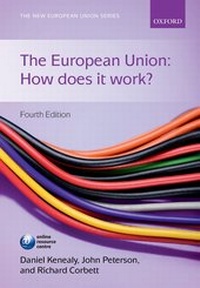
The European Union: How does it work?
4th Edition
Published on 8. September 2016
Other
Multiple copy pack
322 pages
978-0-19-879777-7 (ISBN)
Description
The European Union: How does it work? is the perfect introduction to the EU's structure and operations for those coming to the subject for the first time. An expert team of scholars and practitioners cut through the complexity to explain how the EU works in practice, and equip students with the knowledge and skills they need to master the subject.
The fourth edition of this successful textbook reflects the ongoing changes in the EU in the aftermath of the Eurozone crises, and the global context in which the EU exists. It also features expanded coverage of theories of European integration and policy making, and considers the hugely topical debate about the UK's future in the EU.
Students' understanding of the main actors, policies, and developments in the EU is aided by the inclusion of helpful learning features throughout the text. 'How it really works' boxes challenge students to contrast the theory with how the EU actuallly works in practice, while 'Compared to what?' features encourage them to think broadly and critically about the reality of politics in the EU.
The European Union: How does it work? 4e is also supported by an Online Resouce Centre, designed to make teaching and learning more effective for both students and instructors. The Online Resource Centre includes the following features:
For students:
- Test your understanding and receive instant feedback with our range of multiple-choice questions
- Revise key terms and test your knowledge of terminology from the book with our digital flashcard glossary
For registered adopters of the textbook:
- Guide class debate with suggested seminar questions and activities
- Adapt PowerPoint(R) slides as a basis for lecture presentations, or use as handouts in class.
The fourth edition of this successful textbook reflects the ongoing changes in the EU in the aftermath of the Eurozone crises, and the global context in which the EU exists. It also features expanded coverage of theories of European integration and policy making, and considers the hugely topical debate about the UK's future in the EU.
Students' understanding of the main actors, policies, and developments in the EU is aided by the inclusion of helpful learning features throughout the text. 'How it really works' boxes challenge students to contrast the theory with how the EU actuallly works in practice, while 'Compared to what?' features encourage them to think broadly and critically about the reality of politics in the EU.
The European Union: How does it work? 4e is also supported by an Online Resouce Centre, designed to make teaching and learning more effective for both students and instructors. The Online Resource Centre includes the following features:
For students:
- Test your understanding and receive instant feedback with our range of multiple-choice questions
- Revise key terms and test your knowledge of terminology from the book with our digital flashcard glossary
For registered adopters of the textbook:
- Guide class debate with suggested seminar questions and activities
- Adapt PowerPoint(R) slides as a basis for lecture presentations, or use as handouts in class.
More details
Series
Edition
4th Revised edition
Language
English
Place of publication
Oxford
United Kingdom
Target group
College/higher education
Edition type
Revised edition
Dimensions
Height: 245 mm
Width: 175 mm
Thickness: 16 mm
Weight
518 gr
ISBN-13
978-0-19-879777-7 (9780198797777)
Copyright in bibliographic data and cover images is held by Nielsen Book Services Limited or by the publishers or by their respective licensors: all rights reserved.
Schweitzer Classification
Other editions
Additional editions
Book
05/2015
4th Edition
Oxford University Press
€34.65
Article exhausted; check different version
Persons
Daniel Kenealy is Deputy Director of the Academy of Government and Lecturer in Public Policy at the University of Edinburgh.
John Peterson is Professor of International Politics at the University of Edinburgh.
Richard Corbett is currently the Member of the European Parliament for Yorkshire and the Humber region, and formerly an advisor on institutional issues to the President of the European Council.
John Peterson is Professor of International Politics at the University of Edinburgh.
Richard Corbett is currently the Member of the European Parliament for Yorkshire and the Humber region, and formerly an advisor on institutional issues to the President of the European Council.
Content
BACKGROUND; MAJOR ACTORS; POLICIES AND POLICY MAKING; THE EU AND THE WIDER WORLD