

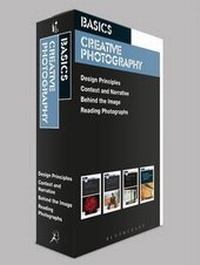
Basics Creative Photography Box Set
Published on 16. October 2014
Other
Multiple copy pack
978-1-4725-6752-9 (ISBN)
Description
The Creative Photography Box Set, originally published by AVA Publishing contains all four books from the Basics Creative Photography series, providing photography students with a complete guide to understanding photography and creating meaningful images.
Striking visual examples from a range of genres and periods are used to illustrate the text and engaging case studies delve deeper into the topics raised within each chapter. Each book includes a range of practical exercises designed to develop the readers understanding of the ideas presented.
Striking visual examples from a range of genres and periods are used to illustrate the text and engaging case studies delve deeper into the topics raised within each chapter. Each book includes a range of practical exercises designed to develop the readers understanding of the ideas presented.
Reviews / Votes
Beginning with fundamental building blocks and moving to case studies and creative strategies, Design Principles, with its combination of text and images, provides readers with authoritative principles and superb photographic examples ... Images by Ernst Haas, Martine Franck, Henri Cartier-Bresson, Angus Fraser, Alexander Rodchenko, and dozens of other featured contributors are among the best photographs ever made. They brilliantly illustrate the ideas discussed in the text. Summing Up: Highly recommended. All levels, all libraries. -- R. M. Labuz, Mohawk Valley Community College (Reprinted with permission of Choice, copyright 2011, American Library Association) [Context and Narrative] is one of a series of practical texts for the undergraduate college student in the applied visual arts. It uses an attractive magazine-like layout with concise, often bulleted text and striking color photographs. ...Each themed chapter is accompanied by creative exercises designed to help the student incorporate the concepts presented. Case studies that profile the work of a contemporary photographer, additional readings, and relevant websites are also included for each section ... useful for arts instructors and their students. -- Nancy B. Turner, Syracuse University Library, New York, USA Caruana and Fox have written an important and timely book. Broad in scope, with focused examples, this is an effective and engaging introduction to the convergences of practice and theory; spontaneity and systematic enquiry; critical engagement and creative exploration that research in photography involves. -- Fergus Heron, Artist and Senior Lecturer in Photography, University of Brighton, UKMore details
Series
Language
English
Place of publication
London
United Kingdom
Publishing group
Bloomsbury Publishing PLC
Illustrations
800 colour illus
Weight
2363 gr
ISBN-13
978-1-4725-6752-9 (9781472567529)
Copyright in bibliographic data and cover images is held by Nielsen Book Services Limited or by the publishers or by their respective licensors: all rights reserved.
Schweitzer Classification
Persons
Jeremy Webb teaches workshops with Creative Partnerships and North Walsham Junior School, and the City of Norwich School, running the Coast Watch Photography. Anna Fox is professor of photography at the University for the Creative Arts, Farnham, UK. Natasha Caruana is a practising artist, lecturer of photography and founding director of the London-based Studio Strike artists' studios. Richard Salkeld is senior lecturer in the Art and Design department at the University of Gloucestershire, teaching undergraduate students of photography. Maria Short is a photographer, educator and writer.
Content
Design Principles (9782940411368)
Introduction.
Chapter 1: Basic design theory: The role of the viewfinder in photography;The use of space; Positional decisions; Case study 1 - Points of view; The rules and when to break them; Exercise 1 - Cropping. Chapter 2: The elements of design: Line; Shape or form; Space; Texture; Case study 2 - Light and time; Light; Colour; Exercise 2 - Design limitations. Chapter 3: First design principles; Pattern; Repetition; Interruption; Variety and unity; Case study 3 - Depth and light; Rhythm; Contrast; Exercise 3 - Form and structure. Chapter 4: Depth and scale: Overcoming limitations; Actual and illusory depthl; Scale and proportion; Case study 4 - Style and setting; The absence of scale; Abstraction; Exercise 4 - Abstract images. Chapter 5: Movement and flow; Directional forces; Case study 5 - Lines and shapes; Containment; Flow direction; Exercise 5 - Observation. Chapter 6: Emphasis and emotion; Point of interest; Focus areas vs areas of de-focus; Juxtaposition; Case study 6 - Juxtaposition; Incongruity; Mood and emotion; Exercise 6 - Themes. Chapter 7: Putting it all together: Expressing views and visions; Symbolism as visual shorthand; Case study 7 - The vernacular; Creative strategies; Exercise 7 - Concepts and ideas. Conclusion; Glossary; Bibliography and webography; Index; Acknowledgements and picture credits; Working with ethics.
Context and Narrative (9782940411405)
Introduction. Chapter 1: The photograph: The function of the photograph; The photographic brief; Context and the photograph; Case study 'The Regency Project'- Richard Rowland; Exercises and summary. Chapter 2: Subject:Choosing your subject; Concept; Equipment and materials; External factors; Case study 'Homeless Ex-service' - Stuart Griffiths; Exercises and summary. Chapter 3: Audience; Audience and intention; Statement of intent; The response of the audience; Intention, interpretation and context; Case study 'The King Alfred' - Simon Carruthers; Exercises and summary. Chapter 4: Narrative: What is narrative?; A series or set of photographs; The single image; Case study 'Average Subject' - Kim Sweet; Exercises and summary. Chapter 5: Signs and symbols: Basic theory; Negotiating signs and symbols; Enigmas and truths;Practical techniques; Case study 'Les Moguichets' - Betsie Genou; Exercises and summary. Chapter 6: Text: Using text; Integrated text; Text within the image; Accompanying information; Case study 'Uncertainty' - Trevor Williams; Exercises and summary.
Conclusion; Recommended reading; Online resources; Picture credits; Index; Acknowledgements; Working with ethics.
Behind the Image (9782940411665)
Introduction: What is research in photography? Chapter 1: Planning: A research proposal; Being informed: History; Being informed: Practice; Being informed: Theory; Case study 1: Aberfan; Activity 1: Recording ideas. Chapter 2: Developing ideas through research; Where to do background research?; The Internet; Archives; Other interactive forms of research; How research informs practice; Case study 2: Flora; Activity 2: An illustrated story. Chapter 3: Practice as research: What to do and why; Studios; Street photography; Style, genre, medium and technique; Post production; Applying research to practice; Editing; Evaluation as part of the research process; Making judgements; Case study 3: Helen Goodin; Activity 3: Pioneers of photography. Chapter 4: Compiling your research: Keeping a workbooks/sketchbook; Blogging; Storing your archive; Case study: Putting On; Activity 4: Start your own blog. Chapter 5: Research and practice: Testing the relevance of what you are doing; Audience and context; Revisiting past research; Thinking time; Modifying a plan; Final production; Case study 5: Clare Strand; Activity 5: Context and meaning. Chapter 6: The impact of research: The bigger picture; Reflection; Photographers' archives; Putting research into context; Case study 6: Hashem el Madani; Activity 6: Booklet. Conclusion; Glossary; Bibliography and webography; Index; Picture credits; Acknowledgements; Working with ethics.
Reading Photographs (9782940411894)
Chapter 1: What is a photograph?; Invention: the marriage of chemistry and optics; Time and light; Uses and application; The democratic image; A small history of photography; The camera: an evolution; Case study 1. Chapter 2: Reading the signs; Where do meanings come from?; Semiotics: the study of signs; Ideology: ideas, practices and beliefs; Case Study 2. Chapter 3: Truth and lies; The camera never lies; Representation and reality; The camera always lies; Case study 3. Chapter 4: Identity: People and portraits; Looks and gazes; The body; A note on psychoanalysis; Case study 4.
Chapter 5: Big Brother is watching you: Surveillance and control; Propaganda and advertising; Public space - private lives; Case study 5. Chapter 6: Aesthetics: But is it art?; The 'painter' of modern life; The iconic image; Case study 6. Conclusion; Bibliography; Index; Working with Ethics.
Introduction.
Chapter 1: Basic design theory: The role of the viewfinder in photography;The use of space; Positional decisions; Case study 1 - Points of view; The rules and when to break them; Exercise 1 - Cropping. Chapter 2: The elements of design: Line; Shape or form; Space; Texture; Case study 2 - Light and time; Light; Colour; Exercise 2 - Design limitations. Chapter 3: First design principles; Pattern; Repetition; Interruption; Variety and unity; Case study 3 - Depth and light; Rhythm; Contrast; Exercise 3 - Form and structure. Chapter 4: Depth and scale: Overcoming limitations; Actual and illusory depthl; Scale and proportion; Case study 4 - Style and setting; The absence of scale; Abstraction; Exercise 4 - Abstract images. Chapter 5: Movement and flow; Directional forces; Case study 5 - Lines and shapes; Containment; Flow direction; Exercise 5 - Observation. Chapter 6: Emphasis and emotion; Point of interest; Focus areas vs areas of de-focus; Juxtaposition; Case study 6 - Juxtaposition; Incongruity; Mood and emotion; Exercise 6 - Themes. Chapter 7: Putting it all together: Expressing views and visions; Symbolism as visual shorthand; Case study 7 - The vernacular; Creative strategies; Exercise 7 - Concepts and ideas. Conclusion; Glossary; Bibliography and webography; Index; Acknowledgements and picture credits; Working with ethics.
Context and Narrative (9782940411405)
Introduction. Chapter 1: The photograph: The function of the photograph; The photographic brief; Context and the photograph; Case study 'The Regency Project'- Richard Rowland; Exercises and summary. Chapter 2: Subject:Choosing your subject; Concept; Equipment and materials; External factors; Case study 'Homeless Ex-service' - Stuart Griffiths; Exercises and summary. Chapter 3: Audience; Audience and intention; Statement of intent; The response of the audience; Intention, interpretation and context; Case study 'The King Alfred' - Simon Carruthers; Exercises and summary. Chapter 4: Narrative: What is narrative?; A series or set of photographs; The single image; Case study 'Average Subject' - Kim Sweet; Exercises and summary. Chapter 5: Signs and symbols: Basic theory; Negotiating signs and symbols; Enigmas and truths;Practical techniques; Case study 'Les Moguichets' - Betsie Genou; Exercises and summary. Chapter 6: Text: Using text; Integrated text; Text within the image; Accompanying information; Case study 'Uncertainty' - Trevor Williams; Exercises and summary.
Conclusion; Recommended reading; Online resources; Picture credits; Index; Acknowledgements; Working with ethics.
Behind the Image (9782940411665)
Introduction: What is research in photography? Chapter 1: Planning: A research proposal; Being informed: History; Being informed: Practice; Being informed: Theory; Case study 1: Aberfan; Activity 1: Recording ideas. Chapter 2: Developing ideas through research; Where to do background research?; The Internet; Archives; Other interactive forms of research; How research informs practice; Case study 2: Flora; Activity 2: An illustrated story. Chapter 3: Practice as research: What to do and why; Studios; Street photography; Style, genre, medium and technique; Post production; Applying research to practice; Editing; Evaluation as part of the research process; Making judgements; Case study 3: Helen Goodin; Activity 3: Pioneers of photography. Chapter 4: Compiling your research: Keeping a workbooks/sketchbook; Blogging; Storing your archive; Case study: Putting On; Activity 4: Start your own blog. Chapter 5: Research and practice: Testing the relevance of what you are doing; Audience and context; Revisiting past research; Thinking time; Modifying a plan; Final production; Case study 5: Clare Strand; Activity 5: Context and meaning. Chapter 6: The impact of research: The bigger picture; Reflection; Photographers' archives; Putting research into context; Case study 6: Hashem el Madani; Activity 6: Booklet. Conclusion; Glossary; Bibliography and webography; Index; Picture credits; Acknowledgements; Working with ethics.
Reading Photographs (9782940411894)
Chapter 1: What is a photograph?; Invention: the marriage of chemistry and optics; Time and light; Uses and application; The democratic image; A small history of photography; The camera: an evolution; Case study 1. Chapter 2: Reading the signs; Where do meanings come from?; Semiotics: the study of signs; Ideology: ideas, practices and beliefs; Case Study 2. Chapter 3: Truth and lies; The camera never lies; Representation and reality; The camera always lies; Case study 3. Chapter 4: Identity: People and portraits; Looks and gazes; The body; A note on psychoanalysis; Case study 4.
Chapter 5: Big Brother is watching you: Surveillance and control; Propaganda and advertising; Public space - private lives; Case study 5. Chapter 6: Aesthetics: But is it art?; The 'painter' of modern life; The iconic image; Case study 6. Conclusion; Bibliography; Index; Working with Ethics.