

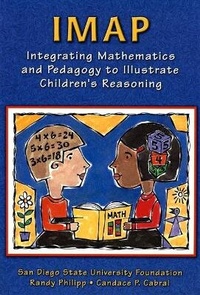
IMAP CD-ROM
Integrating Mathematics and Pedagogy to Illustrate Children's Reasoning
Published on 24. June 2004
Software
CD-ROM
1 pages
978-0-13-119854-8 (ISBN)
Description
After studying the video clips on this CD, you will be able to better understand the ways individual children approach math problems, get to know the unique and creative ways children think mathematically, and recognize the best ways to support their developing comprehension. KEY TOPICS: This CD contains 25 video clips. The mathematics content of the clips is early number, place value, and rational number. Some clips show children in Grades 1-5 solving problems; others show problem solving in classrooms. A few clips were designed to illustrate interviewing children to assess their mathematical thinking. A video guide containing suggestions for using each video clip and reflection questions accompanies the CD. MARKET: For prospective and practicing elementary school teachers and administration.
More details
Content
CLIP 1: Strategies. Time: 2:56, Grade: 1
Three strategies for solving a missing-addend problem
CLIP 2: Dillon. Time: 10:00, Grade: 2
Story problems of seven types
CLIP 3: Gretchen. Time: 5:42, Grade: 2
One child with three approaches for 70 - 23
CLIP 4: Andrew. Time: 1:11, Grade: 2
Invented strategy for 47 - 39
CLIP 5: Zenaida. Time: 1:23, Grade: 3
12 tens in 120; 3 tens, 32 ones in 32; 316 ones in 316
CLIP 6: Javier. Time: 1:54, Grade: 5
6 x 12; 12 x 12, using number sense
CLIP 7: Talecia. Time 7:21, Grade: 3
Child confused about 10 hundred versus 110 in interview by 2 PSTs
CLIP 8: Decimal Assessments. Time: 5:19, Grade: 3, 5
Adding decimal numbers without understanding
CLIP 9: Megan & Donna. Time: 2:31, Grade: 5
Appending zeros to compare decimals; representing decimal numbers with blocks
CLIP 10: Brooke. Time: 1:26, Grade: 5
Using pictures to solve 4 - .7
CLIP 11: Ally. Time: 7:08, Grade: 5
Fraction assessment
CLIP 12: Jacky. Time: 3:25, Grade 5
1/7 > 2/7, less "out of" the whole; clip from Children's Mathematical Thinking Experience
CLIP 13: June/Rachel. Time: 6:21, Grade: 5
Conceptual/procedural
CLIP 14: Felisha Grade 4. Time 2:29, Grade: 4
Role of the unit
CLIP 15: Felisha Grade 2. Time: 1:39, Grade: 2
Making sense of fractions
CLIP 16: Elliot. Time: 1:29, Grade: 6
Role of the unit in 1 1/2 / 1/3
CLIP 17: Grade 1 Class. Time: 7:24, Grade: 1
Sharing of story-problem solutions, whole class
CLIP 18: Grade 2 Class. Time: 14:43, Grade: 2
Small group solving problems with 10s
CLIP 19: Grade 3-4 Class. Time: 4:52, Grade: 3-4
192,000: 19,200 tens/1,920 hundreds
CLIP 20: Stephanie Intro. Time: 1:27, Grade: 1
Interview introduction
CLIP 21: Nicole Intro. Time: 3:41, Grade: 2
Interview Introduction
CLIP 22: Nicole 2. Time 1:17, Grade: 2
Using blocks to model a problem
CLIP 23: Nicole 3. Time: 1:00, Grade: 2
Sharing context for 15 / 3 and 18 / 3
CLIP 24: Richard. Time: 8:13, Grade 2
Interviewing issues, wait time, tools
CLIP 25: Melissa. Time: 0:54, Grade: 5
Correct answer, no sense
Three strategies for solving a missing-addend problem
CLIP 2: Dillon. Time: 10:00, Grade: 2
Story problems of seven types
CLIP 3: Gretchen. Time: 5:42, Grade: 2
One child with three approaches for 70 - 23
CLIP 4: Andrew. Time: 1:11, Grade: 2
Invented strategy for 47 - 39
CLIP 5: Zenaida. Time: 1:23, Grade: 3
12 tens in 120; 3 tens, 32 ones in 32; 316 ones in 316
CLIP 6: Javier. Time: 1:54, Grade: 5
6 x 12; 12 x 12, using number sense
CLIP 7: Talecia. Time 7:21, Grade: 3
Child confused about 10 hundred versus 110 in interview by 2 PSTs
CLIP 8: Decimal Assessments. Time: 5:19, Grade: 3, 5
Adding decimal numbers without understanding
CLIP 9: Megan & Donna. Time: 2:31, Grade: 5
Appending zeros to compare decimals; representing decimal numbers with blocks
CLIP 10: Brooke. Time: 1:26, Grade: 5
Using pictures to solve 4 - .7
CLIP 11: Ally. Time: 7:08, Grade: 5
Fraction assessment
CLIP 12: Jacky. Time: 3:25, Grade 5
1/7 > 2/7, less "out of" the whole; clip from Children's Mathematical Thinking Experience
CLIP 13: June/Rachel. Time: 6:21, Grade: 5
Conceptual/procedural
CLIP 14: Felisha Grade 4. Time 2:29, Grade: 4
Role of the unit
CLIP 15: Felisha Grade 2. Time: 1:39, Grade: 2
Making sense of fractions
CLIP 16: Elliot. Time: 1:29, Grade: 6
Role of the unit in 1 1/2 / 1/3
CLIP 17: Grade 1 Class. Time: 7:24, Grade: 1
Sharing of story-problem solutions, whole class
CLIP 18: Grade 2 Class. Time: 14:43, Grade: 2
Small group solving problems with 10s
CLIP 19: Grade 3-4 Class. Time: 4:52, Grade: 3-4
192,000: 19,200 tens/1,920 hundreds
CLIP 20: Stephanie Intro. Time: 1:27, Grade: 1
Interview introduction
CLIP 21: Nicole Intro. Time: 3:41, Grade: 2
Interview Introduction
CLIP 22: Nicole 2. Time 1:17, Grade: 2
Using blocks to model a problem
CLIP 23: Nicole 3. Time: 1:00, Grade: 2
Sharing context for 15 / 3 and 18 / 3
CLIP 24: Richard. Time: 8:13, Grade 2
Interviewing issues, wait time, tools
CLIP 25: Melissa. Time: 0:54, Grade: 5
Correct answer, no sense