

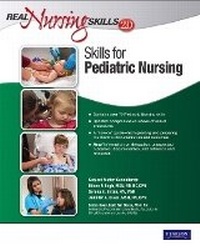
Real Nursing Skills 2.0
Skills for Pediatric Nursing
2nd Edition
Published on 15. August 2011
Software
DVD-ROM
978-0-13-700946-6 (ISBN)
Description
Prentice Hall's Real Nursing Skills series continues to offer nurses the complete foundation for competency in performing clinical nursing skills. The volumes in this series consist of interactive DVD-ROMs with comprehensive procedures and rationales demonstrated in hundreds of realistic video clips, animations, illustrations, and photographs. For each skill, students will review: Purpose * Equipment * Preparation * Procedure * Post-Procedure * Expected Outcomes * Documentation * and Variation (if applicable). This is the only skills series designed to help students visualize how to perform clinical nursing skills and understanding the concepts and rationales for each skill. Throughout the videos, viewers will experience the real-life aspects of: therapeutic communication between the nurse and the client, the client's reaction to invasive skills, and cultural, gender, and age diversity among nurses and clients. Skills sets include pediatric assessment, positioning & restraint, nasogastric and orogatric tube interventions, and more!
More details
Edition
2nd edition
Language
English
Place of publication
United States
Publishing group
Pearson Education (US)
Target group
College/higher education
Illustrations
sd., col.
Dimensions
Height: 251 mm
Width: 167 mm
Thickness: 8 mm
Weight
120 gr
ISBN-13
978-0-13-700946-6 (9780137009466)
Schweitzer Classification
Other editions
Previous edition
Software
06/2005
Prentice Hall
€55.06
Article exhausted; check for reprint
Content
GROUPING ONE: Assessment Pediatric Assessment and Considerations Vital Signs and Measurements for an Infant Vital Signs and Measurements for a Child Variation: Thermometer reading in an infant Variation: Oral Route temperature in a child Variation: Axillary Route temperature in a child Placement of Electrodes for a 12 lead Electrocardiogram Using the Glasgow Coma Scale Providing Cast Care and Neurovascular Assessment Using a Snellen E or Picture Chart Hearing Acuity Screening: Tympanometry & Pure Tone Audiometry Selected Pediatric Pain Scales GROUPING TWO: Positioning and Restraint Positioning/Preparation of a Child for Intravenous Access/Injection Positioning a Child for Lumbar Puncture Positioning for an Otoscopic Examination: Child and Infant Applying Elbow Restraints to a child Applying a Mummy Restraint on a child Variation: Applying a Papoose Restraint GROUPING THREE: Specimen Collection Blood Cultures Blood Glucose Meter Performing Venipuncture & Accessing a Peripheral Vein Collecting a Catheter Specimen Obtaining a Sample for Wound Culture/Wound Irrigation Obtaining a Sample for Throat Culture Collecting Respiratory Secretions from a Child Collecting Respiratory Secretions from an Intubated patient GROUPING FOUR: Medication Administration Administering an Intramuscular Injection Administering a Subcutaneous Injection Ear Irrigation Eye Irrigation Administering an Opthalmic Medication Administering an Otic Medication Administering a Nasal Medication Administering an Oral Medication Administer Nebulizer Aerosol therapy Using a Metered Dose Inhaler Metered Dose Inhaler VARIATION: Diskus Topical Medication: Burn Wound Care Administering a Rectal Medication GROUPING FIVE: Parenteral Medication Administration Starting an Intravenous Infusion Administering an Intravenous Push Medication Infusing Medication: Saline Lock Administering an Intravenous Medication: Burritrol with an infant Administering Blood or Blood Products Administering Client-Controlled Analgesia (PCA) Pumps Accessing a Central Venous Catheter Site Implanted Ports Conscious Sedation Monitoring GROUPING SIX: Nasogastric and Orogastric Tube Interventions Inserting an Orogastric Tube Administering a Gavage/Tube feeding Inserting and Removing a Nasogastric Tube GROUPING SEVEN: Urinary Elimination Interventions Intake and Output Measurement for Infants Applying a Urine Collection Bag Performing a Urinary Catheterization GROUPING EIGHT: Cardio/Respiratory Interventions Oxygen Delivery Systems: Blow-by Oxygen Delivery Systems: Nasal Cannula Oxygen Delivery Systems: Face Mask Pulse Oximetry Variation: Portable Pulse oximeter Using a Cardiorespiratory Monitor Using a Peak Expiratory Flow Meter Using the Incentive Spirometer Oropharyngeal Airway Insertion Assisting Nasopharyngeal Airway Insertion Tracheostomy General Guidelines and Care Bag-Valve-Mask Ventilation Removing a Foreign Body Airway Obstruction: Concious Child and Unconscious Child between ages 1 and 8 Performing Chest Physiotherapy/Postural Drainage GROUPING NINE: Airway Clearance Interventions Tracheostomy Suctioning Endotracheal Tube Suctioning Nasal/Oral Suctioning Using a bulb syringe Using a Yankauer (tonsil tip catheter) Suctioning a Conscious (Awake and Alert) Child Suctioning a Child with Decreased Level of Consciousness GROUPING TEN: Wound Care Changing the Dressing for an Infant with an Ostomy Changing an Ostomy Pouch for an Infant or Child Changing Central Venous Catheter Site Dressing