

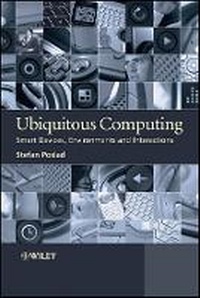
Ubiquitous Computing - Smart Devices, Environments and Interactions
Published on 31. March 2009
Software
Other digital
502 pages
978-0-470-77944-6 (ISBN)
Description
This book provides an introduction to the complex field of ubiquitous computing Ubiquitous Computing (also commonly referred to as Pervasive Computing) describes the ways in which current technological models, based upon three base designs: smart (mobile, wireless, service) devices, smart environments (of embedded system devices) and smart interaction (between devices), relate to and support a computing vision for a greater range of computer devices, used in a greater range of (human, ICT and physical) environments and activities. The author details the rich potential of ubiquitous computing, the challenges involved in making it a reality, and the prerequisite technological infrastructure. Additionally, the book discusses the application and convergence of several current major and future computing trends.
Key Features:* Provides an introduction to the complex field of ubiquitous computing* Describes how current technology models based upon six different technology form factors which have varying degrees of mobility wireless connectivity and service volatility: tabs, pads, boards, dust, skins and clay, enable the vision of ubiquitous computing* Describes and explores how the three core designs (smart devices, environments and interaction) based upon current technology models can be applied to, and can evolve to, support a vision of ubiquitous computing and computing for the future* Covers the principles of the following current technology models, including mobile wireless networks, service-oriented computing, human computer interaction, artificial intelligence, context-awareness, autonomous systems, micro-electromechanical systems, sensors, embedded controllers and robots* Covers a range of interactions, between two or more UbiCom devices, between devices and people (HCI), between devices and the physical world.*
Includes an accompanying website with PowerPoint slides, problems and solutions, exercises, bibliography and further reading Graduate students in computer science, electrical engineering and telecommunications courses will find this a fascinating and useful introduction to the subject. It will also be of interest to ICT professionals, software and network developers and others interested in future trends and models of computing and interaction over the next decades.
Key Features:* Provides an introduction to the complex field of ubiquitous computing* Describes how current technology models based upon six different technology form factors which have varying degrees of mobility wireless connectivity and service volatility: tabs, pads, boards, dust, skins and clay, enable the vision of ubiquitous computing* Describes and explores how the three core designs (smart devices, environments and interaction) based upon current technology models can be applied to, and can evolve to, support a vision of ubiquitous computing and computing for the future* Covers the principles of the following current technology models, including mobile wireless networks, service-oriented computing, human computer interaction, artificial intelligence, context-awareness, autonomous systems, micro-electromechanical systems, sensors, embedded controllers and robots* Covers a range of interactions, between two or more UbiCom devices, between devices and people (HCI), between devices and the physical world.*
Includes an accompanying website with PowerPoint slides, problems and solutions, exercises, bibliography and further reading Graduate students in computer science, electrical engineering and telecommunications courses will find this a fascinating and useful introduction to the subject. It will also be of interest to ICT professionals, software and network developers and others interested in future trends and models of computing and interaction over the next decades.
More details
Language
English
Place of publication
Hoboken
United Kingdom
Publishing group
John Wiley and Sons Ltd
Target group
Professional and scholarly
Dimensions
Height: 254 mm
Width: 175 mm
Thickness: 33 mm
Weight
978 gr
ISBN-13
978-0-470-77944-6 (9780470779446)
Copyright in bibliographic data and cover images is held by Nielsen Book Services Limited or by the publishers or by their respective licensors: all rights reserved.
Schweitzer Classification
Other editions
Additional editions
E-Book
08/2011
Wiley
€89.99
Available for download
E-Book
03/2009
Wiley
€89.99
Available for download
Content
List of Figures. List of Tables. Preface. Acknowledgements. 1 Ubiquitous Computing: Basics and Vision. 1.1 Living in a Digital World. 1.2 Modelling the Key Ubiquitous Computing Properties. 1.3 Ubiquitous System Environment Interaction. 1.4 Architectural Design for UbiCom Systems: Smart DEI Model. 1.5 Discussion. Exercises. References. 2 Applications and Requirements. 2.1 Introduction. 2.2 Example Early UbiCom Research Projects. 2.3 Everyday Applications in the Virtual, Human and Physical World. 2.4 Discussion. Exercises. References. 3 Smart Devices and Services. 3.1 Introduction. 3.2 Service Architecture Models. 3.3 Service Provision Life-Cycle. 3.4 Virtual Machines and Operating Systems. Exercises. References. 4 Smart Mobiles, Cards and Device Networks. 4.1 Introduction. 4.2 Smart Mobile Devices, Users, Resources and Code. 4.3 Operating Systems for Mobile Computers and Communicator Devices. 4.4 Smart Card Devices. 4.5 Device Networks. Exercises. References. 5 Human-Computer Interaction. 5.1 Introduction. 5.2 User Interfaces and Interaction for Four Widely Used Devices. 5.3 Hidden UI Via Basic Smart Devices. 5.4 Hidden UI Via Wearable and Implanted Devices. 5.5 Human-Centred Design (HCD). 5.6 User Models: Acquisition and Representation. 5.7 iHCI Design. Exercises. References. 6 Tagging, Sensing and Controlling. 6.1 Introduction. 6.2 Tagging the Physical World. 6.3 Sensors and Sensor Networks. 6.4 Micro Actuation and Sensing: MEMS. 6.5 Embedded Systems and Real-Time Systems. 6.6 Control Systems (for Physical World Tasks). 6.7 Robots. Exercises. References. 7 Context-Aware Systems. 7.1 Introduction. 7.2 Modelling Context-Aware Systems. 7.3 Mobility Awareness. 7.4 Spatial Awareness. 7.5 Temporal Awareness: Coordinating and Scheduling. 7.6 ICT System Awareness. Exercises. References. 8 Intelligent Systems (IS). 8.1 Introduction. 8.2 Basic Concepts. 8.3 IS Architectures. 8.4 Semantic KB IS. 8.5 Classical Logic IS. 8.6 Soft Computing IS Models. 8.7 IS System Operations. Exercises. References. 9 Intelligent System Interaction. 9.1 Introduction. 9.2 Interaction Multiplicity. 9.3 Is Interaction Design. 9.4 Some Generic Intelligent Interaction Applications. Exercises. References. 10 Autonomous Systems and Artificial Life. 10.1 Introduction. 10.2 Basic Autonomous Intra-Acting Systems. 10.3 Reflective and Self-Aware Systems. 10.4 Self-Management and Autonomic Computing. 10.5 Complex Systems. 10.6 Artificial Life. Exercises. References. 11 Ubiquitous Communication. 11.1 Introduction. 11.2 Audio Networks. 11.3 Data Networks. 11.4 Wireless Data Networks. 11.5 Universal and Transparent Audio, Video and Alphanumeric Data. 11.6 Ubiquitous Networks. 11.7 Further Network Design Issues. Exercises. References. 12 Management of Smart Devices. 12.1 Introduction. 12.2 Managing Smart Devices in Virtual Environments. 12.3 Managing Smart Devices in Human User-Centred Environments. 12.4 Managing Smart Devices in Physical Environments. Exercises. References. 13 Ubiquitous System: Challenges and Outlook. 13.1 Introduction. 13.2 Overview of Challenges. 13.3 Smart Devices. 13.4 Smart Interaction. 13.5 Smart Physical Environment Device Interaction. 13.6 Smart Human-Device Interaction. 13.7 Human Intelligence Versus Machine Intelligence. 13.8 Social Issues: Promise Versus Peril. 13.9 Final Remarks. Exercises. References. Index.