

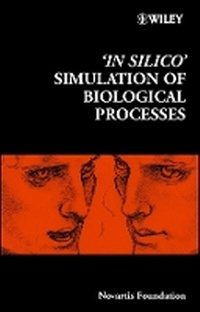
Novartis Foundation Symposium 247 - 'In Silico' Simulation of Biological Processes
Published on 7. October 2008
Software
Other digital
270 pages
978-0-470-85789-2 (ISBN)
Description
Over recent decades vast amounts of biological data have been accumulated. However, it is becoming increasingly difficult to apply traditional theoretical methods to the formulation of coherent pictures of cell and organ function because it is no longer possible for a human theorist to integrate all of the available information. Instead, computer technologies must now be used to perform this integration. This book brings together contributions from many different fields to summarize the current status of computer-assisted modelling of biological processes. The initial chapters deal with fundamental developments in hardware, software and mathematics that underlie current approaches to biological modelling. Next, different approaches to collating data on gene structure and function are presented. These databases form a vital resource for any investigator trying to construct an integrated picture of particular biological systems. Cell signalling systems form a particularly complicated aspect of all cellular function and are important both in the understanding of basic cellular processes and in selecting targets for drugs.
Recent approaches to integrating data on cell signalling into computer models are covered. Further chapters build on these approaches to show how computerized models of intact cells can be developed. Finally, approaches to the computer modelling of whole organs such as the heart are presented. The role of computer modelling in drug design is the subject of the final chapter and is also touched on throughout the discussions.
Recent approaches to integrating data on cell signalling into computer models are covered. Further chapters build on these approaches to show how computerized models of intact cells can be developed. Finally, approaches to the computer modelling of whole organs such as the heart are presented. The role of computer modelling in drug design is the subject of the final chapter and is also touched on throughout the discussions.
More details
Language
English
Place of publication
New York
United States
Target group
Professional and scholarly
Dimensions
Height: 237 mm
Width: 158 mm
Thickness: 18 mm
Weight
558 gr
ISBN-13
978-0-470-85789-2 (9780470857892)
Copyright in bibliographic data and cover images is held by Nielsen Book Services Limited or by the publishers or by their respective licensors: all rights reserved.
Schweitzer Classification
Other editions
Additional editions
Gregory R. Bock | Jamie A. Goode
'In Silico' Simulation of Biological Processes
E-Book
04/2003
1st Edition
Wiley
€161.99
Available for download
Content
Chair's Introduction (D. Noble). Integrative biological modelling in silico (A. McCulloch and G. Huber). Advances in computing, and their impact on scientific computing (M. Giles). From physics to phenomenology: Levels of description and levels of selection (D. Krakauer). Making sense of complex phenomena in biology (P. Maini). On ontologies for biologists: the Gene Ontology-untangling the web (M. Ashburner and S. Lewis). General discussion I: Model validation. The KEGG database (M. Kanehisa). Shanka Subramaniam and the Bioinformatics Core Laboratory Bioinformatics of cellular signalling. General discussion II: Standards of communication. Semantics and intercommunicability. Imaging-based integrative models of the heart: closing the loop between experiment and simulation (R. Winslow, et al.). General discussion III: Modelling Ca 2+ signalling. The Virtual Cell project (L. Loew). Modelling the bacterial chemotaxis receptor complex (T. Shimizu and D. Bray). The heart cell in silico : successes, failures and prospects (D. Noble). General discussion IV. The IUPS Physiome Project (P. Hunter, et al.). Using in silico biology to facilitate drug development (J. Levin, et al). Final discussion: Is there a theoretical biology? Index of contributors. Subject index.