

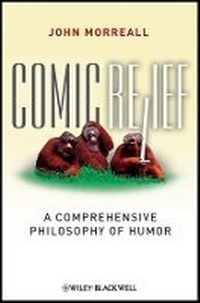
Comic Relief
Published on 11. November 2009
Software
Other digital
208 pages
978-1-4443-0779-5 (ISBN)
Description
Comic Relief: A Comprehensive Philosophy of Humor develops an inclusive theory that integrates psychological, aesthetic, and ethical issues relating to humor Offers an enlightening and accessible foray into the serious business of humor Reveals how standard theories of humor fail to explain its true nature and actually support traditional prejudices against humor as being antisocial, irrational, and foolish Argues that humor's benefits overlap significantly with those of philosophy Includes a foreword by Robert Mankoff, Cartoon Editor of The New Yorker
Reviews / Votes
"As an intelligent treatment of what humor is and what it means, this work raises significant questions and proposes plausible answers." (CHOICE, September 2010)More details
Language
English
Place of publication
Chicester
United Kingdom
Publishing group
John Wiley and Sons Ltd
Target group
Professional and scholarly
Dimensions
Height: 237 mm
Width: 163 mm
Thickness: 22 mm
Weight
468 gr
ISBN-13
978-1-4443-0779-5 (9781444307795)
Copyright in bibliographic data and cover images is held by Nielsen Book Services Limited or by the publishers or by their respective licensors: all rights reserved.
Schweitzer Classification
Other editions
Additional editions
E-Book
08/2011
Wiley-Blackwell
€28.99
Available for download
E-Book
11/2009
Wiley-Blackwell
€28.99
Available for download
Person
John Morreall 's previous publications include Taking Laughter Seriously (1983); The Philosophy of Laughter and Humor (1987); Humor Works (1997); and Comedy, Tragedy, and Religion (1999). In 2004 and 2005, he was elected President of the International Society for Humor Studies. His work has been featured in the New York Times , the Washington Post , and the Economist .
Content
Foreword - Robert Mankoff, Cartoon Editor of The New Yorker. Preface. 1 No Laughing Matter: The Traditional Rejection of Humor and Traditional Theories of Humor. Humor, Anarchy, and Aggression. The Superiority Theory: Humor as Anti-social. The Incongruity Theory: Humor as Irrational. The Relief Theory: Humor as a Pressure Valve. The Minority Opinion of Aristotle and Thomas Aquinas: Humor as Playful Relaxation. The Relaxation Theory of Robert Latta. 2 Fight or Flight - or Laughter: The Psychology of Humor. Humor and Disengagement. Humor as Play. Laughter as a Play Signal. 3 From Lucy to "I Love Lucy": The Evolution of Humor. What Was First Funny? The Basic Pattern in Humor: The Playful Enjoyment of a Cognitive Shift Is Expressed in Laughter. The Worth of Mirth. 4 That Mona Lisa Smile: The Aesthetics of Humor. Humor as Aesthetic Experience. Humor and Other Ways of Enjoying Cognitive Shifts: The Funny, Tragic, Grotesque, Macabre, Horrible, Bizarre, and Fantastic. Tragedy vs. Comedy: Is Heavy Better than Light? Enough with the Jokes: Spontaneous vs. Prepared Humor. 5 Laughing at the Wrong Time: The Negative Ethics of Humor. Eight Traditional Moral Objections. The Shortcomings in the Contemporary Ethics of Humor. A More Comprehensive Approach: The Ethics of Disengagement. First Harmful Effect: Irresponsibility. Second Harmful Effect: Blocking Compassion. Third Harmful Effect: Promoting Prejudice. 6 Having a Good Laugh: The Positive Ethics of Humor. Intellectual Virtues Fostered by Humor. Moral Virtues Fostered by Humor. Humor during the Holocaust. 7 Homo Sapiens and Homo Ridens: Philosophy and Comedy. Was Socrates the First Stand-up Comedian? Humor and the Existentialists. The Laughing Buddha. 8 The Glass Is Half-Empty and Half-Full: Comic Wisdom. Notes. Bibliography. Index.