

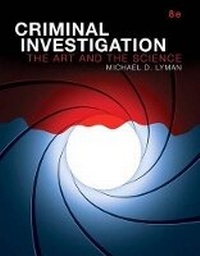
Revel for Criminal Investigation
The Art and the Science -- Access Card
8th Edition
Published on 7. July 2016
Software
Other digital
978-0-13-443858-0 (ISBN)
Description
REVEL is the newest way of delivering our respected content from Pearson. Fully digital and highly engaging, REVEL replaces the textbook and gives students everything they need for the course. Informed by extensive research on how people read, think, and learn, REVEL is an interactive learning environment that enables students to read, practice, and study in one continuous experience-for less than the cost of a traditional textbook.
A practical guide for both students and practitioners in the field.
Written by a nationally-recognized expert in criminal investigation and police procedure, Criminal Investigation: The Art and the Science, 8/e, clearly and thoughtfully explains the fundamentals of criminal investigation and forensic science as practiced by police investigators across the nation. The text explores the past experience of investigators as well as new and emerging techniques in forensic science. Lyman focuses on the steps and considerations involved in actual criminal investigations and examines the many external variables than can influence an investigator's success in the field. In the Eighth Edition, updated Case Studies, Learning Objectives, and graphics further illustrate the dynamic field of criminal investigation.
A practical guide for both students and practitioners in the field.
Written by a nationally-recognized expert in criminal investigation and police procedure, Criminal Investigation: The Art and the Science, 8/e, clearly and thoughtfully explains the fundamentals of criminal investigation and forensic science as practiced by police investigators across the nation. The text explores the past experience of investigators as well as new and emerging techniques in forensic science. Lyman focuses on the steps and considerations involved in actual criminal investigations and examines the many external variables than can influence an investigator's success in the field. In the Eighth Edition, updated Case Studies, Learning Objectives, and graphics further illustrate the dynamic field of criminal investigation.
More details
Series
Edition
8th edition
Language
English
Place of publication
Upper Saddle River
United States
Target group
College/higher education
Dimensions
Width: 216 mm
Thickness: 2 mm
ISBN-13
978-0-13-443858-0 (9780134438580)
Copyright in bibliographic data and cover images is held by Nielsen Book Services Limited or by the publishers or by their respective licensors: all rights reserved.
Schweitzer Classification
Other editions
Previous edition
Book
04/2013
7th Edition
Pearson
€122.55
Article exhausted; check for reprint
Person
Michael D. Lyman is Professor of Criminal Justice at Columbia College of Missouri, located in Columbia, MO. In addition to being a teaching faculty member, he serves as the program Coordinator for the Master of Science of Criminal Justice Program and the founder of the college's Bachelor of Science in Forensic Science Program. Before entering the field of college teaching, he was employed as a criminal investigator for state police organizations in Kansas and Oklahoma and has taught literally thousands of law enforcement officers in the proper police techniques and methods of professional criminal investigation. Dr. Lyman has authored numerous textbooks in criminal justice dealing with the areas of criminal investigation, policing, organized crime, drug enforcement, and drug trafficking. He received both his bachelor's and master's degrees from Wichita State University and his Ph.D. from the University of Missouri-Columbia. He has been called upon on an estimated 300 occasions by law enforcement and the legal communities to review criminal investigations and render the results of his evaluations and his opinions in federal court proceedings nationwide.
Textbooks are an ongoing work in progress, and the author welcomes communication and correspondence about his work. Dr. Lyman can be contacted at Columbia College, 1001 Rogers Street, Columbia, MO 65216 or at mlyman@cougarsccis.edu.
Textbooks are an ongoing work in progress, and the author welcomes communication and correspondence about his work. Dr. Lyman can be contacted at Columbia College, 1001 Rogers Street, Columbia, MO 65216 or at mlyman@cougarsccis.edu.
Content
Part 1: Fundamentals of Criminal Investigation
1. Foundations And History Of Criminal Investigation
2. The Crime Scene: Identification and Collection of Evidence
3. The Crime Science: Field Notes, Documenting, and Reporting
Part 2: Follow-Up Investigative Processes
4. Identification of Criminal Suspects: Field and Laboratory Services
5. Legal Issues in Criminal Investigation
Part 3: Information Gathering
6. Interviews and Interrogations
7. Criminal Intelligence and Surveillance Operations
8. Management of Informants and Undercover Operations
Part 4: Crimes Against Persons
9. Death Investigations
10. Robbery
11. Assault and Related Offenses
12. Missing and Abducted Persons
13. Crimes against Children: Child Abuse, Child Fatalities, and Exploitation
Part 5: Crimes Against Property
14. Theft-Related Offenses
15. Arson, Bombings, and Terrorism
Part 6: Vice and Profit-Related Crime
16. Special Investigations: Drug Trafficking and Gangs
17. Special Investigations: White-Collar, Corporate, and Computer-Related Crimes
Part 7: Prosecution
18. Preparation for Court
1. Foundations And History Of Criminal Investigation
2. The Crime Scene: Identification and Collection of Evidence
3. The Crime Science: Field Notes, Documenting, and Reporting
Part 2: Follow-Up Investigative Processes
4. Identification of Criminal Suspects: Field and Laboratory Services
5. Legal Issues in Criminal Investigation
Part 3: Information Gathering
6. Interviews and Interrogations
7. Criminal Intelligence and Surveillance Operations
8. Management of Informants and Undercover Operations
Part 4: Crimes Against Persons
9. Death Investigations
10. Robbery
11. Assault and Related Offenses
12. Missing and Abducted Persons
13. Crimes against Children: Child Abuse, Child Fatalities, and Exploitation
Part 5: Crimes Against Property
14. Theft-Related Offenses
15. Arson, Bombings, and Terrorism
Part 6: Vice and Profit-Related Crime
16. Special Investigations: Drug Trafficking and Gangs
17. Special Investigations: White-Collar, Corporate, and Computer-Related Crimes
Part 7: Prosecution
18. Preparation for Court