

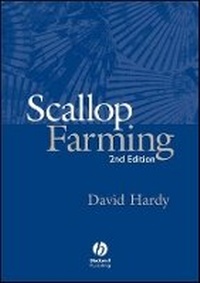
Scallop Farming 2e
Published on 16. November 2007
Software
Other digital
328 pages
978-0-470-99581-5 (ISBN)
Description
The scallop farming industry continues to expand, providing an important global source of food and revenue. In recent decades over-fishing has caused a decline in wild stocks and as consumer demand increases, the opportunities for new and existing scallop farming ventures are greater than ever before. Scallop Farming, 2e is an essential tool for all those working in the scallop farming industry.
Reviews / Votes
"Scallop Farming (2nd ed.) serves as an 'all-purpose' guide to not only scallop farming, but also shellfish farming in general. It provides vital intorductory information for industry newcomers, it will no doubt expose experienced farmers to some new ideas. This book could be a good catalyst for renewing interest in scallop farming." Matt Liutkus and Joanne Power, St Andrews Biological Station, University of New Brunswick. "...an important reference tool...provides vital information for industry newcomers...[and] it will expose experienced farmers to new ideas...could be a good catalyst for renewing interest..." Aquatic Association of Canada NewsletterMore details
Language
English
Place of publication
Hoboken
United Kingdom
Publishing group
John Wiley and Sons Ltd
Target group
Professional and scholarly
Dimensions
Height: 253 mm
Width: 179 mm
Thickness: 23 mm
Weight
856 gr
ISBN-13
978-0-470-99581-5 (9780470995815)
Copyright in bibliographic data and cover images is held by Nielsen Book Services Limited or by the publishers or by their respective licensors: all rights reserved.
Schweitzer Classification
Other editions
Additional editions
Person
Content
Section 1 General information. Chapter 1 A bit of background information about the species. Chapter 2 The farm environment and its microscopic inhabitants. Chapter 3 Scallop biology and ecology. Section 2 Hands on. Chapter 4 Choosing a site. Chapter 5 Collecting spat. Chapter 6 Getting underway. Chapter 7 Methods of cultivation. Chapter 8 Moorings. Chapter 9 Design and manufacture of equipment. Chapter 10 Diving work. Section 3 Getting down to business. Chapter 11 To collect or not to collect. Chapter 12 Farming logistics. Chapter 13 The business of farming. Chapter 14 More strings to our bow. Chapter 15 Marketing, handling and processing