

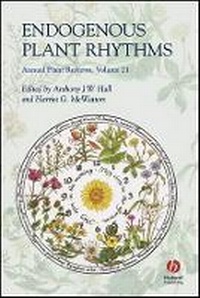
Endogenous Plant Rhythms
Published on 12. November 2007
Software
Other digital
288 pages
978-0-470-98852-7 (ISBN)
Description
Our knowledge of the circadian clock in plants has advanced considerably in recent years and we now have a clearer view of the biochemical processes making up its mechanism. Recent work provides insight into the central role played by the circadian system in the regulation of many aspects of metabolism. The multiple systems involved in photoreception have been determined, leading to an understanding of how light entrains the internal biological clock to the natural cycle of day and night, and how this impacts on key events in the plant lifecycle, such as the photoperiodic regulation of flowering. This book provides a contemporary overview of endogenous plant rhythms for researchers and professionals in the plant sciences. It will also serve as a valuable source of reference for the wider circadian community.
More details
Language
English
Place of publication
Hoboken
United Kingdom
Publishing group
John Wiley and Sons Ltd
Target group
Professional and scholarly
Dimensions
Height: 242 mm
Width: 161 mm
Thickness: 20 mm
Weight
674 gr
ISBN-13
978-0-470-98852-7 (9780470988527)
Copyright in bibliographic data and cover images is held by Nielsen Book Services Limited or by the publishers or by their respective licensors: all rights reserved.
Schweitzer Classification
Other editions
Additional editions
Anthony J. W. Hall | Harriet G. McWatters
Annual Plant Reviews, Volume 21, Endogenous Plant Rhythms
E-Book
05/2008
Wiley-Blackwell
€238.99
Available for download
Person
Dr Anthony Hall, School of Biological Sciences, University of Liverpool, UK. Dr Harriet McWatters, Department of Plant Sciences, University of Oxford, UK
Content
1. The plant circadian clock: review of a clockwork Arabidopsis. Frank Harmon, Takato Imaizumi and Steve Kay, Department of Cell Biology, The Scripps Research Institute, La Jolla, California, USA. 2. Pseudo-response regulator genes"tell" the time of day: multiple feedbacks in the circadian system of higher plants?. Shiregu Hanano and Seth Davis, Department of Plant Developmental Biology, Max Planck Institute for Plant Breeding Research, Cologne, Germany. 3. Multiple and slave oscillators. Dorothee Staiger and Corinna Streitner, Institut fur Pflanzenwissenschaften, ETH, Zurich, Switzerland, and. Fabian Rudolf, Institut fur Biochemie, ETH, Zurich, Switzerland, and. Xi Huang, Institut fur Pflanzenwissenschaften, ETH, Zurich, Switzerland. 4. Entrainment of the plant circadian clock. David Somers, Ohio State University, Columbus, Ohio, USA. 5. Photoreceptors and light signalling pathways in plants. Victoria Larner, Keara Franklin and Garry Whitelam, Department of Biology, University of Leicester, UK. 6. Circadian regulation of global gene expression and metabolism. Stacey Harmer and Michael Covington, Section of Plant Biology, University of California, Davis, California, USA, and. Oliver Blasing and Mark Stitt, Max Planck Institute of Molecular Plant Physiology, Potsdam, Germany. 7. Photoperiodic responses and the regulation of flowering. Isabelle Carre, Department of Biological Sciences, University of Warwick, Coventry, UK, and. George Coupland, Max Planck Institute for Plant Breeding Research, Cologne, Germany, and. Joanne Putterill, School of Biological Sciences, University of Auckland, New Zealand. 8. Circadian regulation of Ca2+ signalling. Michael Gardner, Antony Dodd and Carlos Hotta, Department of Plant Sciences, University of Cambridge, UK, and. Dale Sanders, The Plant Laboratory, Biology Department, University of York, UK, and Alex Webb, Department of Plant Sciences, University of Cambridge, UK. 9. The circadian clock in CAM plants. James Hartwell, Centre for Novel Agricultural Products, Department of Biology, University of York, UK. 10. Clock evolution and adaptation: whence and whither?. Carl H Johnson, Department of Biological Sciences, Vanderbilt University, Nashville Tennessee, USA, and. Charalambos Kyriacou, Department of Genetics, University of Leicester, UK