

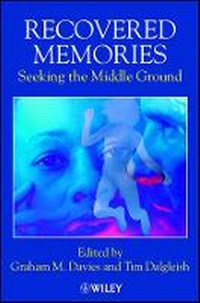
Recovered Memories - Seeking the Middle Ground
Published on 28. January 2005
Software
Other digital
292 pages
978-0-470-01348-9 (ISBN)
Description
The phenomenon of recovered memories has excited much controversy in recent years amongst professionals with extreme positions being held: either all such memories are, by definition false, or any such claim is an attempt to deny the victims of abuse their rights to confront their abusers. In this refreshing new approach to the problem Graham Davies and Tim Dalgleish have assembled leading figures from both sides of the debate to provide a balanced overview of empirical evidence as well as evidence from clinical practice. Recovered Memories: Seeking the middle ground, unlike most other writing on the topic, eschews extreme positions. It provides clinicians with findings from the latest research to enhance their understanding of memory and presents pure researchers with a range of experiences encountered in clinical practice for which they presently have few explanations. Topics include the impact on family and community members, the latest findings on implanted memories and discussion of clinical guidelines for therapeutic practice to avoid potential influence on memory.
Having weighed the evidence, a framework is offered in which true and false recovered memories are seen as the inevitable compliment of true and false continuous memories. This important new collection should not be missed by anyone with an interest in memory, whether engaged in a clinical, legal, child protection, family welfare or experimental research capacity. It is the most authoritative and comprehensive review of the evidence on both sides available to date.
Having weighed the evidence, a framework is offered in which true and false recovered memories are seen as the inevitable compliment of true and false continuous memories. This important new collection should not be missed by anyone with an interest in memory, whether engaged in a clinical, legal, child protection, family welfare or experimental research capacity. It is the most authoritative and comprehensive review of the evidence on both sides available to date.
Reviews / Votes
"...a fascinating, well researched book that is surprisingly well balanced given the highly emotive topic..." (Mental Health Today, September 2002) "...this book makes a significant contribution to this aim..." (Applied Cognitive Psychology, May 2003) "...I would strongly recommend this book...an engaging and thorough examination of this important subject..." (Journal of Behavioural & Cognitive Psychotherapy, No.1 and 2, 2005) "...I strongly recommend this book...a fascinating read..." (BACP, Dec 2005)More details
Language
English
Place of publication
Chichester
United Kingdom
Publishing group
John Wiley and Sons Ltd
Target group
College/higher education
Professional and scholarly
Dimensions
Height: 235 mm
Width: 166 mm
Thickness: 18 mm
Weight
450 gr
ISBN-13
978-0-470-01348-9 (9780470013489)
Copyright in bibliographic data and cover images is held by Nielsen Book Services Limited or by the publishers or by their respective licensors: all rights reserved.
Schweitzer Classification
Other editions
Additional editions
E-Book
10/2002
Wiley
€70.99
Available for download
Persons
This book is aimed at programmers, client and server-side Web developers and system administrators.
Content
About the Editors. About the Contributors. Introduction. THE SOCIAL ASPECTS. Socio-historical Perspective (T. Dalgleish & N. Morant). Recovered Memories: Effects Upon the Family and Community (G. Gudjonsson). Recovered Memories of Abuse: Effects on the Individual (A. Skinner). Recovered Memories: The Legal Dilemmas (E. Magner & P. Parkinson). EVIDENTIAL ASPECTS. The Recovered Memories Controversy: Where Do We Go From Here? (D. Lindsay & J. Read). Discovering Fact and Fiction: Case-based Analyses of Authentic and Fabricated Discovered Memories of Abuse (K. Shobe & J. Schooler). Is It Possible to Discriminate True From False Memories? (G. Davies). CLINICAL ASPECTS. Therapeutic Techniques, Therapeutic Contexts and Memory (D. Bekerian & M. O'Neill). Recovered Memories in Therapy Clinicians' Beliefs and Practices (B. Andrews). Establishing Practice-based Guidelines for Therapists (N. Robertson). Psychogenic Amnesias: Functional Memory Loss (M. Kopelman & J. Morton). CONCLUDING COMMENTS. Memories of Abuse and Alien Abduction: Close Encounters of a Therapeutic Kind (M. Power). Author Index. Subject Index.