

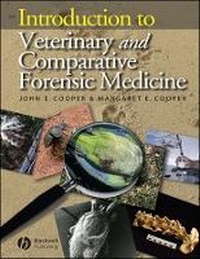
Introduction to Veterinary and Comparative Forensic Medicine
Published on 14. January 2008
Software
Other digital
432 pages
978-0-470-75294-4 (ISBN)
Description
Introduction to Veterinary and Comparative Forensic Medicine is a ground-breaking book in an emerging new speciality. It reflects the increasing demand for expert opinion by veterinarians and others in courts of law. A particular feature is practical advice, with protocols on dealing with common problems, together with case studies, various appendices and an extensive bibliography. A vital reference for members of the veterinary profession, lawyers, enforcement bodies and welfare and conservation organisations.
Reviews / Votes
"...an indispensable guide for general veterinary practitioners in their day-to-day work." (Veterinary Record, January 2008)More details
Language
English
Place of publication
Hoboken
United Kingdom
Publishing group
John Wiley and Sons Ltd
Target group
Professional and scholarly
Dimensions
Height: 253 mm
Width: 198 mm
Thickness: 28 mm
Weight
1208 gr
ISBN-13
978-0-470-75294-4 (9780470752944)
Copyright in bibliographic data and cover images is held by Nielsen Book Services Limited or by the publishers or by their respective licensors: all rights reserved.
Schweitzer Classification
Other editions
Additional editions
John E. Cooper | Margaret E. Cooper
Introduction to Veterinary and Comparative Forensic Medicine
E-Book
05/2008
Wiley-Blackwell
€108.99
Available for download
Person
John and Margaret Cooper are a husband and wife team, from the United Kingdom. John E Cooper trained as a veterinary surgeon and is now a specialist pathologist with particular interests in wildlife and exotic species, tropical diseases and comparative medicine. Margaret E Cooper is a lawyer who trained originally as a British solicitor and has made the study of animal and conservation law her special interest. The Coopers have travelled widely and lectured together in many countries. They have spent nearly ten years living in Africa, including a period in Rwanda working with the mountain gorillas. They are currently based at the University of the West Indies in Trinidad and Tobago where they continue to combine their medical and legal backgrounds in the promotion of an interdisciplinary approach to veterinary and biological education, wildlife conservation and forensic science.
Content
Dedication. Foreword. Authors' Preface. Part I: Introduction:. 1. What is forensic medicine?. 2. The special features of veterinary and comparative forensic medicine. 3. The importance and application of animal law. Part II: Particular Types of Case:. 4. Animal welfare. 5. Conservation and wildlife crime. Part III: Methodology:. 6. Clinical work. 7. Post-mortem examinations. 8. Laboratory investigations. 9. Site visits and collection of evidence. 10. Collation and analysis of findings and record-keeping. 11. Storage, labelling and presentation of material. 12. Serving as a witness and appearing in court. 13. The future. Appendix A. Submission and report forms - carcasses, tissues and laboratory samples. Appendix B. Useful addresses and sources of information. Appendix C. Glossary of terms. Appendix D. Some case studies, demonstrating approach and techniques. Appendix E. Journals, societies and organisations. Appendix F. Scientific names of species in text. References and Further Reading. Index