

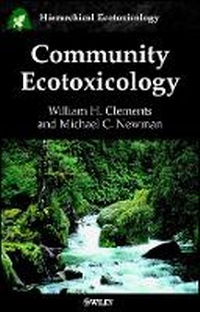
Community Ecotoxicology
Published on 10. March 2006
Software
Other digital
354 pages
978-0-470-85515-7 (ISBN)
Description
Ecotoxicology is the study of the effects of toxicants on ecological systems. Ecological effects of contaminants may occur at several levels of biological organisation, from individual organisms to the entire biosphere. Communities consist of interacting populations that overlap in time and space. Thus, community ecotoxicology is concerned with effects of contaminants on communities. This is one of a series of five books that will provide a comprehensive treatment of field ecotoxicology, it provides important insights into how contaminants affect the distribution and abundance of organisms in nature. Both authors are well known highly respected scientists in the field. The first book to be dedicated to 'community ecotoxicology.'
Reviews / Votes
"...clearly written and easy to read...particularly useful for practising ecotoxicologists who would like to strengthen their understanding..." (Journal of the North American Benthological Society, Vol 23(2), 2004)More details
Language
English
Place of publication
New York
United States
Target group
Professional and scholarly
Dimensions
Height: 236 mm
Width: 158 mm
Thickness: 25 mm
Weight
636 gr
ISBN-13
978-0-470-85515-7 (9780470855157)
Copyright in bibliographic data and cover images is held by Nielsen Book Services Limited or by the publishers or by their respective licensors: all rights reserved.
Schweitzer Classification
Other editions
Additional editions
William H. Clements | Michael C. Newman
Community Ecotoxicology
E-Book
11/2002
Wiley
€135.99
Available for download
Content
Introduction to Community Ecotoxicology. Biotic and Abiotic Factors that Regulate Communities. Biomonitoring and the Responses of Communities to Contaminants. Experimental Approaches in Community Ecology and Ecotoxicology. Application of Multimetric and Multivarate Approaches in Community Ecotoxicology. Disturbance Ecology and the Responses of Communities to Contaminants. Community Responses to Global and Atmospheric Stressors. Trophic Structure, Food Webs, and Contaminant Transport. Conclusions. Index.