Alles über Loseblattwerke | Antworten auf Fragen rund um Loseblattwerke und Fortsetzungen finden Sie in unserem Info- & Hilfebereich.
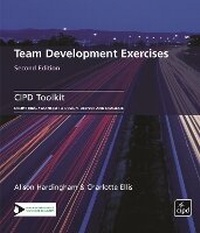
The need for teams to work effectively together is critical to organisational success. The <b><i>Team Development Exercises </i></b>toolkit is designed to build the skills needed to make this happen. Perfect for HR professionals, team leaders and those who coach or facilitate teams, it provides a comprehensive range of tools and techniques that will enable effective team development throughout the team's life cycle, and addresses the complexities of team working in a clear and accessible way.
<b><i>Team Development Exercises</i></b> includes tools that focus on the specific challenges that face organisations today, including virtual teams, multicultural teams, team mergers, team emotions and sustaining high performance. Containing structured facilitator notes, this toolkit enables users to select and apply the most relevant exercises quickly and confidently. A matrix of exercises at the start of the toolkit makes it easy to pick the most appropriate tools and techniques for the purpose, for the team's developmental stage, and for the user's level of experience. Each tool is customizable, ensuring that the techniques chosen are precisely tailored to an organisation's exact needs.
<b>About the Series:</b>
The <b>HR Toolkits</b> provide complete sets of customizable, printable resources to facilitate in-house training and development workshops and strategy design. Supplied as both ring binders and electronic files, and consisting of modules which can be used individually or combined for more extended programmes, the toolkits include ready-made practical exercises, handouts, discussion questions and more to upskill employees.
Series
Edition
Language
Place of publication
Edition type
Dimensions
Height: 314 mm
Width: 270 mm
Thickness: 64 mm
Weight
ISBN-13
978-1-84398-178-7 (9781843981787)
Copyright in bibliographic data is held by Nielsen Book Services Limited or its licensors: all rights reserved.
Schweitzer Classification
<b>Alison Hardingham</b> is a UK business psychologist and expert in the field of executive coaching. As the Director of Yellow Dog Consulting, she works with organisations and individuals at times of chosen, imposed, and hoped-for change, to introduce a flexible teamworking culture across broad sections of the organisation.
<b>Charlotte Ellis</b> is a UK Business Psychologist consulting to a wide range of companies across private and public sectors. She is Director of Ellis Bourne Consulting, and frequently works internationally, helping organisations and teams deal with the challenges of operating globally.
<ul style='padding-top:0;padding-left:0;list-style:none;'><li>Section - ONE: Introduction and Commentary;</li><li><ul style='padding-top:0;list-style:none;'><li>Chapter - 01: Why do we Need this Toolkit?;</li><li>Chapter - 02: How to Get the Most out of this Toolkit;</li><li>Chapter - 03: Matrix Showing Level of Facilitator Difficulty by Exercise;</li><li>Chapter - 04: Overview of Exercises;</li><li>Chapter - 05: Exercise Selection Matrix;</li><li>Chapter - 06: Off-the-shelf Programmes;</li><li>Chapter - 07: Facilitator's Log;</li><li>Chapter - 08: Facilitator/Observer Form;</li><li>Chapter - 09: Team Development Log;</li><li>Chapter - 10: Commentary;</li><li>Chapter - 11: Further Resources;</li></ul></li><li>Section - TWO: Getting the Team Started;</li><li><ul style='padding-top:0;list-style:none;'><li>Chapter - 12: Team Purpose 1;</li><li>Chapter - 13: Team Purpose 2;</li><li>Chapter - 14: Role Clarification;</li><li>Chapter - 15: Objective-Setting;</li><li>Chapter - 16: Aligning the Team's Objectives;</li><li>Chapter - 17: Fun Ways to Get to Know Each Other 1;</li><li>Chapter - 18: Fun Ways to Get to Know Each Other 2;</li><li>Chapter - 19: Understanding Each Other 1;</li><li>Chapter - 20: Understanding Each Other 2;</li><li>Chapter - 21: Understanding Each Other 3;</li><li>Chapter - 22: Understanding Each Other 4;</li><li>Chapter - 23: Understanding Each Other 5;</li><li>Chapter - 24: Measuring Team Effectiveness;</li><li>Chapter - 25: Pictures of Reality;</li></ul></li><li>Section - THREE: Fundamental Teamworking Processes;</li><li><ul style='padding-top:0;list-style:none;'><li>Chapter - 26: Creativity;</li><li>Chapter - 27: Problem-Solving;</li><li>Chapter - 28: Decision-Making;</li><li>Chapter - 29: Flipcharting;</li><li>Chapter - 30: The PEP Talk;</li><li>Chapter - 31: Popular Post-Mortems;</li><li>Chapter - 32: Basic Facilitation Skills;</li><li>Chapter - 33: Diagnostic Check;</li><li>Chapter - 34: Benefits and Concerns;</li><li>Chapter - 35: Communication Analysis;</li><li>Chapter - 36: Team Force Field Analysis;</li></ul></li><li>Section - FOUR: Advanced Teamowrking Tools and Techniques;</li><li><ul style='padding-top:0;list-style:none;'><li>Chapter - 37: Team Consultation;</li><li>Chapter - 38: Dialogue-ing;</li><li>Chapter - 39: Fishbowl;</li><li>Chapter - 40: Peer Feedback;</li><li>Chapter - 41: Customer Role-play;</li><li>Chapter - 42: Critical Friend;</li><li>Chapter - 43: Skilful Discussion;</li><li>Chapter - 44: Avoiding Group-Think;</li><li>Chapter - 45: Building Relationships in a Virtual Team-Level;</li></ul></li><li>Section - FIVE: Ending the Team Well;</li><li><ul style='padding-top:0;list-style:none;'><li>Chapter - 46: Celebrating Success;</li><li>Chapter - 47: Praise Party;</li></ul></li><li>Section - SIX: Team Coaching;</li><li><ul style='padding-top:0;list-style:none;'><li>Chapter - 48: Team Goals;</li><li>Chapter - 49: Exploring the Team's Current Reality;</li><li>Chapter - 50: Helping the Team to Generate Options;</li><li>Chapter - 51: Exploring What the Team is Up For</li></ul></li></ul>