

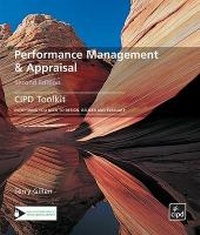
Performance Management and Appraisal
2nd Edition
Will be published approx. on 16. February 2007
Loose-leaf edition
398 pages
978-1-84398-170-1 (ISBN)
Description

Are you confident that your performance management and appraisal systems are used to their full potential?
Packed with practical techniques and easy-to-use exercises, handouts and facilitators' notes, this toolkit provides an effective way to train your managers efficiently and effectively. To support the implementation of your performance management and appraisal system this toolkit also provides:
- guidance on setting up your own appraisal system
- sample appraisal documentation
- advice on making the case for appraisals
- a customisable PowerPoint presentation.
More details
Series
Edition
2nd Revised edition
Language
English
Place of publication
Wimbledon
United Kingdom
Edition type
Revised edition
Dimensions
Height: 310 mm
Width: 270 mm
Thickness: 60 mm
Weight
1964 gr
ISBN-13
978-1-84398-170-1 (9781843981701)
Copyright in bibliographic data is held by Nielsen Book Services Limited or its licensors: all rights reserved.
Schweitzer Classification
Other editions
Previous edition

Terry Gillen
Exercises in Appraisal and Performance Development
Book
03/1999
Chartered Institute of Personnel & Development
€386.88
Article exhausted; check for reprint
Person
<b>Terry Gillen</b> is a consultant, trainer and author specialising in subjects that improve people's performance, relationships and well-being. Working successfully with many well known organisations, writing numerous books and articles and consulting on videos and e-learning programmes, he has helped thousands of people become more assertive. Terry also has an extensive track record of writing excellent material for other trainers, not only saving them valuable time but providing them with easy-to-use professional tools that make a real impact.
Content
<ul style='padding-top:0;padding-left:0;list-style:none;'><li><ul style='padding-top:0;list-style:none;'><li>Chapter - 01: Why do we Need this Toolkit?;</li><li>Chapter - 02: How this Toolkit will Help;</li><li>Chapter - 03: The Activities;</li><li>Chapter - 04: Are You a Modern Performance Manager?;</li><li>Chapter - 05: What's in it for Whom?;</li><li>Chapter - 06: Part of the Problem or Part of the Solution?;</li><li>Chapter - 07: Identifying Key Performance Areas;</li><li>Chapter - 08: Clarifying High Performance;</li><li>Chapter - 09: Agreeing Objectives and Standards;</li><li>Chapter - 10: Keeping Track of Performance;</li><li>Chapter - 11: Performance Management and Your Management Style;</li><li>Chapter - 12: The Elements of Good Performance;</li><li>Chapter - 13: When Performance is Difficult to Quantify;</li><li>Chapter - 14: Competencies and Effective Appraisal;</li><li>Chapter - 15: Assessing Performance;</li><li>Chapter - 16: Avoiding Bias;</li><li>Chapter - 17: High-Quality Feedback - I;</li><li>Chapter - 18: High-Quality Feedback - II;</li><li>Chapter - 19: High-Quality Feedback - III;</li><li>Chapter - 20: Assertive Appraisal - I;</li><li>Chapter - 21: Assertive Appraisal - II;</li><li>Chapter - 22: Resolving Typical Appraisal Problems;</li><li>Chapter - 23: Improving as an Appraiser - I;</li><li>Chapter - 24: Improving as an Appraiser - II;</li><li>Chapter - 25: Agreeing Role Clarity;</li><li>Chapter - 26: Agreeing Objectives and Performance Standards;</li><li>Chapter - 27: 360-Degree Feedback - I;</li><li>Chapter - 28: 360-Degree Feedback - II;</li><li>Chapter - 29: Deciding If You Have a Performance Problem;</li><li>Chapter - 30: Identifying the Reasons for Poor Performance;</li><li>Chapter - 31: Investigating and Assessing a Performance Problem;</li><li>Chapter - 32: Writing Performance-Improvement Plans;</li><li>Chapter - 33: Roles and Responsibilities in Staff Development;</li><li>Chapter - 34: The 'Added-Value' Approach to Development;</li><li>Chapter - 35: Developing Staff without Really Trying - I;</li><li>Chapter - 36: Developing Staff without Really Trying - II;</li><li>Chapter - 37: Attitudes to Appraisal and Performance Management;</li><li>Chapter - 38: Self-Appraisal;</li><li>Chapter - 39: Making the Case for a Coherent Performance Management Process - I;</li><li>Chapter - 40: Making the Case for a Coherent Performance Management Process - II;</li><li>Chapter - 41: Making the Case for a Coherent Performance Management Process - III;</li><li>Chapter - 42: Designing an Appraisal Process to Fit your Organisation;</li><li>Chapter - 43: Draft Documentation - Performance Development Process;</li><li>Chapter - 44: Appraisal Briefing Session;</li><li>Chapter - 45: Handouts;</li><li>Chapter - 46: Clarifying Performance Expectations;</li><li>Chapter - 47: Agreeing Objectives and Performance Standards;</li><li>Chapter - 48: Monitoring Performance;</li><li>Chapter - 49: Assessing Performance;</li><li>Chapter - 50: Avoiding Unintentional Bias;</li><li>Chapter - 51: Giving Constructive Feedback;</li><li>Chapter - 52: How to Be Assertive in Discussions with Staff;</li><li>Chapter - 53: Tips for a Good Appraisal and FAQs;</li><li>Chapter - 54: Taking Action to Help Under-Performers;</li><li>Chapter - 55: Developing Staff Ability to Perform Well;</li><li>Chapter - 56: Links and Resources;</li><li>Chapter - 57: Off the Shelf Programmes;</li><li>Chapter - 58: Learning Log</li></ul></li></ul>