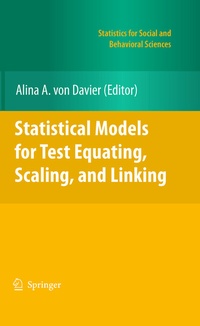
Statistical Models for Test Equating, Scaling, and Linking
Description

The book contributes to establishing "equating" as a theoretical field, a view that has not been offered often before. The tradition in the practice of equating has been to present the knowledge and skills needed as a craft, which implies that only with years of experience under the guidance of a knowledgeable practitioner could one acquire the required skills. This book challenges this view by indicating how a good equating framework, a sound understanding of the assumptions that underlie the psychometric models, and the use of statistical tests and statistical process control tools can help the practitioner navigate the difficult decisions in choosing the final equating function.
This book provides a valuable reference for several groups: (a) statisticians and psychometricians interested in the theory behind equating methods, in the use of model-based statistical methods for data smoothing, and in the evaluation of the equating results in applied work; (b) practitioners who need to equate tests, including those with these responsibilities in testing companies, state testing agencies, and school districts; and (c) instructors in psychometric, measurement, and psychology programs.
Reviews / Votes
From the reviews:
"The intended audience of the book consists of graduate students, researchers, statisticians and psychometricians who are interested in equating theory, as well as practitioners who equate tests. . volume is easy to understand since overall it is clear and well written, and has examples that are nice and easy to follow. . I recommend this book for anyone with an interest in the equating research field, and . the book has succeeded in providing a statistical view on equating which has long been searched for." (Marie Wiberg, Psychometrika, Vol. 78 (1), January, 2013)More details
Other editions
Additional editions