

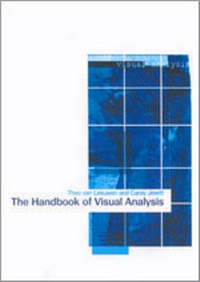
The Handbook of Visual Analysis
1st Edition
Published on 26. October 2000
224 pages
978-1-4462-0537-2 (ISBN)
Description

The Handbook of Visual Analysis is a rich methodological resource for students, academics, researchers and professionals interested in investigating the visual representation of socially significant issues.
The Handbook:
? Offers a wide-range of methods for visual analysis: content analysis, historical analysis, structuralist analysis, iconography, psychoanalysis, social semiotic analysis, film analysis and ethnomethodology
? Shows how each method can be applied for the purposes of specific research projects.
? Exemplifies each approach through detailed analyses of a variety of data, including, newspaper images, family photos, drawings, art works and cartoons.
? Includes examples from the authors' own research and professional practice.
The Handbook of Visual Analysis which demonstrates the importance of visual data within the social sciences offers an essential guide to those working in a range of disciplines including: media and communication studies, sociology, anthropology, education, psychoanalysis, and health studies.
The Handbook:
? Offers a wide-range of methods for visual analysis: content analysis, historical analysis, structuralist analysis, iconography, psychoanalysis, social semiotic analysis, film analysis and ethnomethodology
? Shows how each method can be applied for the purposes of specific research projects.
? Exemplifies each approach through detailed analyses of a variety of data, including, newspaper images, family photos, drawings, art works and cartoons.
? Includes examples from the authors' own research and professional practice.
The Handbook of Visual Analysis which demonstrates the importance of visual data within the social sciences offers an essential guide to those working in a range of disciplines including: media and communication studies, sociology, anthropology, education, psychoanalysis, and health studies.
Reviews / Votes
`This is the book on visual analysis I have been waiting decades to see. Written by the leading visual analysts of our time, this book gives not only the substance of their analyses, but tells us how they do their work as well. From content analysis to cultural studies, film and photography to anthropology, if you do visual analysis, this is a handbook you will want on your bookshelf' - Ron Scollon, Georgetown UniversityAll prices
More details
Edition
First Edition
Language
English
Place of publication
London
United Kingdom
Target group
College/higher education
ISBN-13
978-1-4462-0537-2 (9781446205372)
Copyright in bibliographic data and cover images is held by Nielsen Book Services Limited or by the publishers or by their respective licensors: all rights reserved.
Schweitzer Classification
Other editions
Additional editions
Theo van Leeuwen | Carey Jewitt
The Handbook of Visual Analysis
Book
11/2000
1st Edition
SAGE Publications Inc
€232.50
Shipment within 15-20 days
Theo van Leeuwen | Carey Jewitt
The Handbook of Visual Analysis
Book
10/2000
1st Edition
SAGE Publications Inc
€97.50
Shipment within 15-20 days
Persons
Before becoming an academic, Theo van Leeuwen worked as a film and television producer, scriptwriter and director in his native Holland and in Australia.
He studied linguistics and semiotics at Macquarie and Sydney University and at the CETSAS in Paris.
He has worked at Macquarie University, the University of the Arts (London), and Cardiff University, and lectured at many other Universities throughout the world. He is now Dean of the Faculty of Arts and Social Sciences, UTS.
He has written many books and articles on discourse analysis, visual communication and multimodality. His most recent book is Introducing Social Semiotics (Routledge, 2005) and he is currently working on Global Media Discourse, to be published with Routledge in 2007. He is also editor of the journal Visual Communication.
My research interests centre around three areas of specialization:
1) Research theory and methodologies: Visual and Multimodal research and and Video-based research
2) Technology mediated teaching and learning: notably its affect on classroom practices, and subject knowledge
3) Multimodal school based research: with a focus on urban schooling, identities, policy and curriculum
Recent research project areas include: the development of multimodal methods for researching digital data and environments, the effects of government technology initiatives on learning in the secondary school and the home, and the changing practices of teaching and learning in the classroom.
He studied linguistics and semiotics at Macquarie and Sydney University and at the CETSAS in Paris.
He has worked at Macquarie University, the University of the Arts (London), and Cardiff University, and lectured at many other Universities throughout the world. He is now Dean of the Faculty of Arts and Social Sciences, UTS.
He has written many books and articles on discourse analysis, visual communication and multimodality. His most recent book is Introducing Social Semiotics (Routledge, 2005) and he is currently working on Global Media Discourse, to be published with Routledge in 2007. He is also editor of the journal Visual Communication.
My research interests centre around three areas of specialization:
1) Research theory and methodologies: Visual and Multimodal research and and Video-based research
2) Technology mediated teaching and learning: notably its affect on classroom practices, and subject knowledge
3) Multimodal school based research: with a focus on urban schooling, identities, policy and curriculum
Recent research project areas include: the development of multimodal methods for researching digital data and environments, the effects of government technology initiatives on learning in the secondary school and the home, and the changing practices of teaching and learning in the classroom.
Content
Introduction
Content Analysis of Visual Images - Philip Bell
Approaches to Analysis in Visual Anthropology - Malcolm Collier
Seeing beyond Belief - Martin Lister and Liz Wells
Cultural Studies as an Approach to Analyzing the Visual
Semiotics and Iconography - Theo van Leeuwen
A Therapeutic Perspective - Gertraud Diem-Wille
The Use of Drawings in Child Psychoanalysis and Social Science
Visual Meaning - Carey Jewitt and Rumiko Oyama
A Social Semiotic Approach
Practices of Seeing, Visual Analysis - Charles Goodwin
An Ethnomethodological Approach
Analyzing Film and Television - Rick Iedema
A Social Semiotic Account of 'Hospital: An Unhealthy Business'
Content Analysis of Visual Images - Philip Bell
Approaches to Analysis in Visual Anthropology - Malcolm Collier
Seeing beyond Belief - Martin Lister and Liz Wells
Cultural Studies as an Approach to Analyzing the Visual
Semiotics and Iconography - Theo van Leeuwen
A Therapeutic Perspective - Gertraud Diem-Wille
The Use of Drawings in Child Psychoanalysis and Social Science
Visual Meaning - Carey Jewitt and Rumiko Oyama
A Social Semiotic Approach
Practices of Seeing, Visual Analysis - Charles Goodwin
An Ethnomethodological Approach
Analyzing Film and Television - Rick Iedema
A Social Semiotic Account of 'Hospital: An Unhealthy Business'
