


Algorithmic Gatekeeping for Professional Communicators
Power, Trust, and Legitimacy
1st Edition
Published on 30. May 2023
96 pages
978-1-000-91279-1 (ISBN)
Description

This book provides a critical study of the power, trust, and legitimacy of algorithmic gatekeepers.
The news and public information which citizens see and hear is no longer solely determined by journalists, but increasingly by algorithms. Van Dalen demonstrates the gatekeeping power of social media algorithms by showing how they affect exposure to diverse information and misinformation and shape the behaviour of professional communicators. Trust and legitimacy are foregrounded as two crucial antecedents for the acceptance of this algorithmic power. This study reveals low trust among the general population in algorithms performing journalistic tasks and a perceived lack of legitimacy of algorithmic power among professional communicators. Drawing on case studies from YouTube and Instagram, this book challenges technological deterministic discourse around "filter bubbles" and "echo chambers" and shows how algorithmic power is situated in the interplay between platforms, audiences, and professional communicators. Ultimately, trustworthy algorithms used by news organizations and social media platforms as well as algorithm literacy training are proposed as ways forward towards democratic algorithmic gatekeeping.
Presenting a nuanced perspective which challenges the deep divide between techno-optimistic and techno-pessimistic discourse around algorithms, Algorithmic Gatekeeping is recommended reading for journalism and communication researchers in related fields.
The Open Access version of this book, available at http://www.taylorfrancis.com, has been made available under a Creative Commons [Attribution-Non Commercial-No Derivatives (CC-BY-NC-ND)] 4.0 license.
The news and public information which citizens see and hear is no longer solely determined by journalists, but increasingly by algorithms. Van Dalen demonstrates the gatekeeping power of social media algorithms by showing how they affect exposure to diverse information and misinformation and shape the behaviour of professional communicators. Trust and legitimacy are foregrounded as two crucial antecedents for the acceptance of this algorithmic power. This study reveals low trust among the general population in algorithms performing journalistic tasks and a perceived lack of legitimacy of algorithmic power among professional communicators. Drawing on case studies from YouTube and Instagram, this book challenges technological deterministic discourse around "filter bubbles" and "echo chambers" and shows how algorithmic power is situated in the interplay between platforms, audiences, and professional communicators. Ultimately, trustworthy algorithms used by news organizations and social media platforms as well as algorithm literacy training are proposed as ways forward towards democratic algorithmic gatekeeping.
Presenting a nuanced perspective which challenges the deep divide between techno-optimistic and techno-pessimistic discourse around algorithms, Algorithmic Gatekeeping is recommended reading for journalism and communication researchers in related fields.
The Open Access version of this book, available at http://www.taylorfrancis.com, has been made available under a Creative Commons [Attribution-Non Commercial-No Derivatives (CC-BY-NC-ND)] 4.0 license.
More details
Series
Edition
1. Auflage
Language
English
Place of publication
London
United Kingdom
Publishing group
Taylor & Francis Ltd
Target group
College/higher education
Product notice
Reflowable
Illustrations
1 Tables, black and white; 7 Line drawings, black and white; 7 Illustrations, black and white
File size
0,72 MB
ISBN-13
978-1-000-91279-1 (9781000912791)
Copyright in bibliographic data and cover images is held by Nielsen Book Services Limited or by the publishers or by their respective licensors: all rights reserved.
Schweitzer Classification
Other editions
Additional editions
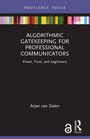
Book
10/2024
1st Edition
Routledge
€32.50
Shipment within 10-20 days
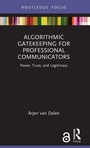
Book
05/2023
1st Edition
Routledge
€74.60
Shipment within 10-20 days
Person
Arjen van Dalen is Professor WSR at the Center for Journalism of the University of Southern Denmark. He wrote his PhD dissertation on Political Journalism in Comparative Perspective and is co-author of an award-winning book on this topic with Cambridge University Press. He published in journals such as Political Communication, Journalism, the International Journal of Press/Politics, and Public Opinion Quarterly. His research on algorithmic gatekeeping is funded by the Independent Research Fund Denmark and Carlsberg Foundation.
Content
List of Figures
List of Tables
Acknowledgments
Chapter 1: Introduction
1.1 Algorithmic power
1.2 Conceptualizing algorithmic gatekeeping
1.3 Technological determinism, hard and weak
1.4 Theoretical considerations
1.5. Legitimacy and trust
1.6 Outline and Content of the Book
Chapter 2: Algorithm Aversion
2.1 Introduction
2.2 Making sense of news algorithms
2.3 Research questions
2.4 Method
2.5 Results
2.6 Conclusion
Chapter 3: The Mediating Power of Algorithms
3.1 Introduction
3.2 Misinformation and algorithms
3.3 YouTube and Autism Spectrum Disorder
3.4 The mediating power of YouTube's algorithms
3.5 Research questions
3.6 Method
3.7 Results
3.8 Conclusion
Chapter 4: Structuring Power
4.1 Introduction
4.2 Influencers: politically relevant strategic actors
4.3 Algorithmic power
4.3 Research questions
4.4 Method
4.5 Results
4.6 Conclusion
Chapter 5: Algorithmic Power, Trust and Legitimacy
5.1 Algorithmic power
5.2 Algorithms, trust and legitimacy
5.3 Implications
References
List of Tables
Acknowledgments
Chapter 1: Introduction
1.1 Algorithmic power
1.2 Conceptualizing algorithmic gatekeeping
1.3 Technological determinism, hard and weak
1.4 Theoretical considerations
1.5. Legitimacy and trust
1.6 Outline and Content of the Book
Chapter 2: Algorithm Aversion
2.1 Introduction
2.2 Making sense of news algorithms
2.3 Research questions
2.4 Method
2.5 Results
2.6 Conclusion
Chapter 3: The Mediating Power of Algorithms
3.1 Introduction
3.2 Misinformation and algorithms
3.3 YouTube and Autism Spectrum Disorder
3.4 The mediating power of YouTube's algorithms
3.5 Research questions
3.6 Method
3.7 Results
3.8 Conclusion
Chapter 4: Structuring Power
4.1 Introduction
4.2 Influencers: politically relevant strategic actors
4.3 Algorithmic power
4.3 Research questions
4.4 Method
4.5 Results
4.6 Conclusion
Chapter 5: Algorithmic Power, Trust and Legitimacy
5.1 Algorithmic power
5.2 Algorithms, trust and legitimacy
5.3 Implications
References
