

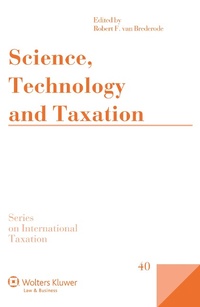
Science, Technology and Taxation
Published on 1. August 2012
232 pages
978-90-411-4206-1 (ISBN)
Description

This first comprehensive study of the interaction between technology and taxation approaches the subject along four main avenues: insight and analysis gained from empirical legal studies conducted in the area of taxation; methods for improving the control and management of the tax function in business; tax auditing through statistical sampling; and changes in the fiscal environment as a result of technological capabilities. Among the topics that arise are the following: what choices of sampling methodology exist; determination of both one-sided and two-sided confidence intervals; under what circumstances statistical sampling is acceptable as proof of underpayment and as a basis for penalties; the use of sampling agreements as a tool to improve taxpayers' understanding of the process; complexities encountered by the introduction of technology in tax administration in developing countries; technological capability to detect economic activity in the informal sector; technological innovation as substitute for inadequate human capacity; improvements available to better monitor the movement and values of goods entering a country; safeguards to prevent unauthorized use of personal information; prioritizing resources to ensure that the key strategic objectives of the agency are being addressed; government defensive action and the threat to privacy; and capabilities and limitations of enterprise resource planning systems and tax engines. Although the author pays especially detailed attention to the technologies developed and used by the United States Internal Revenue Service, other notable systems developed by the European Union, Brazil, Mexico, and China are also examined. Various sampling methods and practices are illustrated with numerical examples. As tax systems acquire ever higher levels of integration, and because accuracy is crucial to the measurement of tax compliance, the perspectives opened and expertly analyzed by the author will prove of great importance. Practitioners, tax policymakers and administrators, tax standard setters, and tribunals dealing with disputes over tax administration and procedure, as well as academics and researchers, will instantly recognize the book's great importance and practical value.
More details
Other editions
Additional editions
Robert F. van Brederode
Science, Technology and Taxation
Book
08/2012
1st Edition
Kluwer Law International
€248.09
Shipment within 10-20 days
Content
- Intro
- Title Page
- Copyright
- Table of Contents
- List of Editors and Authors
- Introduction
- PART I Empirical Evaluation of Taxation
- CHAPTER 1 Empirical Legal Studies and Taxation in the United States
- §1.01 Introduction
- §1.02 A Short Overview of Early Empiricism in Legal Studies
- §1.03 ELS as an Academic Discipline Sui Generis
- §1.04 Research Methodology
- §1.05 ELS Studies in the Area of Taxation
- §1.06 Summary and Conclusions
- §1.07 References
- PART II Statistical Science in Tax Auditing
- CHAPTER 2 Statistical Sampling in Tax Compliance Auditing in the USA
- §2.01 Introduction
- §2.02 Why Sample?
- §2.03 What Is Statistical Sampling?
- §2.04 Sampling Authority and Sampling in Other Audit Fields
- §2.05 Sampling Theory: Simple Random Sampling Example
- §2.06 Dealing with Tax Compliance Populations with Large Variances
- §2.07 Planning the Sample: Population Refinements and Establishing the Frame
- §2.08 Projecting the Sample Results
- §2.09 Stratification
- §2.10 Problems in Applying Statistical Sampling
- §2.11 References
- CHAPTER 3 Legal Issues Surrounding Sampling
- §3.01 Introduction
- §3.02 Permissibility of Sampling
- [A] Burden of Proof
- [B] Type of Tax
- [C] Confidence Interval
- [D] Taxpayer's Acceptance and Sampling Agreements
- [E] Fairness
- §3.03 Extrapolation
- §3.04 Interest and Penalties
- §3.05 Concluding Remarks
- §3.06 References
- PART III Technology Use in Government Tax Administration
- CHAPTER 4 Technology and Taxation in Developing Countries
- §4.01 Introduction
- §4.02 Technology and Tax Administration
- [A] Challenges Facing Tax Administrations
- [1] Size of agricultural and informal sector
- [2] Use of the financial sector
- [3] Organizational change
- [4] Administrative capacity
- [5] Political will
- [B] Using Technology to Improve Tax Administration
- [1] Tracking taxpayers
- [2] Information reporting and withholding
- [3] Processing returns and payments
- [4] Auditing taxpayers
- [5] Services to taxpayers
- [6] Management of tax administration
- §4.03 Technology and the Design of Tax Systems
- [A] Tax System Design
- [B] Tax Instruments
- [1] Value-added taxes
- [2] Excises
- [3] Trade taxes
- [4] Property taxes
- [5] Income taxes
- [C] Tax Reform Process
- §4.04 Privacy and Privatization - Some Cautionary Notes
- [A] Privacy - Big Brother Is Watching
- [B] Privatizing Tax Administration
- §4.05 The Future Relationship of Tax and Technology
- §4.06 References
- CHAPTER 5 Information Technology in the U.S. Tax Administration
- §5.01 Introduction
- §5.02 The Evolution of Information Technology in Tax Administration
- [A] Early Systems Focused on Processing Incoming Data and Maintaining Accounts
- [B] Efficiency Is Driven by the Automation of Work Processes
- [C] Automation and Electronic Filing Drive Significant Processing Cost Reduction
- [D] Information Matching Programs Provide Significant Compliance Presence
- [E] Web-Based Systems Offer Improved Service to Taxpayers
- §5.03 Planning for the Future: Developing an IT Program Roadmap
- §5.04 Technology Challenges Facing Tax Agencies for the Future
- [A] Support Delivery of Current Operations
- [B] Carry Out New Responsibilities
- [C] Protect Sensitive Data
- [D] Drive Business Efficiency and Cost Reduction
- [E] Improve Service to Taxpayers and Tax Professionals
- [F] Address Noncompliance with the Tax Laws
- §5.05 Conclusion
- §5.06 References
- PART IV Technology Use in Tax Compliance and Tax Planning
- CHAPTER 6 The Role of Automation in Improving Indirect Tax Reporting and Compliance
- §6.01 Introduction
- §6.02 Regulatory Environment
- §6.03 Technological Solutions
- [A] Capabilities and Limitations of Enterprise Resource Planning Systems (ERP)
- [B] Tax Solutions beyond the ERP
- [1] Tax Engines
- [2] Hosted Tax Solutions
- [3] Reporting Solutions
- §6.04 The Implementation Process
- §6.05 Benefits and Value of Tax Technology Application
- §6.06 The Role of Technology in Supporting Tax Strategy
- §6.07 Conclusions and Predictions
- §6.08 Bibliography
- CHAPTER 7 Automation Technology in Special Customs Programs and Preferences
- §7.01 Introduction
- §7.02 Government-Mandated Automation
- [A] Mexico: The IMMEX Program and Automated Inventory Controls
- [1] Overview and History
- [2] Automated Inventory Controls
- [B] RECOF in Brazil
- [1] Overview and History
- [a] Benefits
- [2] Requirements for Participation
- [3] RECOF Software
- §7.03 Automation Necessary to Realize Benefits
- [A] U.S. Foreign-Trade Zones
- [1] Background
- [2] Benefits
- [3] Inventory Control and Recordkeeping System
- [4] Petroleum Refining FTZs
- [B] Customs Warehousing in the European Union
- [1] Overview and Benefits
- [2] Focus on Automation
- [3] Customs Freight Simplified Procedures (CFSP)25
- [C] Processing Trade in China
- [1] Overview and History
- [2] Primary Requirement for Participation in PTC: Customs Handbook
- [3] Development of the Electronic Customs Handbook
- §7.04 Use of Automated Tools
- §7.05 Conclusion
- §7.06 References
