

Harnessing the Power of Technology to Improve Lives
1st Edition
Published on 15. September 2017
1156 pages
978-1-61499-798-6 (ISBN)
Description

The lives of people with disabilities are complex and various, and there are many situations where technology - particularly assistive technology - already makes a real difference. It is clear that smart phone and tablet computer based solutions continue to enhance the independence of many users, but it is also important that more traditional assistive technologies and services are not forgotten or neglected.
This book presents the proceedings of the 14th conference of the Association for the Advancement of Assistive Technology in Europe (AAATE 2017) entitled: 'Harnessing the power of technology to improve lives', held in Sheffield, UK, in September 2017. This 4-day event about assistive technologies (AT) highlights the association's interest in innovating not only technology, but also services, and addresses the global challenge of meeting the needs of the increasing number of people who could benefit from assistive technology. The 200+ papers in the book are grouped under 30 subject headings, and include contributions on a wide range of topical subjects, including aging well and dementia; care robotics; eHealth and apps; innovations; universal design; sport; and disordered speech.
The breadth of the AAATE conference reflects people's life needs and so the book is sure to contain something of interest to all those whose work involves the design, development and use of assistive technology, whatever the situation.
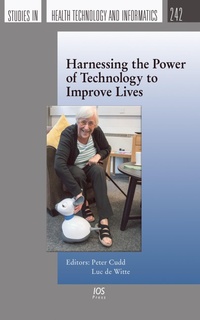
The photo on the front cover illustrates the breadth of assistive technologies that can improve lives. Photographer: Simon Butler.
This book presents the proceedings of the 14th conference of the Association for the Advancement of Assistive Technology in Europe (AAATE 2017) entitled: 'Harnessing the power of technology to improve lives', held in Sheffield, UK, in September 2017. This 4-day event about assistive technologies (AT) highlights the association's interest in innovating not only technology, but also services, and addresses the global challenge of meeting the needs of the increasing number of people who could benefit from assistive technology. The 200+ papers in the book are grouped under 30 subject headings, and include contributions on a wide range of topical subjects, including aging well and dementia; care robotics; eHealth and apps; innovations; universal design; sport; and disordered speech.
The breadth of the AAATE conference reflects people's life needs and so the book is sure to contain something of interest to all those whose work involves the design, development and use of assistive technology, whatever the situation.
The photo on the front cover illustrates the breadth of assistive technologies that can improve lives. Photographer: Simon Butler.
More details
Series
Language
English
Place of publication
London
Netherlands
Publishing group
IOS Press
Target group
Professional and scholarly
File size
20,78 MB
ISBN-13
978-1-61499-798-6 (9781614997986)
Copyright in bibliographic data and cover images is held by Nielsen Book Services Limited or by the publishers or by their respective licensors: all rights reserved.
Schweitzer Classification
Other editions
Additional editions
Luc de Witte
Harnessing the Power of Technology to Improve Lives
Book
09/2017
1st Edition
IOS Press,US
€239.18
Article exhausted; check different version
Content
- Title Page
- Preface
- Committees and Reviewers
- Contents
- AGING
- Dementia Cognitive Impairment
- Comparing Recent Reviews About Touchscreens for Dementia with Lessons Learnt from the Field
- Digital Support for Persons with Cognitive Impairment
- Reconnecting People with Dementia by Using the Interactive Instrument CRDL
- Independent Living Functions for the Elderly (IN-LIFE): Supporting Communication in Dementia
- Using Surface Table Computers to Promote the Well-Being of People with Dementia
- Home Testing of a Digital Prompter for People with Dementia
- Mobile Delivery of Health Information for People with Mild Cognitive Impairment
- Interacting with Dementia: The MARIO Approach
- Age Well
- Citizen and Stakeholder Perspectives About Approaches to Enhance Equitable Access to Assistive Technologies for Older Adults
- Cross-Cultural Adaptation of a Decision Support System for AT Selection
- Ethical Issues Related to IT Adoption by Elderly Persons with Cognitive Impairments
- Lived Experience, Stakeholder Evaluation and the Participatory Design of Assisted Living Technology
- ICT Inexperienced Elderlies: What Would Attract Elderlies to Use Items of Technology?
- LIFE AREAS
- AT Services
- Introducing an AT Passport: A Key to Managing Transitions Across the Lifespan
- Wireless as Enabler of Innovation in 21st Century Health and Social Care
- Writing Good-Quality Assistive Technology Assessment Reports
- Observing Remote Prescription of AT
- Development of National Guidelines for the Ground Rules to Lending Assistive Technology Devices in Finland
- Access Visits Using Video Communication
- Remote Care Technology: A Systematic Overview
- The Need for Information on Standards on eAccessibility&eInclusion - Based on the Experience of the EU-Project IN LIFE
- Quality Outcomes
- Validation of European Portuguese Version of the Kwazo Instrument
- Effectiveness of Service Dogs for Veterans with PTSD: Preliminary Outcomes
- Measuring AT Usability with the Modified System Usability Scale (SUS)
- Dissemination Strategy of Ambient Assisted Living Project Experience
- Remote Health Care Provision in Care Homes
- HOME & LIVING
- Tech for Independent Living 1
- Smart Clothing for Falls Protection and Detection: User-Centred Co-Design and Feasibility Study
- Perceptions and Use of Technology to Support Older Adults with Multimorbidity
- Obstacle: A Tool to Assess the Home Environment Designed for All
- ShopComm: Community-Supported Online Shopping for Older Adults
- The Role of Haptics in User Input for People with Motor and Cognitive Impairments
- Inclusive Smartphone Interface Design in Context: Co(Re)designing the PIS
- Tech for Independent Living 2
- Human Behavior Drift Detection in a Smart Home Environment
- Evaluation Method for an App Involving Kitchen Activities
- Quantitative Indicators for Behaviour Drift Detection from Home Automation Data
- Electronic Assisted Living Technology: Interim Systematic Review Results - The Evidence for Creative Methodologies
- Exploring the Use of Technology for Active Aging and Thriving
- A Study on Evaluations of Living Spaces by Caregivers for Elderly People
- EDUCATION & LEARNING
- Autism & Intellectual Disability 1
- The Application of CSCL Scripts to Support Teaching and Learning for Children with Intellectual Disabilities
- User Centered Reading Intervention for Individuals with Autism and Intellectual Disability
- Improving the Quality of Life of Persons with Intellectual Disabilities Through ICTs
- Risks of Stigmatisation Resulting from Assistive Technologies for People with Autism Spectrum Disorder
- E-Inclusion: Social Inclusion of Young Adults with Intellectual Disabilities - A Participatory Design
- Managing Weight: What Do People with an Intellectual Disability Want from Mobile Technology?
- AT for Children
- Sliders" Android Game - Improving Logical Skills of People with Disabilities
- Android-Based Daily Routine Organizing Application for Elementary School Students Living with ASD
- Designing Out the Play: Accessibility and Playfulness in Inclusive Play
- Interactive Games with an Assistive Robotic System for Hearing-Impaired Children
- COMMUNICATION
- ACC Speech 1
- An Innovative Speech-Based User Interface for Smarthomes and IoT Solutions to Help People with Speech and Motor Disabilities
- Restoring Speech Following Total Removal of the Larynx
- Cloud-Based Speech Technology for Assistive Technology Applications (CloudCAST)
- ISi-Speech: A Digital Training System for Acquired Dysarthria
- Analysis of an Individual's Language to Improve Efficiency of an AAC System
- ACC Speech 2
- Non-Visually Performing Analytical Tasks on Statistical Charts
- The Language and Communication Characteristics of Communication Aids - A Systematic Review
- The Hollybank Challenges: AT for People with Profound Disabilities
- Democratisation of AAC Symbol Choices Using Technology
- Optimising Service Delivery of AAC AT Devices and Compensating AT for Dyslexia
- Exploring the Perspectives of People Who Use Alternative and Augmentative Communication Aids (AAC)
- INNOVATION
- Innovative Technology
- Technology for Early Detection of Depression and Anxiety in Older People
- A User-Centred Approach Exploring the Potential of a Novel EMG Switch for Control of Assistive Technology
- Fuzzy Logic to Determine the Likelihood of Survival for Trauma Injury Patients
- Development of Technology for Assisting Violent Psychiatric Patients
- Embedded Systems and TensorFlow Frameworks as Assistive Technology Solutions
- Providing Sources of Self-Efficacy Through Technology Enhanced Post-Stroke Rehabilitation in the Home
- Using Machine Learning to Match Assistive Technology to People with Disabilities
- Innovative Methods
- Mouthsticks - A Participatory Approach
- Four Models to Guide AT Projects Intending Innovative Technology Development Outcomes
- Conjuring up New Technology - Using Magic Objects in Co-Ideation with Stroke Survivors
- Process Development for the Design and Manufacturing of Personalizable Mouth Sticks
- Designing for Mild Cognitive Impairment (MCI): A Design Anthropological Perspective
- ROBOTICS
- Robotics 1
- Overview of Robotic Devices for Nursing Care Project
- Development of Robotic Rollators and Walking Trolleys in Japan
- An Introduction to the Development of Transfer Assistive Robots in Japan
- Robots for Elderly Care: Their Level of Social Interactions and the Targeted End User
- Development of a Robotic System for Enhancing Children's Motivation in Constraint Induced Movement Therapy (CIMT)
- Robotics 2
- A Robotic Solution for Assisting People with MCI at Home: Preliminary Tests of the ENRICHME System
- Design of a Behavior of Robot That Attracts the Interest of the Mildly Demented Elderly
- Exploring the Use of a Humanoid Robot to Engage Children with Autism Spectrum Disorder (ASD)
- Introducing ZORA to Children with Severe Physical Disabilities
- Evaluation of Dynamic Arm Supports in Real Life Environments
- Investigating the Effect of Social Robot Embodiment
- Care Robot ZORA in Dutch Nursing Homes
- An Evaluation Study
- Robotics 3
- Standardization of Care and Assistive Products Involving Robot Technology
- Estimation of Injury by Falls for Risk Assessment of Robotic Care Devices
- Development of a Risk Assessment Assistance Tool for Robotic Care Devices
- Standardization of Assistive Products with Robotic Technology - From a Perspective of ISO/TC173
- IntelliTable: Inclusively-Designed Furniture with Robotic Capabilities
- Usability of JACO Arm Interfaces Designed with a User-Centred Design Method
- E-HEALTH & APPS
- E-Health
- Development/Testing of a Monitoring System Assisting MCI Patients: The European Project INLIFE
- Embracing Technological Development and Salutogenic Health Promotion in the Provision of Assistive Technologies
- Adaptive Sampling Technique Using Regression Modelling and Fuzzy Inference System for Network Traffic
- ICT Services for Life Improvement for the Elderly
- Apps 1
- Applying Game Thinking to Slips, Trips and Falls Prevention
- A Mobile Game for the Social and Cognitive Well-Being of Elderly People in China
- Customised City Maps in Mobile Applications for Senior Citizens
- Mobile Recommender Apps with Privacy Management for Accessible and Usable Technologies
- The Use of Apps for Health in Persons with Multiple Sclerosis, Parkinson's Disease and Stroke - Barriers and Facilitators
- Mobile App Selection Tool (MAST) for Post-Secondary Students with Disabilities
- Involving Users in the Evaluation of Apps for Specific Health Conditions
- Apps & Games
- Living Lab as an Agile Approach in Developing User-Friendly Welfare Technology
- Accapto, a Generic Design and Development Toolkit for Accessible Mobile Apps
- Designing Web-Apps for All: How Do We Include Those with Cognitive Disabilities?
- Design for Somebody" - Approach Enabling Mobile Technology Development
- Recommendations for Age-Appropriate Mobile Application Design
- MOBILITY
- Navigation
- Six-and-a-Half-Year Practice of Tactile Map Creation Service
- Towards Standardised Information Exchange Regarding the Accessibility of Public Transport in Germany
- Definition of "Total Accessibility" for Public Transport
- Image Based Location Estimation for Walking Out of Visual Impaired Person
- Movement and Activity
- Inertial Measurement Techniques for Human Joints' Movement Analysis
- Modular Gesture Interface for People with Severe Motor Dysfunction: Foot Recognition
- Assessing Gait Impairments Based on Auto-Encoded Patterns of Mahalanobis Distances from Consecutive Steps
- Attenuating Tremor Using Passive Devices
- A Review of Physical Activity Monitoring and Activity Trackers for Older Adults
- Developing an Assessment (Tool) for Touch Screen Devices
- Wheelchair Innovations
- Not Just the Right to a Wheelchair but the Right Wheelchair - Improving Brazilian Wheelchair Service Delivery
- One Dimensional Input Device of Electric Wheelchair for Persons with Severe Duchenne Muscular Dystrophy
- Efficiency and Rolling Resistance in Manual Wheelchair Propulsion
- Advantages of Unstable Manual Wheelchair
- Servomotor Assistance in the Improvement of Manual Wheelchair Mobility
- EDUCATION & LEARNING
- Autism & Intellectual Disability 2
- MotorSense: Using Motion Tracking Technology to Support the Identification and Treatment of Gross-Motor Dysfunction
- Can Automated Facial Expression Analysis Show Differences Between Autism and Typical Functioning?
- Assistive Technology for an Inclusive Society for People with Intellectual Disability
- Participation and Autonomy for Users with ABI Through Easy Social Media Access
- ICT Learning & Digital Inclusion 1
- A Self-Assessment Framework for Inclusive Schools Supporting Assistive Technology Users
- Digital Skills Development and ICT in Inclusive Education: Experiences from Cyprus Schools
- Web Widgets Barriers for Visually Impaired Users
- Extraction Methodology of Implicit Didactics in Math Schoolbooks for the Blind
- Toward Emotionally Accessible Massive Open Online Courses (MOOCs)
- Auditing the Accessibility of Massive Open Online Courses (MOOCs)
- ICT Learning & Digital Inclusion 2
- A Community-Level Perspective on Digitally and Socially Including Disabled People
- Supporting Disabled People's Independence With Digital Skills in the Community
- Building an Accessible Pictograph Interface for Users with Intellectual Disabilities
- Inclusive E-Learning - Towards an Integrated System Design
- Co-Creation Learning Procedures: Comparing Interactive Language Lessons for Deaf and Hearing Students
- The WebACS - An Accessible Graphical Editor
- ACCESSIBILITY
- AT and Sight Loss
- How Accessible is Weibo for People with Visual Impairments?
- DUCK: A DeDUCtive Soft Keyboard for Visually Impaired Users
- Evaluation of Orientation Performance of Attention Patterns for Blind Person
- An Analysis and Proposal of 3D Printing Applications for the Visually Impaired
- Accessibility Analysis of the Eclipse IDE for Users with Visual Impairment
- Digital Accessibility & Interaction
- Effects of Optimizing the Scan-Path on Scanning Keyboards with QWERTY-Layout for English Text
- Usability of Optical Mark Reader Sheet as an Answering Tool in Testing
- Use of Scanning Wizard Can Enhance Text Entry Rate: Preliminary Results
- Towards a Cognitive Screenreader
- Inclusive Competitive Game Play Through Balanced Sensory Feedback
- Comparing Accessibility Auditing Methods for Ebooks: Crowdsourced, Functionality-Led Versus Web Content Methodologies
- Universal Design
- Universal Design as a Transformative Agent in Education for All Learners
- A Self-Service Approach to Promote Self-Sufficiency, Independence and Inclusion Amongst Disabled Students
- ICT and UD: Preliminary Study for Recommendations to Design Accessible University Courses
- Universal Design Across the Curriculum: Training for Students and Teachers
- Machine Learning Based Evaluation of Reading and Writing Difficulties
- Development of Mathematical Skills Developing Game Software
- Lessons from Helen Keller: How to Make the Comics Accessible?
- INNOVATION
- Education in Care
- Education in Care and Technology
- Development and Evaluation of a First Cohort of an International Master Course
- Higher Education Beyond Faculties: Interdisciplinary Education in Care and Technology
- Designing Situated Learning Experiences: Interdisciplinary Collaboration for Design Education in Healthcare
- Simulation in Medical School Education
- Roles and Responsibilities of Parents and Therapists in a Kindergarten Treatment Centre
- Adoption and Use of a Mobile System at Home Care
- Open Developer Space
- Open DeveloperSpace: An Enabling Infrastructure for Stakeholders to Generate New Access Solutions
- Feed3: A Strategy for a 3-Direction Connection Among AT Consumers and Developers
- Using the Assistance on Demand Platform to Set Up a Network of Assistance Services
- Use Model for a User Centred Design in Multidisciplinary Teams
- Enabling Accessibility Through Model-Based User Interface Development
- Stepping Stones for People with Cognitive Disabilities and Low Digital Literacy
- Use of Eye Gaze
- Gaze-Based Assistive Technology - Use in Everyday Life for Individuals with Impairments
- The Benefits of Gaze-Based Assistive Technology in Daily Activities for Children with Disabilities
- Teachers' Experiences of Hope Using Eye Gaze-Controlled Computers
- Parent Perception of Two Eye-Gaze Control Technology Systems in Young Children with Cerebral Palsy: Pilot Study
- Participation Through Gaze Controlled Computer for Children with Severe Multiple Disabilities
- Gaze-Based Assistive Technology for a Toddler with Tetraplegia and Without Speech
- Gaze-Based Assistive Technology - Usefulness in Clinical Assessments
- Subject Index
- Author Index
