

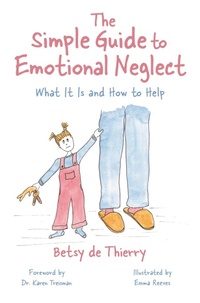
The Simple Guide to Emotional Neglect
What It Is and How to Help
Published on 21. July 2023
128 pages
978-1-83997-676-6 (ISBN)
Description

What is emotional neglect?
How does it affect children and the adults they become?
What can we do to help?
In The Simple Guide to Emotional Neglect, Betsy de Thierry provides clarity and guidance on the complex subject of emotional neglect, including how it impacts emotional connection and behaviour in the children who experience it.
Betsy de Thierry has spent years working with children and adults impacted by emotional neglect from all walks of life, and combines her experience with the latest research evidence to provide you with a concise overview of what emotional neglect looks like, and the issues it can create, including its impact on the developing brain, the development of trauma-based behaviours and challenges to forming emotional connections.
The practical advice in this book guides parents, carers, and professionals involved in child welfare on how to provide informed and empathic support.
How does it affect children and the adults they become?
What can we do to help?
In The Simple Guide to Emotional Neglect, Betsy de Thierry provides clarity and guidance on the complex subject of emotional neglect, including how it impacts emotional connection and behaviour in the children who experience it.
Betsy de Thierry has spent years working with children and adults impacted by emotional neglect from all walks of life, and combines her experience with the latest research evidence to provide you with a concise overview of what emotional neglect looks like, and the issues it can create, including its impact on the developing brain, the development of trauma-based behaviours and challenges to forming emotional connections.
The practical advice in this book guides parents, carers, and professionals involved in child welfare on how to provide informed and empathic support.
More details
Series
Edition
Digital original
Language
English
Place of publication
London
United Kingdom
Target group
College/higher education
Professional and scholarly
Edition type
Digital original
Illustrations
9 B&W
File size
1,07 MB
ISBN-13
978-1-83997-676-6 (9781839976766)
Copyright in bibliographic data and cover images is held by Nielsen Book Services Limited or by the publishers or by their respective licensors: all rights reserved.
Schweitzer Classification
Other editions
Additional editions
Book
07/2023
Jessica Kingsley Publishers
€16.50
Shipment within 3-4 weeks
Persons
Betsy de Thierry is a practising psychotherapist and with over 30 years of experience and knowledge within the field of Complex Trauma & navigating Trauma Recovery. She is the founder of Trauma Recovery Global, which provides training and consultancy and partnerships with select organisations and practitioners to licence her Trauma Recovery Focused Model (TRFM) in 34 nations. She is also the founder of the Trauma Recovery Centre (TRC), a charity specialising in recovery from complex trauma and the founder of CTRN (Childhood Trauma Recovery Network UK). Betsy is also a qualified primary school teacher and is a mum of four brilliant sons. Dr. Karen Treisman, MBE, is an award-winning specialist Clinical Psychologist, trainer, and bestselling author, working in London, UK. Karen is also the Director of Safe Hands and Thinking Minds Training and Consultancy services.
Content
- Intro
- The Simple Guide to Emotional Neglect
- Cover
- By the same author
- Title Page
- Copyright
- Contents
- Foreword
- Introduction
- 1. An Introduction to Emotional Neglect
- How our brains are built
- The continuum of emotional neglect
- Emotional trauma
- The experience of emotional neglect
- We aren't shaming and blaming - but we are acknowledging the impact
- What is 'good enough'?
- What kind of specific experiences could be emotionally neglectful?
- The child being seen and heard
- What do children need from their parents?
- The need to provide emotional availability for children and teens
- Emotional neglect occurs across all socio-economic family backgrounds
- Generational emotional trauma zig zag
- Reflection points
- 2. The General Impact of Emotional Neglect
- The impact of not having a secure attachment
- The impact in adulthood
- The impact of lack of soothing
- The distress of relationships that have insecure foundations
- The impact of the lack of 'enough' emotional attunement
- The impact of emotionally shut down parents
- The impact of the child worrying about their parent
- Possible consequences of not enough emotional connection from parents
- My formal description of the neurobiological impact of emotional neglect
- Reflection points
- 3. The Impact of Emotional Neglect on Relationships
- Being invisible
- Not being a person, not taking up space
- Being responsible for too much
- Not feeling a sense of belonging
- Not able to be self-regulated
- Being the scapegoat
- Over-achieving or compliance to find acceptance
- Independent and self-sufficient
- Intimacy and sex
- Needing attention
- Reflection points
- 4. The Impact of Emotional Neglect on the Emotions
- Emotional regulation
- Anger and defensiveness
- Terror and powerlessness
- Dissociation
- Depression or feeling tired
- Shame
- Reflection points
- 5. The Impact on the Body and Brain
- The impact of touch
- Sensory sensitivity
- Movement
- Food and eating
- Dissociation
- Stress for a baby
- Addiction
- Hypervigilance
- Challenges in communication
- Conclusion
- Reflection points
- 6. The Impact on the Sense of Self and Identity
- Voicelessness
- Social context
- Not knowing what you are good at
- The mess of the inner self
- Feeling of low self-esteem
- How to help a child develop a healthy sense of self
- Reflection points
- 7. What Does the Recovery Journey Look Like?
- Psychoeducation and modelling externalization
- Relationships and trust
- Changing self-neglect into self-nurture
- Noticing negative core beliefs
- Noticing the body sensations and movement
- Exploring safety
- Conclusion
- Reflection points
- 8. Activities to Help an Emotionally Neglected Child Heal
- Strengthening the corpus collosum
- Self-soothing activities
- Vestibular practice
- Relationship strengthening
- Communication of emotion
- Appendix: Some Legal and Official Definitions of Emotional Neglect
- Glossary
- References
- Further Reading
- Index
