

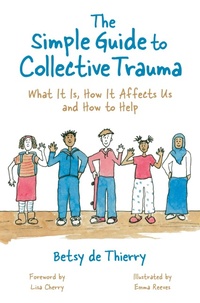
The Simple Guide to Collective Trauma
What It Is, How It Affects Us and How to Help
Published on 21. July 2021
112 pages
978-1-78775-789-9 (ISBN)
Description

? What is collective trauma?
? How can it impact children and communities?
? What can we do about it?
Providing accessible answers to these complex questions and more, this guide explores the key characteristics of collective trauma and provides practical advice on how to help children, young people and communities to heal.
Collective trauma affects communities, families and individuals. This book highlights its impacts and with examples such as grief and loss, outlines how it can manifest. With guidance on building individual, communal and cultural resilience, this book is an invaluable resource to better understand and support children and young people dealing with collective trauma.
? How can it impact children and communities?
? What can we do about it?
Providing accessible answers to these complex questions and more, this guide explores the key characteristics of collective trauma and provides practical advice on how to help children, young people and communities to heal.
Collective trauma affects communities, families and individuals. This book highlights its impacts and with examples such as grief and loss, outlines how it can manifest. With guidance on building individual, communal and cultural resilience, this book is an invaluable resource to better understand and support children and young people dealing with collective trauma.
More details
Series
Edition
Digital original
Language
English
Place of publication
London
United Kingdom
Target group
College/higher education
Professional and scholarly
Edition type
Digital original
File size
1,63 MB
ISBN-13
978-1-78775-789-9 (9781787757899)
Copyright in bibliographic data and cover images is held by Nielsen Book Services Limited or by the publishers or by their respective licensors: all rights reserved.
Schweitzer Classification
Other editions
Additional editions
Book
07/2021
Jessica Kingsley Publishers
€16.50
Shipment within 15-20 days
Persons
Betsy de Thierry is a practising psychotherapist and with over 30 years of experience and knowledge within the field of Complex Trauma & navigating Trauma Recovery. She is the founder of Trauma Recovery Global, which provides training and consultancy and partnerships with select organisations and practitioners to licence her Trauma Recovery Focused Model (TRFM) in 34 nations. She is also the founder of the Trauma Recovery Centre (TRC), a charity specialising in recovery from complex trauma and the founder of CTRN (Childhood Trauma Recovery Network UK). Betsy is also a qualified primary school teacher and is a mum of four brilliant sons.
Content
- Intro
- The Simple Guide to Collective Trauma
- Cover
- Of related interest
- Title page
- Copyright
- Contents
- Foreword by Lisa Cherry
- Introduction
- 1. An Introduction to Collective Trauma and the Impact of the Threat Response
- What is collective trauma?
- Collective trauma and the impact on the whole community
- Collective trauma and relationships
- The impact of trauma on the brain and behaviour
- Recovery from collective trauma
- Reflection points
- 2. The Power of Relationships
- Relationships
- Loneliness and isolation
- Oxytocin: Our social connectedness hormone
- Social relationships
- Suffer together: Heal together
- Conclusion
- Reflection points
- 3. The Centrality of Safety
- Safety is interconnected with attachment relationships
- How feeling unsafe can limit life
- Listening empathetically
- Physical and practical aspects of safety
- What can we do to help the child feel safe?
- What can we do to help the adult feel safe?
- Reflection points
- 4. The Impact of Collective Trauma on Normal Life
- Hypervigilance
- Sleep
- Learning and the impact of unnecessary information
- Anger and aggression
- Separation anxiety
- Sense of purpose and future
- Reflection points
- 5. Parenting and Supporting Parents and Carers
- The centrality of parents and familiar carers to resilience and recovery
- Sharing the experience of trauma
- Parents need support themselves
- What do I do when I am more overwhelmed and upset than they are?
- Sometimes it is the littlest things that make the biggest difference
- Upskilling parents and other adults should be a priority
- Offering sensory comfort and support
- Two dysfunctional patterns to watch for
- Traditions and rituals
- Reflection points
- 6. Big Strong Emotions
- The feeling of overwhelming shock
- Repressing emotions
- Using language around trauma and shock
- Self-regulation and co-regulation
- Emotions that get stuck in the body
- Anxiety and worry
- Reflection points
- 7. Creative Ideas and Activities to Help
- The power of play
- Sensory exploration
- Storytelling
- Music
- Using art
- Creative ideas
- Reflection points
- 8. Grief, Loss and Bereavement
- Questions around death
- How to talk about death
- The grieving process
- Themes in grief
- The impact of grief
- Some important aspects of the bereavement process
- What can we do to help the grieving?
- Survivor's guilt
- Our own journey
- Reflection points
- 9. A Trauma-Informed and Recovery-Focused Culture
- Cultural diversity and humility
- An exploration of culture
- Trauma-informed culture
- Re-traumatisation
- Compassion, kindness and empathy
- Reflection points
- 10. Building for the Future, Resilience and Post-Traumatic Growth
- Individual resilience
- Three tips for developing resilience
- Community resilience
- Cultures that support resilience
- Post-traumatic growth
- Imagining a positive future
- Reflection points
- Glossary
- References
- Further Reading
- Index
