

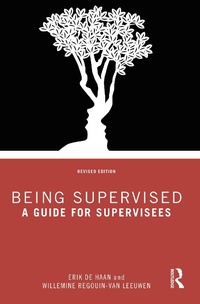
Being Supervised
A Guide for Supervisees
2nd Edition
Published on 30. December 2022
144 pages
978-1-000-82813-9 (ISBN)
Description

Being Supervised: A Guide for Supervisees provides a complete introduction to help supervisees and supervisors to get the most out of supervision and reap its unique and substantial benefits.
De Haan and Regouin-van Leeuwen present a didactic method that enables professionals in the helping professions to convert insights and experiences into greater professional competence. Presented in three parts, the book approaches theory, methods, and practice from the supervisee's perspective, answering questions such as: What is supervision? How does it work? What's the benefit? Part I provides a concise exploration which introduces supervision to future supervisees, Part II is addressed to novice supervisees and examines the supervisory process based on its three main stages, and Part III is focused mainly on advanced supervisees. This fully updated and revised edition includes practical exercises that supervisees and supervisors can use in the preparation of their supervisory journey, taking into account extensive feedback from teachers and supervisors who regularly work with the book, and updates to Ashridge's Code of Conduct for Supervisors.
Being Supervised will be essential reading for any helping professional beginning supervision or looking to understand more about the process, and for supervisors. It will be particularly relevant for psychotherapists, counsellors, coaches, and psychoanalysts in training.
De Haan and Regouin-van Leeuwen present a didactic method that enables professionals in the helping professions to convert insights and experiences into greater professional competence. Presented in three parts, the book approaches theory, methods, and practice from the supervisee's perspective, answering questions such as: What is supervision? How does it work? What's the benefit? Part I provides a concise exploration which introduces supervision to future supervisees, Part II is addressed to novice supervisees and examines the supervisory process based on its three main stages, and Part III is focused mainly on advanced supervisees. This fully updated and revised edition includes practical exercises that supervisees and supervisors can use in the preparation of their supervisory journey, taking into account extensive feedback from teachers and supervisors who regularly work with the book, and updates to Ashridge's Code of Conduct for Supervisors.
Being Supervised will be essential reading for any helping professional beginning supervision or looking to understand more about the process, and for supervisors. It will be particularly relevant for psychotherapists, counsellors, coaches, and psychoanalysts in training.
Reviews / Votes
"Being Supervised is a refreshing blend of being both practical and philosophical in approach. As we move through the book, we are introduced to the history of the profession, the 'how to' for supervisees with anecdotal evidence and as we progress, we are invited to reflect in a much deeper way into what thought is, thinking styles, learning, how we learn, all within the context of supervision. On concluding the book, the reader has taken a deep dive into the power and importance of supervision as resource for anyone working in the caring professions." - Louise Schubert, Executive Coach, Group Facilitator, Mentor and Coach Supervisor, SpainPraise for the First Edition:
'Why aren't there more books for supervisees? This book by Erik de Haan and Willemine Regouin tackles that question and provides an answer to it. A practical, down-to-earth, sensible guide to help both new and experienced supervisees get the most from supervision, this updated text speaks to the modern supervisee. It's the kind of book that I would have loved to have thirty years ago when I first started supervision - something I could confidently give to supervisees to help them be more knowledgeable and skilled as supervisees and more able to partner supervisors on that learning from practice journey.' - Michael Carroll, PhD, Visiting Industrial Professor, University of Bristol
'This book is applicable for individuals in multiple professions, including coaching professionals, organisational consultants, teachers and psychotherapists. Working in an organisational setting as an internal executive coach, I have found this book very practical with helpful instructions for guided self-reflection. Erik de Haan has added a modern twist to this classic work by Willemine Regouin with a strong focus on practical application and easy referencing which lends itself to dipping in and out and makes it suitable for our busy modern lives. I would recommend this book to anyone who starts on the journey of supervision.' - Stephanie Conway, Google Internal Coach and Supervisor
'As a trainee supervisor, this book both terrifies me and energises me in equal measure - terrifies because of all the well-armed supervisees who are likely to present in supervision as a result, and energises because of the potential for such rich working alliances to emerge. If you think that your practice, whatever stage it is at, will benefit from a highly informed, and truly helping hand, don't hesitate to buy this book.' - Camilla Beglan, Executive Coach and Supervisor "Being Supervised is a refreshing blend of being both practical and philosophical in approach. As we move through the book, we are introduced to the history of the profession, the 'how to' for supervisees with anecdotal evidence and as we progress, we are invited to reflect in a much deeper way into what thought is, thinking styles, learning, how we learn, all within the context of supervision. On concluding the book, the reader has taken a deep dive into the power and importance of supervision as a resource for anyone working in the caring professions."
Louise Schubert, Executive Coach, Group Facilitator, Mentor and Coach Supervisor, Spain
Praise for the First Edition:
"Why aren't there more books for supervisees? This book by Erik de Haan and Willemine Regouin tackles that question and provides an answer to it. A practical, down-to-earth, sensible guide to help both new and experienced supervisees get the most from supervision, this updated text speaks to the modern supervisee. It's the kind of book that I would have loved to have thirty years ago when I first started supervision - something I could confidently give to supervisees to help them be more knowledgeable and skilled as supervisees and more able to partner supervisors on that learning from practice journey."
Michael Carroll, PhD, Visiting Industrial Professor, University of Bristol
"This book is applicable for individuals in multiple professions, including coaching professionals, organisational consultants, teachers, and psychotherapists. Working in an organisational setting as an internal executive coach, I have found this book very practical with helpful instructions for guided self-reflection. Erik de Haan has added a modern twist to this classic work by Willemine Regouin with a strong focus on practical application and easy referencing which lends itself to dipping in and out and makes it suitable for our busy modern lives. I would recommend this book to anyone who starts on the journey of supervision."
Stephanie Conway, Google Internal Coach and Supervisor
"As a trainee supervisor, this book both terrifies me and energises me in equal measure - terrifies because of all the well-armed supervisees who are likely to present in supervision as a result, and energises because of the potential for such rich working alliances to emerge. If you think that your practice, whatever stage it is at, will benefit from a highly informed, and truly helping hand, don't hesitate to buy this book."
Camilla Beglan, Executive Coach and Supervisor
More details
Edition
2nd edition
Language
English
Place of publication
London
United Kingdom
Publishing group
Taylor & Francis Ltd
Target group
Professional and scholarly
Illustrations
1 Tables, black and white; 1 Halftones, black and white; 1 Illustrations, black and white
ISBN-13
978-1-000-82813-9 (9781000828139)
Copyright in bibliographic data and cover images is held by Nielsen Book Services Limited or by the publishers or by their respective licensors: all rights reserved.
Schweitzer Classification
Other editions
Additional editions
Book
12/2022
2nd Edition
Routledge
€38.30
Shipment within 10-20 days
Book
12/2022
2nd Edition
Routledge
€193.13
Shipment within 10-20 days
Persons
Erik de Haan is a leadership and organisation development consultant, psychodynamic psychotherapist, executive coach, and supervisor. He is the director of the Hult Ashridge Centre for Coaching and programme leader of the Ashridge Masters (MSc) in executive coaching, and the Ashridge Postgraduate Diploma (PG Dip) in supervision. He was chair of the Association of Coaching Supervisors and non-executive board member of the Dutch Association for Supervision and Coaching. He is also professor of organisation development and coaching at the VU University of Amsterdam. He has written more than 200 articles and 16 books in different languages.
Willemine Regouin-van Leeuwen was a supervisor and educator of supervisors in the Netherlands for many decades. Regouin-van Leeuwen also taught philosophy and published the first edition of this book in 1991.
Willemine Regouin-van Leeuwen was a supervisor and educator of supervisors in the Netherlands for many decades. Regouin-van Leeuwen also taught philosophy and published the first edition of this book in 1991.
Content
Introduction
Part I: Starting the supervisory journey
1. Why supervision?
1.1 Training
1.2 Practice
1.3 Supervision
2. Contracting: the way to monitor your progress
2.1 Contracting with the organisational sponsor
a. Supervision commissioned by a training or qualifying institution
b. Supervision commissioned by a professional care institution, clinic or consultancy
c. Supervision commissioned by the supervisee
2.2 Contracting between supervisor and supervisee
Conditions
Objectives
2.3 Dealing with disappointment and mustering courage
1. Conflicts related to theoretical orientation
2. Conflicts related to supervision style
3. Conflicts due to disruption in the relationship and personality clashes
3. Learning in supervision
3.1 How do people learn in supervision?
3.2 What should be learned in supervision?
3.3 Learning material in supervision
4. Reflective assignment
4.1 Focus on the kind of person you are
4.2 Focus on what you want to achieve through supervision
4.3 Focus on the broader outcomes of your supervision
Part II: Being on the supervisory journey
5. The initial stage
5.1 Who are you both and how to relate to each other?
5.2 Who are you both and what can you do together?
5.3 What can you achieve and how?
6. The middle stage
6.1 Work in progress
6.2 The midterm review
6.3 Heading towards the end
7. The final stage
7.1 We're nearly there
7.2 Final evaluation and optional assessment
7.3 How do we go our separate ways?
8. The importance of writing in supervision
8.1 Writing is essential in the helping professions
8.2 Writing assignment
8.2 Example of a writing problem
Part III: Understanding the supervisory journey
9. The person
9.1 Thinking and knowing
9.2 Feeling, longing and relating
9.3 Actions and skills
10. The profession
10.1 Professional theory: thinking about the profession
10.2 Professional practice: working in the profession
10.3 A professional stance in the here and now
11. Links between person and profession
11.1 Professional socialisation
11.2 Learning and facilitation of learning
11.3 Working and work support
12. The importance of understanding in supervision
12.1 Self-understanding - a reflective assignment
12.2 Understanding yourself in your practice
12.3 Learning from the 'here-and-now'
Glossary of terms
References
Appendix A: Structure of a supervision contract
Appendix B: Ashridge's Code of Conduct for Supervisors
Introduction
General principles
Code of Ethics
Issues of responsibility
Issues of competence
Code of Practice
Management of the work
Confidentiality
Advertising/public statements
Index
Part I: Starting the supervisory journey
1. Why supervision?
1.1 Training
1.2 Practice
1.3 Supervision
2. Contracting: the way to monitor your progress
2.1 Contracting with the organisational sponsor
a. Supervision commissioned by a training or qualifying institution
b. Supervision commissioned by a professional care institution, clinic or consultancy
c. Supervision commissioned by the supervisee
2.2 Contracting between supervisor and supervisee
Conditions
Objectives
2.3 Dealing with disappointment and mustering courage
1. Conflicts related to theoretical orientation
2. Conflicts related to supervision style
3. Conflicts due to disruption in the relationship and personality clashes
3. Learning in supervision
3.1 How do people learn in supervision?
3.2 What should be learned in supervision?
3.3 Learning material in supervision
4. Reflective assignment
4.1 Focus on the kind of person you are
4.2 Focus on what you want to achieve through supervision
4.3 Focus on the broader outcomes of your supervision
Part II: Being on the supervisory journey
5. The initial stage
5.1 Who are you both and how to relate to each other?
5.2 Who are you both and what can you do together?
5.3 What can you achieve and how?
6. The middle stage
6.1 Work in progress
6.2 The midterm review
6.3 Heading towards the end
7. The final stage
7.1 We're nearly there
7.2 Final evaluation and optional assessment
7.3 How do we go our separate ways?
8. The importance of writing in supervision
8.1 Writing is essential in the helping professions
8.2 Writing assignment
8.2 Example of a writing problem
Part III: Understanding the supervisory journey
9. The person
9.1 Thinking and knowing
9.2 Feeling, longing and relating
9.3 Actions and skills
10. The profession
10.1 Professional theory: thinking about the profession
10.2 Professional practice: working in the profession
10.3 A professional stance in the here and now
11. Links between person and profession
11.1 Professional socialisation
11.2 Learning and facilitation of learning
11.3 Working and work support
12. The importance of understanding in supervision
12.1 Self-understanding - a reflective assignment
12.2 Understanding yourself in your practice
12.3 Learning from the 'here-and-now'
Glossary of terms
References
Appendix A: Structure of a supervision contract
Appendix B: Ashridge's Code of Conduct for Supervisors
Introduction
General principles
Code of Ethics
Issues of responsibility
Issues of competence
Code of Practice
Management of the work
Confidentiality
Advertising/public statements
Index
