

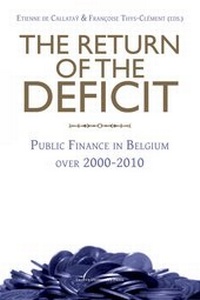
The Return of the Deficit
Public Finance in Belgium over 2000-2010
1st Edition
Published on 20. March 2013
328 pages
978-94-6166-074-9 (ISBN)
Description

An in-depth analysis of Belgium's public finance in the recent past
Prior to the outbreak of the financial crisis in 2008 Belgium's fiscal balances and debt ratios seemed to be on a firm consolidation path. Today, however, Belgium is facing a major budgetary challenge, albeit to some extent lesser than that of other European countries. A proper understanding of the current situation and the design of the most appropriate policy response always benefit from an in-depth analysis of the recent past. This book offers that closer look at the evolution of public finance in Belgium over the decade 2000-2010.
The Return of the Deficit presents a collection of original essays written by the best public finance scholars in Belgium. It covers Belgium's macroeconomic environment, its budgetary policy, changes to the tax system and social security, the evolution of public expenditure, debt management, and fiscal federalism.
This is the seventh volume in the authoritative series History of Public Finance in Belgium published under the auspices of the Belgian Institute of Public Finance. It is introduced with a foreword by Herman Van Rompuy, President of the European Council.
Contributors
K. Algoed (Office of the Minister of Budget, Flanders), J. Deboutte (Public Debt Agency), E. de Callataÿ (Bank Degroof), A. Decoster (University of Leuven), F. Denil (Federal Ministry of Finance), R. Deschamps (University of Namur), M. Gérard (Catholic University of Louvain-la-Neuve), N. Gilson (Catholic University of Louvain-la-Neuve), J. Hindriks (Catholic University of Louvain-la-Neuve), G. Langenus (National Bank of Belgium), M. Nautet (National Bank of Belgium), G. Quaden (National Bank of Belgium), R. Savage (Federal Ministry of Finance), V. Schmitz (University of Namur), B. Scorneau (University of Namur), J. Smets (National Bank of Belgium), F. Thys-Clément (University of Brussels), C. Valenduc (Federal Ministry of Finance), F. Vandenbroucke (University of Leuven), M. van den Hurk (University of Antwerp), A. Van de Voorde (Federal Ministry of Finance), S. Van Garsse (University of Antwerp), L. Van Meensel (National Bank of Belgium), S. Van Parys (National Bank of Belgium), H. Van Rompuy (European Council), K. Verhoest (University of Antwerp)
Prior to the outbreak of the financial crisis in 2008 Belgium's fiscal balances and debt ratios seemed to be on a firm consolidation path. Today, however, Belgium is facing a major budgetary challenge, albeit to some extent lesser than that of other European countries. A proper understanding of the current situation and the design of the most appropriate policy response always benefit from an in-depth analysis of the recent past. This book offers that closer look at the evolution of public finance in Belgium over the decade 2000-2010.
The Return of the Deficit presents a collection of original essays written by the best public finance scholars in Belgium. It covers Belgium's macroeconomic environment, its budgetary policy, changes to the tax system and social security, the evolution of public expenditure, debt management, and fiscal federalism.
This is the seventh volume in the authoritative series History of Public Finance in Belgium published under the auspices of the Belgian Institute of Public Finance. It is introduced with a foreword by Herman Van Rompuy, President of the European Council.
Contributors
K. Algoed (Office of the Minister of Budget, Flanders), J. Deboutte (Public Debt Agency), E. de Callataÿ (Bank Degroof), A. Decoster (University of Leuven), F. Denil (Federal Ministry of Finance), R. Deschamps (University of Namur), M. Gérard (Catholic University of Louvain-la-Neuve), N. Gilson (Catholic University of Louvain-la-Neuve), J. Hindriks (Catholic University of Louvain-la-Neuve), G. Langenus (National Bank of Belgium), M. Nautet (National Bank of Belgium), G. Quaden (National Bank of Belgium), R. Savage (Federal Ministry of Finance), V. Schmitz (University of Namur), B. Scorneau (University of Namur), J. Smets (National Bank of Belgium), F. Thys-Clément (University of Brussels), C. Valenduc (Federal Ministry of Finance), F. Vandenbroucke (University of Leuven), M. van den Hurk (University of Antwerp), A. Van de Voorde (Federal Ministry of Finance), S. Van Garsse (University of Antwerp), L. Van Meensel (National Bank of Belgium), S. Van Parys (National Bank of Belgium), H. Van Rompuy (European Council), K. Verhoest (University of Antwerp)
More details
Other editions
Additional editions
Etienne De Callatay | Francoise Thys-Clement
The Return of the Deficit
Public Finance in Belgium over 2000-2010
Book
01/2013
1st Edition
Leuven University Press
€60.50
Article not available at the moment
Persons
Editor
Etienne de Callataÿ is Chief Economist at Bank Degroof and Visiting Professor at the Catholic University of Louvain-la-Neuve (UCL) and at the University of Namur.
Françoise Thys-Clément is Emeritus Professor of Public Finance at the University of Brussels (ulb) and Honorary President of the Belgian Institute of Public Finance.
Content
Table of contents
Foreword
Herman Van Rompuy
Introduction
Belgium on the eve of the great sovereign debt crisis
Etienne de Callataÿ
1. The European context
Evolving governance in the EU: from the SGP to hell and back?
Guy Quaden, Jan Smets, and Geert Langenus
2. Overview
Main Developments in Public Finance
Maud Nautet and Luc Van Meensel
3. The fiscal stance
The return of the public budget deficit
Reginald Savage
4. Tax revenue and tax policy
A decade of tax cuts
André Decoster, Marcel Gerard, and Christian Valenduc
5. Approaches to primary expenditure
5.1 The structure of expenditure of the Regions and Communities: a comparison 2002-2011
Valérie Schmitz, Bastien Scorneau, and Robert Deschamps
5.2 Trends in public employment in Belgium
Stefan Van Parys and Luc Van Meensel
5.3 The practice of performance contracting by Belgian governments: re-considering the control of autonomous agencies
Koen Verhoest
5.4 Measuring and managing public performance
Jean Hindriks
6. Social Security
The active welfare state: A Stylised Retrospective
Frank Vandenbroucke, with Kim Lievens
7. Indebtedness
Interest payment and public debt
Natacha Gilson and Jean Deboutte
8. Fiscal federalism
The Transition to a New Model of Fiscal Relations
Koen Algoed and Frédérique Denil
Conclusion
Françoise Thys-Clément
Annex 1: Presentation of the Belgian Institute of Public Finance
Aloïs Van de Voorde
Annex 2: Statistical overview
Maud Nautet and Luc Van Meensel
Annex 3: List of contributors
Foreword
Herman Van Rompuy
Introduction
Belgium on the eve of the great sovereign debt crisis
Etienne de Callataÿ
1. The European context
Evolving governance in the EU: from the SGP to hell and back?
Guy Quaden, Jan Smets, and Geert Langenus
2. Overview
Main Developments in Public Finance
Maud Nautet and Luc Van Meensel
3. The fiscal stance
The return of the public budget deficit
Reginald Savage
4. Tax revenue and tax policy
A decade of tax cuts
André Decoster, Marcel Gerard, and Christian Valenduc
5. Approaches to primary expenditure
5.1 The structure of expenditure of the Regions and Communities: a comparison 2002-2011
Valérie Schmitz, Bastien Scorneau, and Robert Deschamps
5.2 Trends in public employment in Belgium
Stefan Van Parys and Luc Van Meensel
5.3 The practice of performance contracting by Belgian governments: re-considering the control of autonomous agencies
Koen Verhoest
5.4 Measuring and managing public performance
Jean Hindriks
6. Social Security
The active welfare state: A Stylised Retrospective
Frank Vandenbroucke, with Kim Lievens
7. Indebtedness
Interest payment and public debt
Natacha Gilson and Jean Deboutte
8. Fiscal federalism
The Transition to a New Model of Fiscal Relations
Koen Algoed and Frédérique Denil
Conclusion
Françoise Thys-Clément
Annex 1: Presentation of the Belgian Institute of Public Finance
Aloïs Van de Voorde
Annex 2: Statistical overview
Maud Nautet and Luc Van Meensel
Annex 3: List of contributors
