


History and Theory of Compromise
Description

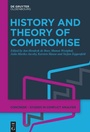
Interest in compromise has recently grown both in public and scholarly debates. However, there is a lack of interdisciplinary dialogue on the topic. This volume fills this gap by bringing together contributions from various relevant disciplines. They show that compromise has been a central technique to regulate social and political conflicts in different contexts. In a compromise the conflicting parties create an agreement by making mutual concessions, but do not give up their original claims. Therein lies the capacity of compromise to prevent or end escalated conflicts even in situations in which disagreements cannot be transformed into a consensus. In addition to theoretical investigations of the concept, the volume includes case studies on Europe in the Middle Ages, in the 19th and 20th centuries, and on pre-modern and contemporary Japan. The overarching question is about the preconditions of compromises. The authors examine the role of compromise in diplomacy, politics, trade, economics, and everyday life. Together they generate a comprehensive picture of the capacities and limitations of compromise in the past and today.
More details
Other editions
Additional editions
Persons
Dr. Jan-Hendryk de Boer , University of Duisburg-Essen, Essen, Germany; Dr. Manon Westphal , University of Münster, Münster, Germany; D r. Mariko Jacoby , University of Duisburg-Essen, Essen, Germany; Dr. Karsten Mause , University of Münster, Münster, Germany; Dr. Stefan Zeppenfeld , Ruhr-University Bochum, Bochum, Germany.
