

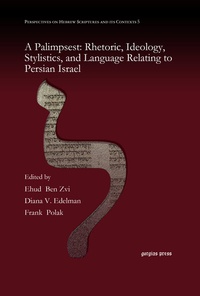
A Palimpsest: Rhetoric, Ideology, Stylistics, and Language Relating to Persian Israel
Palimpsest: Rhetoric, Ideology, Stylistics, and Language Relating to Persian Israel
Published on 11. October 2009
343 pages
978-1-4632-1674-0 (ISBN)
Description

A volume of collected essays that explores what we can learn about the producers and readers of biblical books by looking into matters of language, rhetoric, style, and ideology. What do they teach us about these literati's world of knowledge and imagination, about the issues they had in mind and the ways they came to deal with them through authoritative literature? The book includes essays on such issues as whether linguistic theories can solve literary-critical problems, on what is "late biblical Hebrew," on parallelism and noun groups in biblical poetry, and the communicative meaning of some linguistic choices.
More details
Series
Edition
Digital original
Language
English
Place of publication
Piscataway, NJ
United States
Target group
Professional and scholarly
US School Grade: College Graduate Student
Edition type
Digital original
File size
1,90 MB
ISBN-13
978-1-4632-1674-0 (9781463216740)
Copyright in bibliographic data and cover images is held by Nielsen Book Services Limited or by the publishers or by their respective licensors: all rights reserved.
Schweitzer Classification
Persons
Content
- Table of Contents (page 5)
- Acknowledgments (page 7)
- Abbreviations (page 9)
- Diana V. Edelman, Introduction (page 13)
- Dalit Rom-Shiloni, Group Identities in Jeremiah: Is It the Persian Period Conflict?Z (page 23)
- I. Introduction (page 23)
- II. Stages in Babylonian Exilic Ideology (page 25)
- III. Babylonian Exilic Ideology in the Book of Jeremiah (page 29)
- IV. Conclusions: Is It the Persian Period Conflict? (page 55)
- Diana V. Edelman, Ezra 1.6 as Idealized Past (page 59)
- Introduction (page 59)
- Prophetic Passages Used to Compose Ezra 1.6 (page 61)
- The Reference to Jeremiah in Ezra 1:1 (page 65)
- Implied Authorial Intention (page 68)
- Francesca Stavrakopoulou, Ancestor Ideologies and the Territoriality of the Dead in Genesis (page 73)
- Diana V. Edelman, God Rhetoric: Reconceptualizing YHWH Sebaot as YHWH Elohim in the Hebrew Bible (page 93)
- Introduction (page 93)
- ?-em TheologyZ (page 99)
- ?Kabod TheologyZ (page 103)
- Concluding Considerations (page 118)
- Jean-Daniel Macchi, The Book of Esther: A Persian story in Greek style (page 121)
- The Greeks and the History of Persia (page 123)
- Persian World and Practices in the Book of Esther and in the Greek Literature (page 124)
- Queen Vashti Refuses to Come to the King (Esth 1:10.12) (page 126)
- Judges and King's Marriage (Esth 1:12.20) (page 126)
- Esther Becomes Queen of Persia (Esth 2:1.18) (page 127)
- Haman's Wrath (Esth 3:1.5) (page 129)
- The Queen Risked Life to Contact the King (Esth 4:1.5:2) (page 131)
- The Queen Manipulates People At the Court (Esth 5:3.14; 7:1.8) (page 133)
- Presents to the Benefactor (Esther 6) (page 134)
- Massacre and Festival (Esther 8.9) (page 135)
- Results and Conclusion (page 136)
- Philippe Guillaume, Nahum 1: Prophet, Senet, and Divination (page 141)
- Nahum 1, Alphabetic? (page 141)
- The Senet of Twenty Houses (page 143)
- Nahum 1 and the Senet Grid (page 146)
- The Game of Twenty Squares and Divination (page 158)
- Sortes Sanctorum (page 165)
- Prophets in Chronicles (page 169)
- Prophetic Collection as Oracle Collection (page 169)
- Frank Polak, Verbs of Motion in Biblical Hebrew: Lexical Shifts and Syntactic Structure (page 173)
- 1. Some Notes on Semantics and Syntax of Motion Verbs (page 175)
- 2. Lexical Shifts (page 180)
- 3. Syntactic Patterns: Verbs of Motion Indiscourse (page 199)
- 4. Verbs of Motion and Semanto-Syntactic Patterning (page 209)
- Frank Polak, Parallelism and Noun Groups in Prophetic Poetry from the Persian Era (page 211)
- 1. Haggai (page 212)
- 2. Zechariah 1.8 (page 226)
- 3. Zech 11:4.14:21 and Malachi (page 239)
- 4. Poetic Prosodic in Haggai, Zechariah, Malachi (page 246)
- Robert Rezetko, What Happened to the Book of Samuel in the Persian Period and Beyond? (page 249)
- 1. Introduction (page 249)
- 2. Sparse Evidence and Scholarly Hypothesis on Language Development (page 250)
- 3. Linguistic Dating in Text-critical and Literary-critical Contexts (page 251)
- 4. Early Biblical Hebrew and Late Biblical Hebrew Each as a Cohesive Linguistic Entity (page 253)
- 5. Conclusion (page 263)
- Ian Young, What is ?Late Biblical Hebrew'? (page 265)
- 1. Competing Models: Chronological and Stylistic (page 265)
- 2. What is Late Biblical Hebrew? (page 274)
- Ehud Ben Zvi, The Communicative Message of Some Linguistic Choices (page 281)
- Author Index (page 303)
- References Index (page 311)
- Acknowledgments (page 7)
- Abbreviations (page 9)
- Diana V. Edelman, Introduction (page 13)
- Dalit Rom-Shiloni, Group Identities in Jeremiah: Is It the Persian Period Conflict?Z (page 23)
- I. Introduction (page 23)
- II. Stages in Babylonian Exilic Ideology (page 25)
- III. Babylonian Exilic Ideology in the Book of Jeremiah (page 29)
- IV. Conclusions: Is It the Persian Period Conflict? (page 55)
- Diana V. Edelman, Ezra 1.6 as Idealized Past (page 59)
- Introduction (page 59)
- Prophetic Passages Used to Compose Ezra 1.6 (page 61)
- The Reference to Jeremiah in Ezra 1:1 (page 65)
- Implied Authorial Intention (page 68)
- Francesca Stavrakopoulou, Ancestor Ideologies and the Territoriality of the Dead in Genesis (page 73)
- Diana V. Edelman, God Rhetoric: Reconceptualizing YHWH Sebaot as YHWH Elohim in the Hebrew Bible (page 93)
- Introduction (page 93)
- ?-em TheologyZ (page 99)
- ?Kabod TheologyZ (page 103)
- Concluding Considerations (page 118)
- Jean-Daniel Macchi, The Book of Esther: A Persian story in Greek style (page 121)
- The Greeks and the History of Persia (page 123)
- Persian World and Practices in the Book of Esther and in the Greek Literature (page 124)
- Queen Vashti Refuses to Come to the King (Esth 1:10.12) (page 126)
- Judges and King's Marriage (Esth 1:12.20) (page 126)
- Esther Becomes Queen of Persia (Esth 2:1.18) (page 127)
- Haman's Wrath (Esth 3:1.5) (page 129)
- The Queen Risked Life to Contact the King (Esth 4:1.5:2) (page 131)
- The Queen Manipulates People At the Court (Esth 5:3.14; 7:1.8) (page 133)
- Presents to the Benefactor (Esther 6) (page 134)
- Massacre and Festival (Esther 8.9) (page 135)
- Results and Conclusion (page 136)
- Philippe Guillaume, Nahum 1: Prophet, Senet, and Divination (page 141)
- Nahum 1, Alphabetic? (page 141)
- The Senet of Twenty Houses (page 143)
- Nahum 1 and the Senet Grid (page 146)
- The Game of Twenty Squares and Divination (page 158)
- Sortes Sanctorum (page 165)
- Prophets in Chronicles (page 169)
- Prophetic Collection as Oracle Collection (page 169)
- Frank Polak, Verbs of Motion in Biblical Hebrew: Lexical Shifts and Syntactic Structure (page 173)
- 1. Some Notes on Semantics and Syntax of Motion Verbs (page 175)
- 2. Lexical Shifts (page 180)
- 3. Syntactic Patterns: Verbs of Motion Indiscourse (page 199)
- 4. Verbs of Motion and Semanto-Syntactic Patterning (page 209)
- Frank Polak, Parallelism and Noun Groups in Prophetic Poetry from the Persian Era (page 211)
- 1. Haggai (page 212)
- 2. Zechariah 1.8 (page 226)
- 3. Zech 11:4.14:21 and Malachi (page 239)
- 4. Poetic Prosodic in Haggai, Zechariah, Malachi (page 246)
- Robert Rezetko, What Happened to the Book of Samuel in the Persian Period and Beyond? (page 249)
- 1. Introduction (page 249)
- 2. Sparse Evidence and Scholarly Hypothesis on Language Development (page 250)
- 3. Linguistic Dating in Text-critical and Literary-critical Contexts (page 251)
- 4. Early Biblical Hebrew and Late Biblical Hebrew Each as a Cohesive Linguistic Entity (page 253)
- 5. Conclusion (page 263)
- Ian Young, What is ?Late Biblical Hebrew'? (page 265)
- 1. Competing Models: Chronological and Stylistic (page 265)
- 2. What is Late Biblical Hebrew? (page 274)
- Ehud Ben Zvi, The Communicative Message of Some Linguistic Choices (page 281)
- Author Index (page 303)
- References Index (page 311)
