

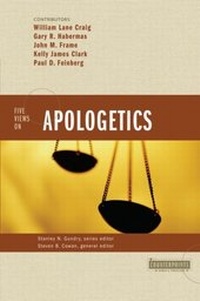
Five Views on Apologetics
Description

Of the most common approaches to apologetics, which is most effective?
The goal of apologetics is to persuasively defend Christianity against charges of falsehood, inconsistency, or credulity. It's an intellectual discipline that serves to bolster the faith of Christian believers and to aid the task of evangelism, but are some methods more effective than others?
Five Views on Apologetics examines the "how-to" of apologetics, putting five prominent techniques under the microscope:
- Classical - represented by William Lane Craig
- Evidential - represented by Gary Habermas
- Cumulative Case - represented by Paul D. Feinberg
- Presuppositional - represented by John M. Frame
- Reformed Epistemology - represented by Kelly James Clark
Offering a forum for presentation, critique, and defense, this book allows the contributors for the different viewpoints to respond to the others. Your own informed conclusions can then guide you as you meet the questions of a needy world with the claims of the gospel.
The Counterpoints series presents a comparison and critique of scholarly views on topics important to Christians that are both fair-minded and respectful of the biblical text. Each volume is a one-stop reference that allows readers to evaluate the different positions on a specific issue and form their own, educated opinion.
More details
Other editions
Additional editions
Person
Content
- Intro
- Books in the Counterpoints Series
- Title Page
- Table of Contents
- INTRODUCTION
- GLOSSARY OF KEY TERMS AND CONCEPTS
- Chapter One CLASSICAL APOLOGETICS
- CLASSICAL APOLOGETICS
- AN EVIDENTIALIST'S RESPONSE
- A CUMULATIVE CASE APOLOGIST'S RESPONSE
- A PRESUPPOSITIONALIST'S RESPONSE
- A REFORMED EPISTEMOLOGISTS RESPONSE
- Chapter Two EVIDENTIAL APOLOGETICS
- EVIDENTIAL APOLOGETICS
- A CLASSICAL APOLOGIST'S RESPONSE
- A CUMULATIVE CASE APOLOGIST'S RESPONSE
- A PRESUPPOSITIONALIST'S RESPONSE
- A REFORMED EPISTEMOLOGIST'S RESPONSE
- Chapter Three CUMULATIVE CASE APOLOGETICS
- CUMULATIVE CASE APOLOGETICS
- A CLASSICAL APOLOGIST'S RESPONSE
- AN EVIDENTIALIST'S RESPONSE
- A PRESUPPOSITIONALIST'S RESPONSE
- A REFORMED EPISTEMOLOGIST'S RESPONSE
- Chapter Four PRESUPPOSITIONAL APOLOGETICS
- PRESUPPOSITIONAL APOLOGETICS
- A CLASSICAL APOLOGIST'S RESPONSE
- AN EVIDENTIALIST'S RESPONSE
- A CUMULATIVE CASE APOLOGIST'S RESPONSE
- A REFORMED EPISTEMOLOGIST'S RESPONSE
- Chapter Five REFORMED EPISTEMOLOGY APOLOGETICS
- REFORMED EPISTEMOLOGY APOLOGETICS
- A CLASSICAL APOLOGIST'S RESPONSE
- AN EVIDENTIALIST'S RESPONSE
- A CUMULATIVE CASE APOLOGIST'S RESPONSE
- A PRESUPPOSITIONALIST'S RESPONSE
- Chapter Six CLOSING REMARKS
- A CLASSICAL APOLOGIST'S CLOSING REMARKS
- AN EVIDENTIAL APOLOGIST'S CLOSING REMARKS
- A CUMULATIVE CASE APOLOGIST'S CLOSING REMARKS
- A PRESUPPOSITIONAL APOLOGIST'S CLOSING REMARKS
- A REFORMED EPISTEMOLOGIST'S CLOSING REMARKS
- CONCLUSION
- Copyright
- About the Author
- About the Contributors
- More Counterpoints:
- About the Publisher
- Share Your Thoughts
