
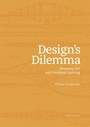
Design's Dilemma between Art and Problem-Solving
Description
Alles über E-Books | Antworten auf Fragen rund um E-Books, Kopierschutz und Dateiformate finden Sie in unserem Info- & Hilfebereich.
The design dilemma is based on the historic separation of design and art since the late Middle Ages. It describes the transformation of design from an art discipline to a problem-solving discipline. On the one hand, this great divergence is accompanied by myths that construct opposites of free art and unfree design, of aura and loss of aura, or of distance and touch. On the other hand, the avant-gardes have often invoked the unity of art and design, which museums or marketing also take up again today. In order to better understand design's wandering between art and non-art, its 600-year history of ideas is now traced for the first time in the fields of art and industrial history as well as the philosophy of pragmatism since about 1900. Special attention is paid to the original ideas and their overformation by technicism, capitalism, functionalism or Darwinism. They create the design dilemma that shapes the "attitude" of its actors.
More details
Other editions
Additional editions

Person
System requirements
File format: PDF
Copy protection: Watermark-DRM (Digital Rights Management)
System requirements:
- Computer (Windows; MacOS X; Linux): Use the free software Adobe Reader, Adobe Digital Editions, or any other PDF viewer of your choice (see eBook Help).
- Tablet/Smartphone (Android; iOS): Install the free app Adobe Digital Editions or another reading app for eBooks, e.g., PocketBook (see eBook Help).
- E-reader: Bookeen, Kobo, Pocketbook, Sony, Tolino and many more (only limited: Kindle).
The file format PDF always displays a book page identically on any hardware. This makes PDF suitable for complex layouts such as those used in textbooks and reference books (images, tables, columns, footnotes). Unfortunately, on the small screens of e-readers or smartphones, PDFs are rather annoying, requiring too much scrolling.
This eBook uses Watermark-DRM, a „soft” copy protection. This means that there are no technical restrictions to prevent illegal distribution. However, there is a personalised watermark embedded in the eBook that can be used to identify the purchaser of the eBook in the event of misuse and to provide evidence for legal purposes.
For more information, see our eBook Help page.