Alles über E-Books | Antworten auf Fragen rund um E-Books, Kopierschutz und Dateiformate finden Sie in unserem Info- & Hilfebereich.
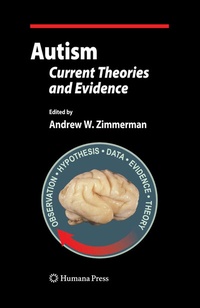
Creative thinking and collaborative scientific research have advanced our understanding of autism, and we are now beginning to synthesize the data into evidence and theories. Autism: Current Theories and Evidence presents current theories about autism and the evidence that supports them. The goal is to show how the scientific method is revealing the biological bases of this spectrum of disorders, thereby leading the way to their treatment and prevention using evidence-based medicine. This book has 20 chapters divided into 6 sections: Molecular and Clinical Genetics; Neurotransmitters and Cell Signaling; Endocrinology, Growth and Metabolism; Immunology, Maternal-Fetal Effects and Neuroinflammation; Neuroanatomy, Imaging and Neural networks; and Environmental Mechanisms and Models. The subjects cover a wide range of current scientific work in the field of autism, with strong and growing evidence to support them, and demonstrate both the breadth and depth of current autism research. The reader is encouraged to consider how theories and the scientific method, in the hands of these and other dedicated researchers, are leading to greater knowledge and continued progress in autism research.
Reviews / Votes
From the reviews:"Autism: Current Theories and Evidence, edited by Andrew Zimmerman, serves as an atlas or geophysical study of the archipelago of autism. . this book is a valuable contribution to the effort to map autism, and it is a demonstration of the type of cooperation that is needed across scientific disciplines if progress is to be made in this effort." (Jeffrey A. Munson, The New England Journal of Medicine, Vol. 360 (23), June, 2009)"All chapters are uniformely arranged with initial abstract, many informative subheadings, tables and impressive figures. All of them are clearly written . . the present book provides an impressive, evidence-based review of pathogenesis, clinical features, genetics, biological bases, pathogenetic factors, current or future treatments of ASDs. It is therefore recommended to all clinicians and neuroscientist who are interested and engaged in the complex field of ASDs." (K. A. Jellinger, European Journal of Neurology, Vol. 16, 2009)"The book has 20 chapters divided into 6 parts. . Mainly, but not only, for neurobiologists, psychologists and psychiatrists. Recommended." (Pediatric Endocrinology Reviews, Vol. 8 (2), December, 2010)
Series
Language
Place of publication
Publishing group
Illustrations
XIX, 474 p. 58 illus., 8 illus. in color.
File size
ISBN-13
978-1-60327-489-0 (9781603274890)
DOI
10.1007/978-1-60327-489-0
Schweitzer Classification
Molecular and Clinical Genetics.- Engrailed2 and Cerebellar Development in the Pathogenesis of Autism Spectrum Disorders.- Teratogenic Alleles in Autism and Other Neurodevelopmental Disorders.- Cholesterol Deficit in Autism: Insights from Smith-Lemli-Opitz Syndrome.- Autism in Genetic Intellectual Disability.- Neurotransmitters and Cell Signaling.- Serotonin Dysfunction in Autism.- Excitotoxicity in Autism.- Prenatal ?2-Adrenergic Receptor Signaling and Autism:.- Endocrinology, Growth, and Metabolism.- A Role for Fetal Testosterone in Human Sex Differences.- Interaction between Genetic Vulnerability and Neurosteroids in Purkinje cells as a Possible Neurobiological Mechanism in Autism Spectrum Disorders.- Insulin-Like Growth Factors.- Oxidative Stress and the Metabolic Pathology of Autism.- Immunology, Maternal-Fetal Interaction, and Neuroinflammation.- The Immune System in Autism.- Maternal Immune Activation, Cytokines and Autism.- Maternal Antibodies and the Placental-Fetal IgG Transfer Theory.- Can Neuroinflammation Influence the Development of Autism Spectrum Disorders?.- Neuroanatomy and Neural networks.- The Significance of Minicolumnar Size Variability in Autism.- Imaging Evidence for Pathological Brain Development in Autism Spectrum Disorders.- Information Processing, Neural Connectivity, and Neuronal Organization.- Environmental Mechanisms and Models.- Evidence for Environmental Susceptibility in Autism.- An Expanding Spectrum of Autism Models.- Erratum.