

Faceworld
Description

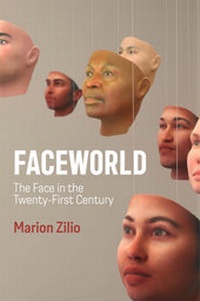
Nothing could be further from the truth. Rather than a window opening onto our inner nature, the face has always been a technical artefact--a construction that owes as much to artificiality as to our genetic inheritance. From the origins of humanity to the triumph of the selfie, Marion Zilio charts the history of the technical, economic, political, legal, and artistic fabrication of the face. Her account of this history culminates in a radical new interrogation of what is too often denounced as our contemporary narcissism. In fact, argues Zilio, the "narcissism" of the selfie may well reconnect us to the deepest sources of the human manufacture of faces--a reconnection that would also be a chance for us to come to terms with the non-human part of ourselves.
This highly original reflection on the fabrication of the face will be of great value to students and scholars of media and culture and to anyone interested in the pervasiveness of the face in our contemporary age of the selfie.
More details
Other editions
Persons
Content
2
The Invention of the Face
The face was probably the foremost obsession of the late nineteenth century. In summer 1839, before an audience drawn from all four corners of Europe, François Arago presented his invention, the daguerreotype, to the Académie des sciences et des beaux-arts, and would conspire to ensure a law was passed calling for his patent to be acquired by the French state, which subsequently presented it as a 'gift to the world'. If the potential of photography caused a public sensation, exciting as much enthusiasm and anticipation as the release of the latest iPhone does today, this was in no small part due to Arago's oratorical skills. As a good scientist and politician, he touted the scientific merits of his discovery and the tremendous prospects for progress it opened up. But, as Walter Benjamin observed, the ensuing public craze also owed to the unprecedented and even diabolical nature of his invention:
To try to capture fleeting mirror images [.] is not just an impossible undertaking, as has been established after thorough German investigation; the very wish to do such a thing is blasphemous. Man is made in the image of God, and God's image cannot be captured by any machine of human devising. The utmost the artist may venture, borne on the wings of divine inspiration, is to reproduce man's God-given features without the help of any machine, in the moment of highest dedication, at the higher bidding of his genius.1
Despite this prohibition weighing upon photography, it was widely hailed by the Parisian press and its success spread well beyond the borders of France. Endorsed by the social elite, it became a privileged subject of salon conversations and, thanks to its release into the public domain, was rapidly perfected. The volume and weight of the camera was reduced, the time it was necessary to pose became shorter, and the metal plate was replaced by glass negatives, allowing the making of copies. If technical reproduction necessarily dispossessed works and people of their 'aura', as Benjamin claimed, it was also accompanied by a dazzling 'technical halo' whose radiation would unconsciously permeate all strata of reality. Photography would become an industry that transformed the face of the world, and perhaps also the face itself.
At this time, the Western world was undergoing profound disruption. Electricity, railways, underground trains, the car, and the elevator, along with the telephone, the phonograph, the radio, photography, and cinema, all formed the backdrop for a technically apparelled [appareillée] society.2 These innovations lay at the origin of a twofold paradigm shift: a rural exodus made it necessary to transform the appearance of the nascent metropolis, following the example of the boulevards envisioned by Haussmann, along with the possibility of recording and reproducing sounds and images of people. Modern democracies resulted from a combination of the development of an optimized system of telecommunications and the deployment of a world of representations, a combination which reconfigured our relation to time and space, further intensified the telescoping of presence and absence, visible and invisible, real and fictional, and gave rise to new spaces of projection. A new world emerged, one of duplicates and of speed, of fluxes and fluidities, stalked by phantasmagoria, commodity fetishism, and the overflowing of nocturnal life into daylight hours. Affecting and transforming the sensibility of individuals, producing ever denser connections and industrializing the modes of production and reproduction of the visible, modern techniques revolutionized our ways of seeing, sensing, and inhabiting the world. According to a Marxian reading, this modern infrastructure reconfigured all of the ideas of society, its laws, its morals, its metaphysics, its language, and its political institutions. The senses, but also what makes sense - and yet more fundamentally, conceptions of the real and of the human - were all reevaluated through the prism of technical mediations that now passed for immediate. This illusion of immediacy, reinforced by automation and rapid acceleration, led to the promotion of mobility and the present moment - which then meant it became necessary for flows to be archived, visualized, and stored, individual and collective memory preserved.
Not only did these techniques of reproduction transform knowledge and memory, they encouraged individuals to develop a taste for their own image. As Benjamin emphasized, 'The notion that one could be reproduced by the apparatus is an enormous attraction for today's humans.'3 Baudelaire would develop this observation further, into a critique of modernity and, in short, of the bourgeois class. From this moment on, he railed, 'our loathsome society rushed, like Narcissus, to contemplate its trivial image on the metallic plate'.4 But above and beyond the narcissistic tendencies of his contemporaries, Baudelaire was concerned with denouncing the impact of 'the invasion of photography and the great industrial madness'5 upon art and the imagination. The 'machinic turn of sensibility'6 had begun. Culture would henceforth be the product of an industry that was bound to transform aesthetics and sensibility in general. With the rise of an individualizing society, it was ultimately the subterranean forms of a technical unconscious that were unleashed.
The face is an invention, for it responds to a programme - that is to say, an organizational plan that responds to rules established upstream of it. Mass produced and circulating within public space, the imagification of the face presented men and women with new scenes of representation which were accompanied by new forms of control. 'Visibility is a trap',7 as Michel Foucault warned. From optical apparatuses to measuring instruments, from informal diagrams to disciplinary institutions, societies became enmeshed with an optical dispositif; and because it was at once that which offers itself to the gaze and that which properly belongs to a theory of vision, the face became both weapon and theatre of a war of visibilities. From this point on, the space of the circulation of gazes, that space where the play of face-to-face engagement between people takes place, would be formed of machinic interfaces and reflecting surfaces. During the nineteenth century, both the shop windows of department stores and the massive commercial production of mirrors exponentially multiplied the images of man. Just as painted portraits had long been reserved for the elite, so mirrors were considered by the people as precious objects of which one might sometimes possess, at most, a fragment. These specular objects invaded bourgeois interiors, becoming a standard fixture in the bedchamber and then the bathroom by the beginning of the twentieth century. Eventually every corner of the home would be adorned by a face-become-image, the sensible apparition of a twice-present existence. From the peasant who, at the time, had little interest in his or her own reflection and saw it only on rare occasions at the hairdresser's or barber's, to the bourgeois concerned to use his portrait to maintain his social standing, all submitted to this new experience of the face.
For the first time in the history of humanity, everyone and anyone was able to see themselves and to possess a face - that is to say, to exchange it, pick it up, manipulate it, and capitalize upon it. This new memory of the face constituted a break in so far as, once reproduced by a camera, it became transmissible and accumulable. Like coins struck with the effigy of the sovereign, faces entered into an economy of flows. More than any other media, the specular function of photography and, later, cinema brought about a consciousness of individuality and of the collective. The masses would finally appear, 'brought face to face with themselves'8 in close up and wide shot, acquiring an image that would represent them and confirm their political potency. In helping bring them to light, photography and the cinema contributed to the spectacularization of people and of the world, the creation of a spectacle whose starting point was man's continuous observation of himself, splitting him in two: into a face-subject and a face-object. The play of the face-to-face now involved not just human partners, but interfaces, cameras, markets, and quantified evaluations.
We have known since Foucault that the emergence of the figure of man in the human sciences was dependent on certain fundamental dispositions of knowledge and that, if these latter were to disappear just as they once appeared, then 'one can certainly wager that man would be erased, like a face drawn in sand at the edge of the sea'.9 According to Foucault, the human sciences were made possible by the disciplinary power to which they reciprocally offered an object, by describing the features of a human nature that could be objectively standardized. In this way, the epistemic basis of modernity introduced an imaginary wherein man was divided up according to various scientific sectors. With the advent of photography, this schema would take the form of an unprecedented visual spatialization and temporalization by means of a panoptic apparatus, an apparatus that claimed to 'see all' and to record all - including everything situated beyond and beneath human perception....
