

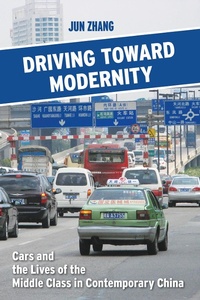
Driving Toward Modernity
Description

In Driving toward Modernity, Jun Zhang ethnographically explores the entanglement between the rise of the automotive regime and emergence of the middle class in South China. Focusing on the Pearl River Delta, one of the nation's wealthiest regions, Zhang shows how private cars have shaped everyday middle-class sociality, solidarity, and subjectivity, and how the automotive regime has helped make the new middle classes of the PRC. By carefully analyzing how physical and social mobility intertwines, Driving toward Modernity paints a nuanced picture of modern Chinese life, comprising the continuity and rupture as well as the structure and agency of China's great transformation.
More details
Other editions
Additional editions
Person
Jun Zhang is Assistant Professor of Asian and International Studies at City University of Hong Kong.
Content
List of Figures and Tables
Acknowledgments
List of Abbreviations and Note on Translation
Introduction: A Mobile Lifestyle, A Middle Way of Living
Prologue: From Official Privileges to Consumer Goods
1. Driving Alone Together: Sociality, Solidarity, and Status
2. Family Cars, Filial Consumer-Citizens: Becoming Properly Middle Class
3. The Emerging Middle Class and the Car Market: Mobilities and Trajectories
4. Car Crash, Class Encounter: Anxiety of Mobility
5. Bidding for a License Plate: The Importance of Being a Free and Proper Consumer
6. Parking: Contesting Space in Middle-Class Complexes
Epilogue: Politics of Transformation
Glossary
Notes
References
Index
